How Benin’s civil protection agency is rewriting crisis response with new OIM-backed tools
The Agency for Civil Protection of Benin (ABPC) has entered a new phase of operational transformation, one that is quietly reshaping how emergency response works across the country. Behind the ceremonial handovers and diplomatic speeches in Cotonou lies a deeper shift: a deliberate move to equip responders with tools that match the speed and scale of modern crises.
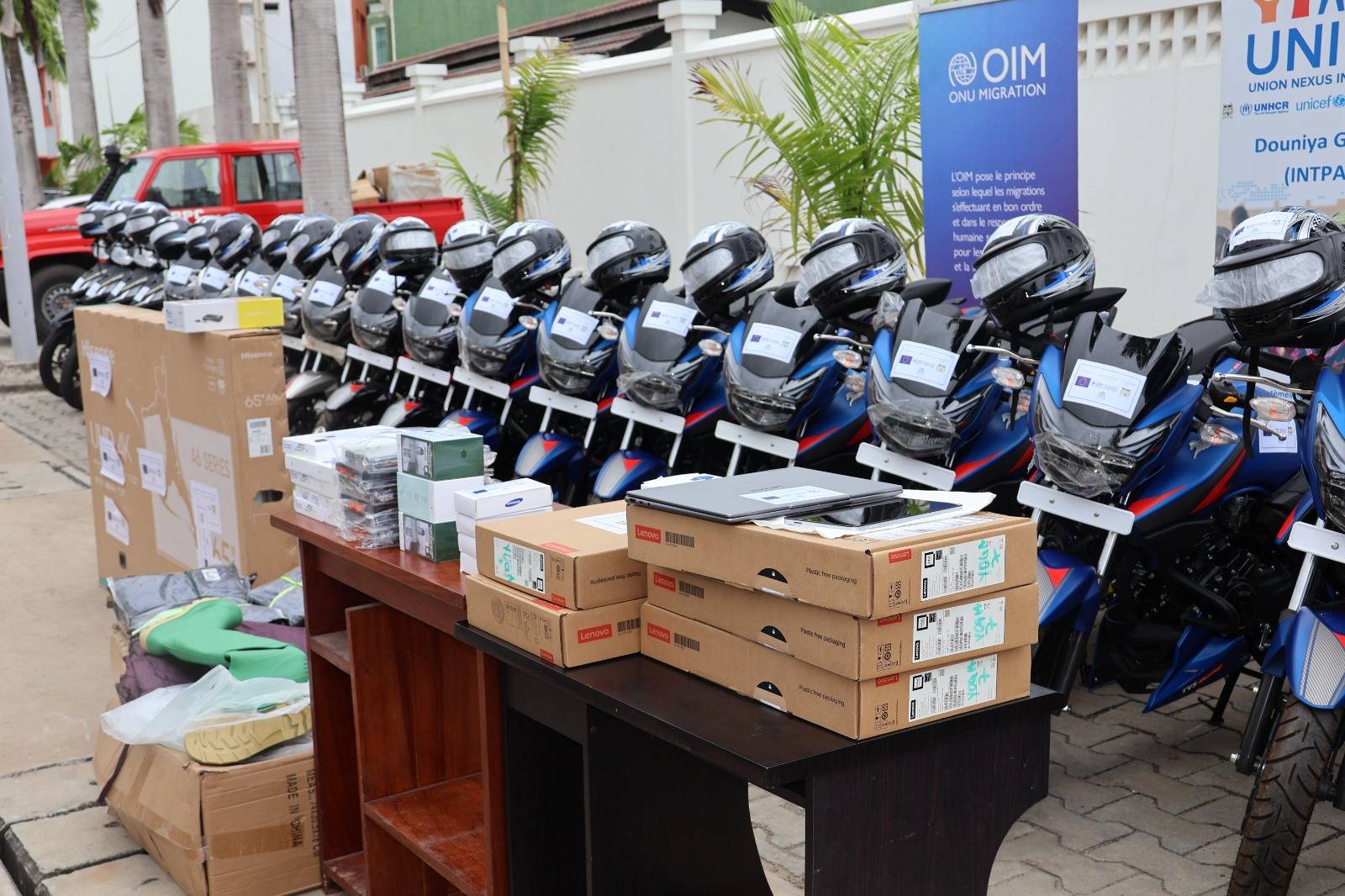
This transformation was formally unveiled during an official gathering at the Ministry of Interior and Public Security, where a carefully selected fleet of vehicles, computing systems, and tactical gear was handed over by the International Organization for Migration (OIM). The donation isn’t just an equipment upgrade—it is a strategic pivot meant to address the root causes of delayed emergency interventions, including difficult terrain, poor data integration, and stretched logistical networks.
Why this equipment matters more than it appears
The timing of this donation reflects a calculated response to growing regional pressures. Benin faces increasing climate-related disasters, volatile migration flows, and rising security concerns along its borders. The ABPC’s ability to act quickly isn’t just a matter of efficiency—it is a pillar of national stability.
Underneath the formal speeches and handshakes, the donation addresses long-identified bottlenecks in emergency response. Remote villages, flood-prone zones, and border areas have historically been hard to reach within critical timeframes. The new vehicles—built for rugged terrain and equipped with integrated communication systems—are designed to close that gap. Meanwhile, upgraded IT infrastructure ensures real-time data flows from the field to command centers, enabling faster decision-making when seconds count.
Technology meets terrain: the tools that define new operational speed
The shipment delivered to the ABPC was not random. It was based on field assessments identifying where response systems were failing. The package includes:
- All-terrain response vehicles: specially adapted to navigate unpaved roads, riverbanks, and disaster zones where standard cars cannot go.
- Secure data systems: portable servers, encrypted laptops, and mapping software to track risks, coordinate teams, and share critical updates without interruption.
- Essential rescue kits: first-aid supplies, safety gear, and signaling equipment to protect responders and civilians during high-risk operations.
These tools don’t just enhance capacity—they redefine it. By integrating mobility and real-time information, the ABPC is shifting from reactive to proactive crisis management.
The human dimension: borders, people, and the cost of delay
At the heart of this upgrade is a recognition that civil protection extends beyond natural disasters. Managing migration flows, supporting displaced populations, and preventing humanitarian crises at borders are now central to the ABPC’s mission.
The OIM’s perspective, shared during the handover, underscores this shift: “A well-equipped civil protection agency doesn’t just respond to disasters—it prevents them from turning into full-blown crises by acting early, accurately, and empathetically.“
The new IT tools will allow the ABPC to monitor migration patterns, predict pressure points, and respond before situations escalate. For border communities—often the first to face instability—this means earlier warnings, faster evacuations, and better coordination with neighboring regions.
A government’s commitment: turning tools into lives saved
In his address, the Minister of Interior underscored a critical point: every piece of equipment represents a direct investment in human lives. The government’s message to ABPC staff was clear—not only to use these tools effectively but to understand their role in a larger mission of resilience.
He highlighted that modernizing civil protection isn’t just technical upgrade. It’s a cultural shift: from responding to waiting, from reacting to anticipating, and from managing disasters to protecting communities before they are in harm’s way.
The road ahead: autonomy, training, and scaling impact
With this donation, the ABPC stands at a crossroads. The new fleet and digital tools offer a rare opportunity: to operate with greater independence, to train responders more effectively, and to extend life-saving services to every corner of Benin.
Yet tools alone are not enough. The agency must now integrate these resources into daily operations, refine protocols, and build institutional knowledge. The government’s emphasis on rigorous use reflects an understanding that this is not a one-time fix—but the foundation of a modern civil protection system.
In a region where climate change and insecurity intersect, Benin’s move to strengthen its civil protection capabilities sends a message. It says that preparedness isn’t optional—it’s essential. And behind the scenes of every handover, every speech, and every new vehicle, lies a quieter commitment: to ensure that when the next crisis arrives, the response will already be in motion.