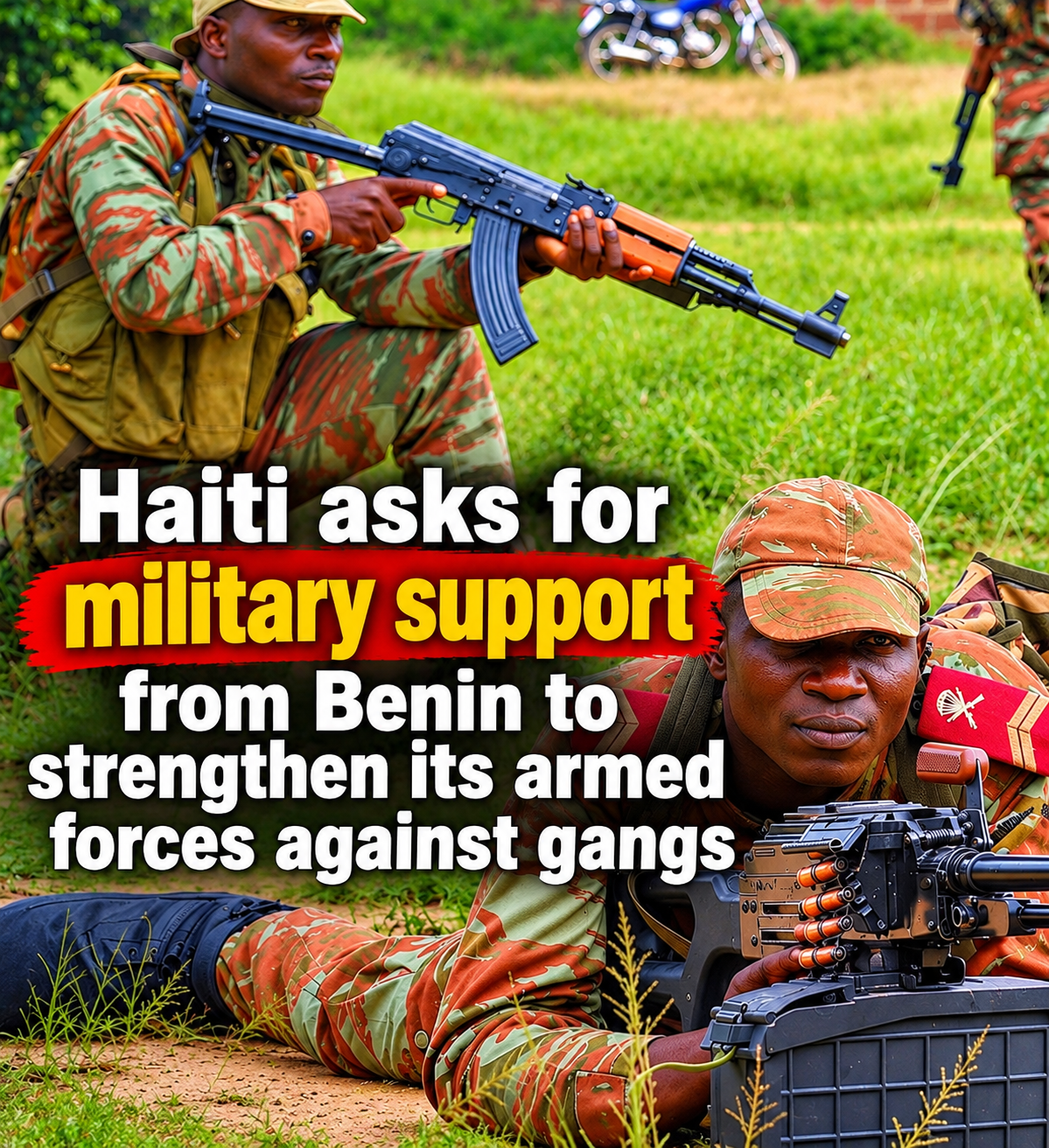
Haiti seeks Benin’s military training to counter gang violence surge
Facing an escalating security crisis fueled by the growing influence of armed gangs, Haiti is seeking to bolster its military capabilities through a strategic partnership with Benin. This initiative highlights the critical role of targeted training and the exchange of military expertise as Port-au-Prince pursues sustainable solutions to its deepening instability.
Military cooperation emerges as a response to Haiti’s security vacuum
The unchecked expansion of armed gangs across Haiti has crippled institutions, disrupted economic activity, and eroded public trust in security forces. With conventional approaches proving insufficient, Haitian authorities have prioritized the enhancement of their military capabilities through external expertise. The collaboration with Benin represents a deliberate shift toward specialized training and operational refinement.
On November 3, 2026, chiefs of staff from both nations convened in Cotonou to formalize discussions on strengthening Haiti’s armed forces. The meeting underscored the urgency of addressing gaps in soldier preparedness, tactical execution, and coordinated response mechanisms a prerequisite for reclaiming control in volatile regions.
Benin’s security experience positions it as a key ally
Benin’s selection as a partner reflects its proven track record in adapting military strategies to counter insurgent threats. Despite its own challenges in the northern regions, the country has successfully developed resilient defense frameworks, refined operational tactics, and invested in soldier training programs. These experiences offer tangible lessons for Haiti, particularly in navigating urban conflict zones where gangs exert territorial dominance.
The partnership emphasizes adaptability, recognizing that while Benin’s approach may provide a foundation, Haiti’s distinct urban warfare landscape requires customized solutions. The objective is not to replicate models wholesale but to extract relevant methodologies that align with Haiti’s operational realities.
Training as the cornerstone of military reinforcement
Beyond arms and personnel increases, Haiti’s security recovery hinges on qualitative improvements in its armed forces. A Benin-led training initiative could focus on three critical areas:
Discipline and cohesion: Reinforcing military structure to ensure reliable command chains and unit coordination.
Operational readiness: Enhancing soldiers’ preparedness for complex urban combat scenarios.
Civilian protection protocols: Prioritizing strategies that minimize collateral damage and safeguard communities.
The proposed training framework would prioritize hands-on learning, scenario-based drills, and leadership development elements proven essential in Benin’s own counterinsurgency campaigns.
Evaluating the partnership’s potential impact
While the diplomatic and technical groundwork is underway, the true measure of this collaboration will lie in its execution. Success will depend on:
The Haitian government’s commitment to implementing reforms.
Benin’s ability to tailor its expertise to Haiti’s unique challenges.
Sustained funding and resource allocation to sustain training programs.
Critics argue that military training alone cannot resolve Haiti’s crisis, which is rooted in political instability, economic decay, and institutional fragility. However, proponents contend that a structured, knowledge-based approach could serve as a catalyst for broader restoration efforts.
Broader implications for South-South military cooperation
This partnership signals a growing trend: African nations leveraging shared experiences to address common security threats. By collaborating with Benin rather than relying solely on Western military aid Haiti is embracing a model of self-sufficiency, where solutions emerge from within the Global South.
The initiative also redefines military cooperation, shifting the focus from equipment supply or foreign deployments to knowledge transfer and institutional capacity-building. For Benin, this represents an opportunity to extend its influence while reinforcing its reputation as a regional security partner.
Looking ahead: from dialogue to action
The November 2026 talks in Cotonou mark a pivotal moment, but their legacy will be determined by subsequent steps. Haiti’s ability to translate this alliance into tangible improvements in soldier proficiency, gang containment, and public safety will shape perceptions of its viability.
For now, Port-au-Prince is placing its faith in Benin’s military acumen a gamble that underscores the broader struggle to reclaim stability in a nation besieged by violence.
By Maimouna Kaboré — Journalist
