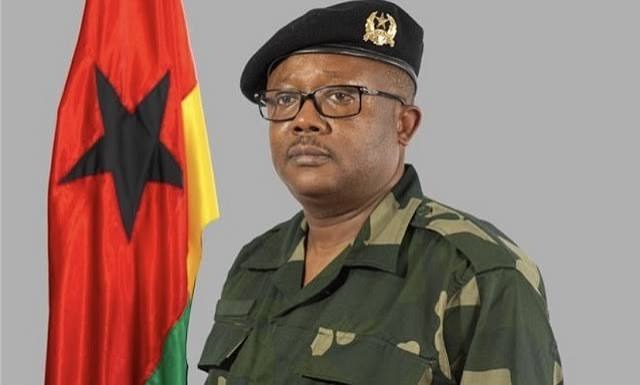
Guinea-Bissau’s political chessboard shifts as Embaló pursues second term amid deepening tensions
In the corridors of power in Bissau, one question now has a definitive answer: President Umaro Sissoco Embaló will seek re-election. His announcement clears the fog around Guinea-Bissau’s political future, bringing into sharp focus the forces shaping the nation’s next chapter.
The president’s decision to stand for a second term ends months of speculation and ends any ambiguity about his political intentions. Following repeated signals of hesitation—even considering stepping aside—Embaló has chosen to remain at the helm, responding to the persistent calls from his party, coalition allies, and loyalists within the state apparatus.
Behind the curtain: why now and what it reveals
The timing of this announcement is no accident. Guinea-Bissau stands at a pivotal juncture, its democratic institutions tested by recurring crises. By declaring his candidacy, Embaló is not only staking a claim to continuity but also revealing the underlying power dynamics that have come to define his presidency.
Since assuming office in early 2020—amid a disputed election that followed a turbulent 2019 vote—the president has pursued a policy of assertive leadership. His tenure has been marked by bold diplomatic initiatives, including presiding over the ECOWAS Heads of State summit, which restored international visibility to Guinea-Bissau after years of marginalization. Yet, this outward engagement has contrasted sharply with internal turbulence.
Promises and pitfalls of a contested presidency
Embaló’s first term has been a paradox of progress and peril. While his administration has championed infrastructure upgrades and regional diplomacy, it has also navigated a minefield of political instability.
Key challenges during his presidency:
- Parliamentary turbulence: Two dissolutions of the National People’s Assembly (in 2022 and late 2023) have raised concerns about executive overreach and the erosion of democratic checks and balances.
- Opposition backlash: The main opposition force, the PAIGC, has accused the government of authoritarian drift, citing restrictions on civic freedoms and political rights.
- Security fragility: Guinea-Bissau has faced repeated threats—alleged coup plots and military posturing—that have tested the resilience of state institutions.
These dynamics have not gone unnoticed. Regional blocs and international partners have repeatedly emphasized the need for an election that is inclusive, credible, and conducted within a framework of stability. The upcoming vote is not just a referendum on Embaló’s leadership—it is a test of Guinea-Bissau’s democratic resilience.
What the 2025 election could change
The presidential race is now poised to unfold under intense scrutiny. Embaló’s formal entry into the campaign reshapes the political landscape, compelling all stakeholders—from opposition figures to civil society—to recalibrate their strategies.
The primary concern remains whether the electoral process can proceed without disruption. Will the opposition unite behind a single candidate? Can the government ensure a level playing field? And most critically, will the military and security forces remain neutral in the face of rising tensions?
The answers to these questions will determine not only the outcome of the vote but also the long-term trajectory of Guinea-Bissau—whether it tilts toward deeper democratization or succumbs to the cyclical instability that has long plagued the country.
Looking ahead: stability versus continuity
For many citizens, the stakes extend beyond politics. The economy—still recovering from years of underinvestment—depends on a predictable and stable environment. Embaló’s re-election bid symbolizes continuity, but it also risks prolonging the very divisions that have hindered progress.
As the campaign gathers pace, the nation watches closely. Will Guinea-Bissau break free from its cycle of crises, or will the shadows of uncertainty continue to loom over its future?
