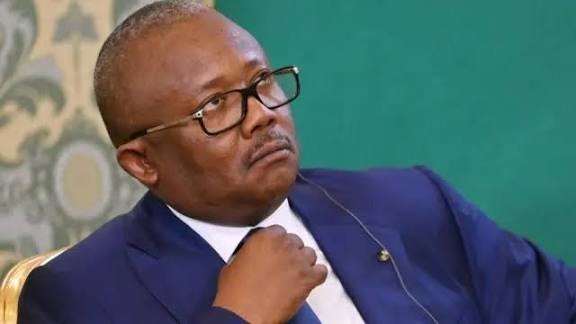
Guinea-Bissau’s fragile democracy: Embaló’s calculated return for 2026 election amid constitutional hurdles
Nine months after being ousted in a military coup, Umaro Sissoco Embaló is making a bold political comeback in Guinea-Bissau. The former president, currently living in exile, has declared his candidacy for the December 6, 2026 presidential election—a move that could reshape the country’s political landscape. His announcement comes at a pivotal moment for Guinea-Bissau, where lingering controversies from the disputed 2025 election and the military’s enduring influence cast long shadows over the upcoming vote.
The backdrop of a disputed 2025 election and military intervention
The seeds of Guinea-Bissau’s current crisis were sown during the highly contested November 23, 2025 presidential and legislative elections. Both Embaló and his main rival, Fernando Dias, claimed victory in the tightly fought race. However, before official provisional results could be released, military forces seized control of state institutions on November 26, 2025.
Embaló was arrested, and the electoral process was abruptly suspended. The coup leaders, led by then-Chief of Staff General Horta N’Tam—a former ally of the former president—installed a transitional military government. The junta justified its actions by citing threats to national security and alleged destabilization plots involving drug trafficking networks. However, no independent evidence has substantiated these claims.
The military takeover also destroyed key electoral infrastructure. The electoral commission reported that ballots, computers, and servers containing voting data were seized or destroyed, leaving the results of the 2025 election officially undetermined. This lack of transparency has fueled speculation, with some accusing Embaló of orchestrating the coup to prevent unfavorable results from being made public—though no definitive proof has emerged to support this theory.
A legal and political maze: navigating new constitutional rules
In the months since the coup, Guinea-Bissau has undergone significant political transformation. On August 30, 2026, the military-led transitional government organized a constitutional referendum that, according to provisional results, approved sweeping changes to the country’s charter. The reforms grant the president expanded powers, including the authority to appoint and dismiss the prime minister and cabinet, and even dissolve parliament under certain conditions.
The opposition, particularly the African Party for the Independence of Guinea and Cape Verde (PAIGC), boycotted the referendum, alleging it was orchestrated under military duress. Despite the boycott, the government declared the reforms approved with roughly 70% of the vote. As the December election approaches, these constitutional changes present a critical hurdle for Embaló.
>Under the new rules, presidential candidates must have continuously resided in Guinea-Bissau for the five years preceding the election. Additionally, candidates must pay a non-refundable deposit of 50 million West African CFA francs. These provisions could disqualify Embaló, who has been in exile since his ouster.
Can Embaló’s comeback rewrite Guinea-Bissau’s political future?
The question now is not whether Embaló will return, but whether he can translate that return into electoral victory. His path to power is fraught with challenges and contradictions.
- Political leverage: Embaló retains significant political networks, including his former party, Madem G15, and allies who have maintained influence during the transitional period. Even within the military-led government, some factions remain sympathetic to him.
- Controversial legacy: Critics argue that Embaló weakened democratic institutions during his presidency, frequently clashing with parliament and opposition groups. These tensions culminated in the pre-election instability that preceded the 2025 coup.
- Uncertain mandate: Without an official result from the 2025 election, it remains unclear whether Embaló held a lead or was poised to lose. The conflicting victory claims made by him and Fernando Dias offer no reliable measure of the electorate’s true will.
For Embaló to succeed, three conditions will likely need to align: he must meet the new residency and financial requirements, the election must be conducted fairly and transparently, and the opposition must regroup effectively. The military’s stance will also be pivotal—will they allow a free and competitive vote, or will their influence tilt the scales?
The December 6 election: a test for Guinea-Bissau’s democratic resilience
The December 6 presidential election will be more than a contest for the presidency—it will serve as a litmus test for Guinea-Bissau’s democratic institutions. After decades of coups, contested elections, and institutional crises, the country stands at a crossroads. Will the vote proceed as planned? Will results be published and accepted by all stakeholders?
For Embaló, this election represents an opportunity to reclaim power. But for Guinea-Bissau, it is an even greater test: can the nation finally break the cycle of instability and prove that its democracy is more than a distant aspiration?
The answers to these questions may well determine whether the country can move forward—or whether it will remain trapped in the same patterns of crisis and uncertainty that have defined it for years.
