Gabon voices outrage over attacks targeting the president’s mother
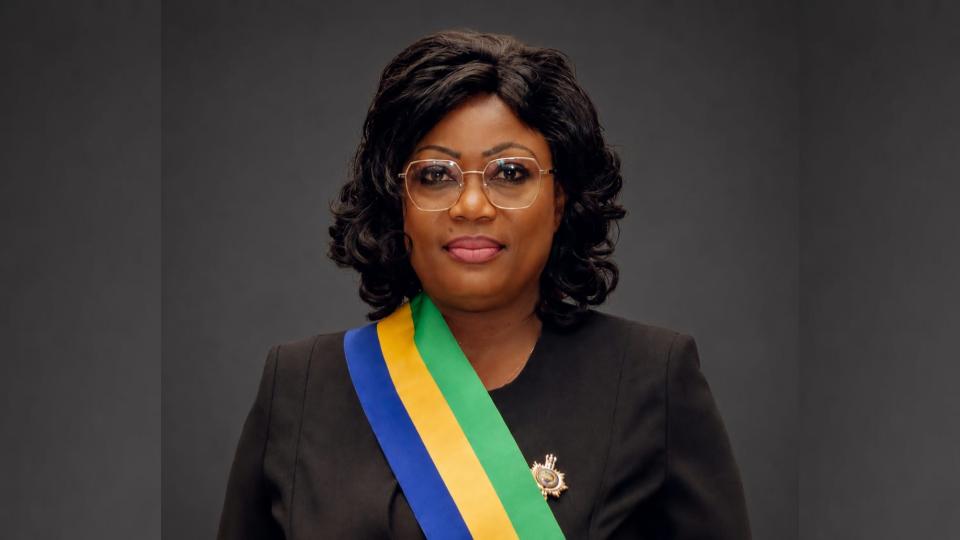
Gabonese politician and women’s rights advocate Daisy Léance Akinikoussou has sharply condemned escalating verbal attacks against the mother of President Brice Clotaire Oligui Nguema. In a forceful statement titled “Time to say enough is enough”, the deputy representing the Plateaux region drew a clear line between legitimate political criticism and unacceptable assaults on personal dignity.
At the heart of the controversy lies the outspoken online persona Landry Mbeng, known as “Lanlaire”, whose recent remarks about the First Lady and the President’s mother crossed what many now consider dangerous thresholds. Akinikoussou argues that while political opposition is a cornerstone of democracy, targeting family members of public figures represents a fundamental violation of human decency.
Preserving fundamental boundaries between politics and personal life
The deputy and Secretary-General of the National Network of Women Parliamentarians (RENAFED) emphasizes that the dignity of individuals should never be compromised by their association with someone in power. “A mother remains a mother, regardless of her child’s position”, she declared, making clear that public service does not forfeit basic respect. “We can challenge the President’s policies, his decisions, and his governance without dragging his family into the fray”, she asserted.
Her stance reframes the debate not as a defense of the administration, but as a defense of universal human values. “Protecting the President’s mother isn’t about supporting the regime — it’s about upholding a principle: the right of every person to live free from public humiliation”.
Uniting women’s rights advocacy with political integrity
Beyond the immediate political context, Akinikoussou leverages this moment to reinforce the integrity of women’s rights advocacy. She warns against selective outrage: “Demanding respect for our own dignity means demanding it for all women — even those whose views, alliances, or family ties we do not share”. Her message underscores a critical truth: the fight for gender equality cannot tolerate double standards.
She draws attention to the growing normalization of verbal abuse and online harassment, transforming digital platforms into arenas of toxicity rather than platforms for constructive dialogue. In her view, the erosion of civility online threatens not just individuals, but the very fabric of democratic discourse.
The slippery slope of personal attacks in public life
Akinikoussou issues a stark warning about the precedent such attacks set. “Today it’s the President’s mother. Tomorrow it could be the mother of an opponent, a journalist, an activist, or an ordinary citizen”, she cautions. This warning reflects a deep concern: once the barrier between political criticism and personal degradation is breached, there is no guarantee it won’t be used against anyone.
Her call is not for silence or impunity. She acknowledges the right — and necessity — of holding leaders accountable. But accountability must remain focused on actions, policies, and governance, not on the private lives of their relatives. “We can be fierce political adversaries without becoming adversaries of human dignity”, she concludes.
As voices from civil society and public life in Gabon continue to sound alarms over the deterioration of online discourse, her intervention serves as both a moral compass and a reminder: democracy thrives on robust debate — but not at the expense of human decency.
