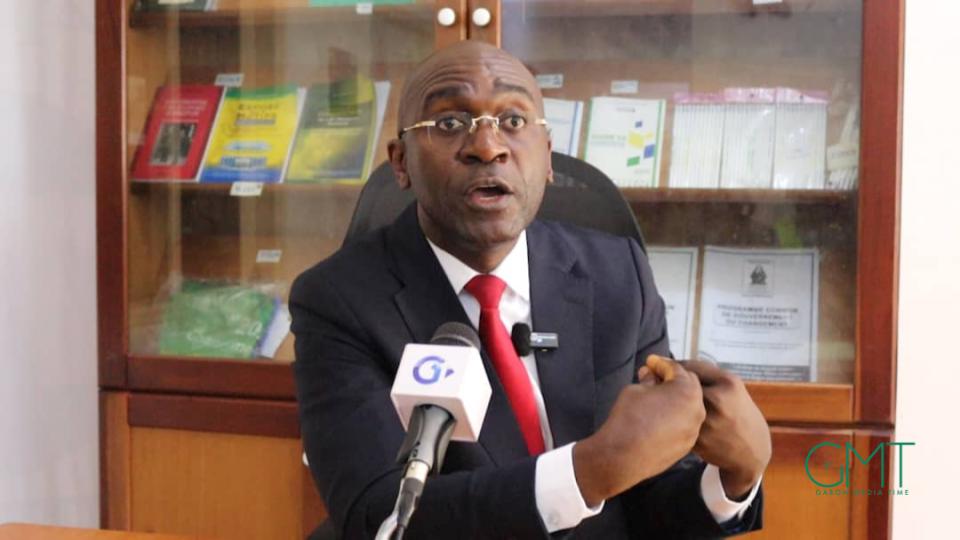
Gabon: civil society leader condemns verbal abuse against authorities
In a rapidly evolving public debate, civil society leader Geoffroy Foumboula Libeka Makosso has drawn a clear line between freedom of expression and verbal abuse. During a press conference held in Libreville, he strongly criticized recent inflammatory remarks targeting President Brice Clotaire Oligui Nguema, his wife, and his mother. While defending the right to criticize public figures, he emphasizes that personal attacks cross a red line that undermines democratic discourse.
Drawing the line between criticism and insult
For Geoffroy Foumboula, civic engagement is not about insults or personal attacks. He stresses that disagreement does not justify verbal violence, recalling his own commitment to advocacy through legal and reasoned debate rather than inflammatory rhetoric. He firmly states that while criticism of institutions is legitimate, defamation and insults are criminal offenses that must be addressed through proper legal channels.
His remarks come in response to recent statements attributed to an activist known as “Lanlaire,” whose remarks he condemns as crossing the threshold from political dissent to personal vilification. Foumboula argues that such behavior not only tarnishes public debate but also risks normalizing disrespect toward state institutions and their leaders.
Questioning the state’s relationship with outspoken activists
Beyond condemning the activists themselves, Geoffroy Foumboula raises concerns about the state’s perceived tolerance—or even encouragement—of aggressive rhetoric from some diaspora figures. He points to repeated invitations extended to these activists, their appearances in state media, and claims that they have been approached during official presidential visits. While some of these assertions remain unverified, they underscore a growing public unease over the boundaries between dissent and impunity.
He also referenced an unverified allegation involving a financial transaction between a presidential delegate and an activist, allegedly intended to fuel verbal attacks against the head of state. Though unconfirmed, such claims fuel speculation about the motivations behind certain public outbursts.
Demanding accountability and judicial action
Foumboula calls on the presidency and state institutions to distance themselves from activists whose rhetoric relies solely on insults and defamation. He warns that the absence of legal consequences may foster a sense of impunity among these figures, encouraging others to adopt similar tactics for visibility or political leverage. He stresses that silence or symbolic condemnation without legal follow-up only serves to trivialize abusive behavior.
The civil society leader urges authorities to take decisive legal action against those who cross the line into defamation and insult. He also appeals to the public to resist amplifying such content by disengaging from the platforms and accounts that propagate it, and by using available reporting tools to curb the spread of harmful speech.
Reaffirming the boundaries of democratic debate
At the heart of Foumboula’s message is a broader reflection on the quality of public discourse in Gabon. While freedom of expression remains a cornerstone of democracy, he insists that it must not be weaponized to humiliate or demean political opponents. Criticism is essential, but criminal offenses belong in court—not in the arena of public insults.
