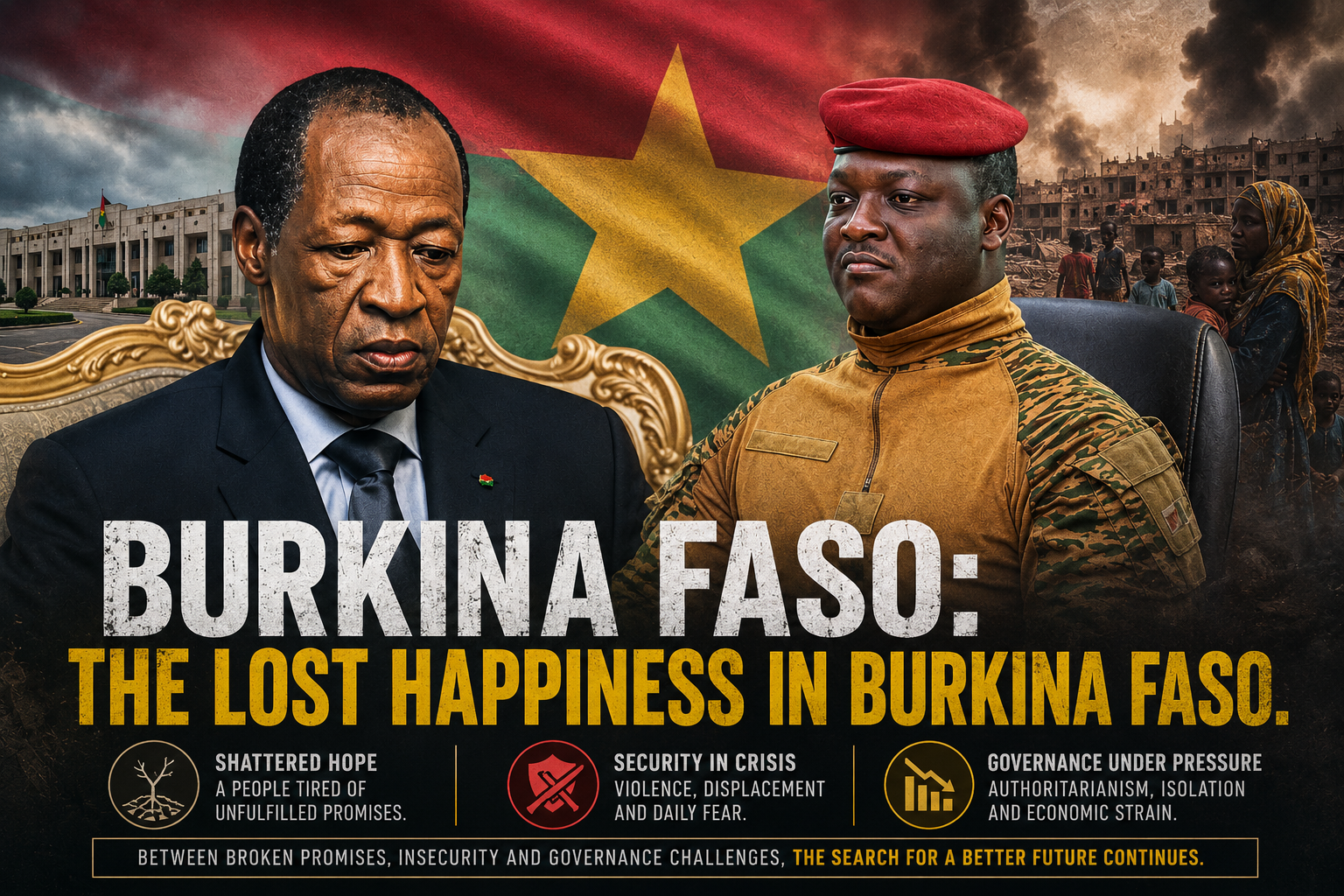
From stability to crisis: Burkina Faso’s lost security under traoré
The Burkina Faso of yesteryears was known less for its turmoil and more for its relative stability—a stability that, while flawed, provided a framework where daily life could unfold without constant fear. Under former President Blaise Compaoré, the country was not immune to criticism, particularly regarding the concentration of power and the suppression of political pluralism. For nearly three decades, his rule was marked by tensions, with opposition voices and international observers repeatedly questioning the democratic process.
Yet, in hindsight, one question looms large: what is the value of political discourse when citizens can no longer live without fear? This question now resonates deeply among Burkinabè citizens, who find themselves comparing the relative calm of the Compaoré era with the escalating insecurity under the current leadership of Captain Ibrahim Traoré.
a stark contrast in security
During Blaise Compaoré’s presidency, Burkina Faso was not a nation gripped by the constant dread of armed attacks. Villagers moved freely between regions, farmers cultivated their lands without hesitation, traders supplied markets without trepidation, and families traveled without the shadow of violence looming over every journey. The terrorism that would later engulf the Sahel had not yet plunged the country into a security crisis of such magnitude.
This is not to absolve the shortcomings of Compaoré’s regime. His governance was widely criticized for stifling political alternatives and consolidating power. However, it highlighted a fundamental truth: the primary duty of any state is to ensure the safety of its people. Without this cornerstone, other achievements—reforms, freedoms, and political promises—lose much of their significance.
unmet promises under traoré
When Captain Ibrahim Traoré assumed power following a military coup, Burkinabè citizens pinned their hopes on a decisive shift in security. The new authorities vowed to reclaim lost territory, strengthen national sovereignty, and confront armed groups with greater effectiveness. Yet, nearly three years into his leadership, these ambitions remain largely unfulfilled. Official statements frequently tout military successes, but on the ground, the reality tells a different story. Attacks persist in many regions, entire communities remain cut off from the rest of the country, and critical roadways remain perilous.
For a growing segment of the population, the disconnect between official narratives and lived reality is glaring. While victories are proclaimed, the daily lives of citizens continue to be disrupted by violence, isolation, and uncertainty. The most telling sign of this failure is not merely the persistence of attacks but the growing exodus of Burkinabè who feel safer outside their own country than within its borders.
the silent exodus: a damning verdict
Every week, families abandon their homes, farmlands, and livelihoods in search of safety. Some relocate to less volatile regions within Burkina Faso; others cross international borders, seeking refuge in neighboring countries. This mass displacement is a stark indictment of the state’s inability to fulfill its most basic obligation: protecting its people. When citizens are forced to choose between staying and fleeing, it reflects a profound loss of confidence in the government’s capacity to ensure their security.
Meanwhile, Captain Traoré’s administration continues to champion themes of sovereignty, a break from former international alliances, and patriotic mobilization. These messages resonate with a portion of the population, particularly those disillusioned by past dependencies. Yet sovereignty cannot be reduced to political rhetoric; it must be demonstrated through tangible actions—governing every inch of the territory and safeguarding the lives of those who reside within it.
the shifting tide of public opinion
An intriguing dynamic has emerged in the public discourse: the voices that once fiercely condemned Compaoré’s governance are now conspicuously silent when evaluating Traoré’s performance. This disparity fuels perceptions of a double standard, where some leaders face far harsher scrutiny than others. It raises uncomfortable questions about consistency in accountability and the criteria used to judge leadership.
The comparison between the Compaoré and Traoré eras is not an attempt to glorify the past or overlook its flaws. Instead, it underscores a simple but critical question: what is the ultimate priority of a state? For countless Burkinabè, the answer is clear. Before slogans, symbols, or declarations of sovereignty, a government is judged by its ability to protect its citizens.
The prosperity of a nation is not measured by the popularity of its leader or the boldness of its declarations. It is reflected in the peace of its villages, the safety of its roads, the functionality of its schools, the vibrancy of its markets, and the hope families have for their future. Until these fundamental conditions are met, the debate over Ibrahim Traoré’s leadership will remain unresolved. History, after all, remembers not the words spoken but the actions taken—and not the promises made but the security delivered.
