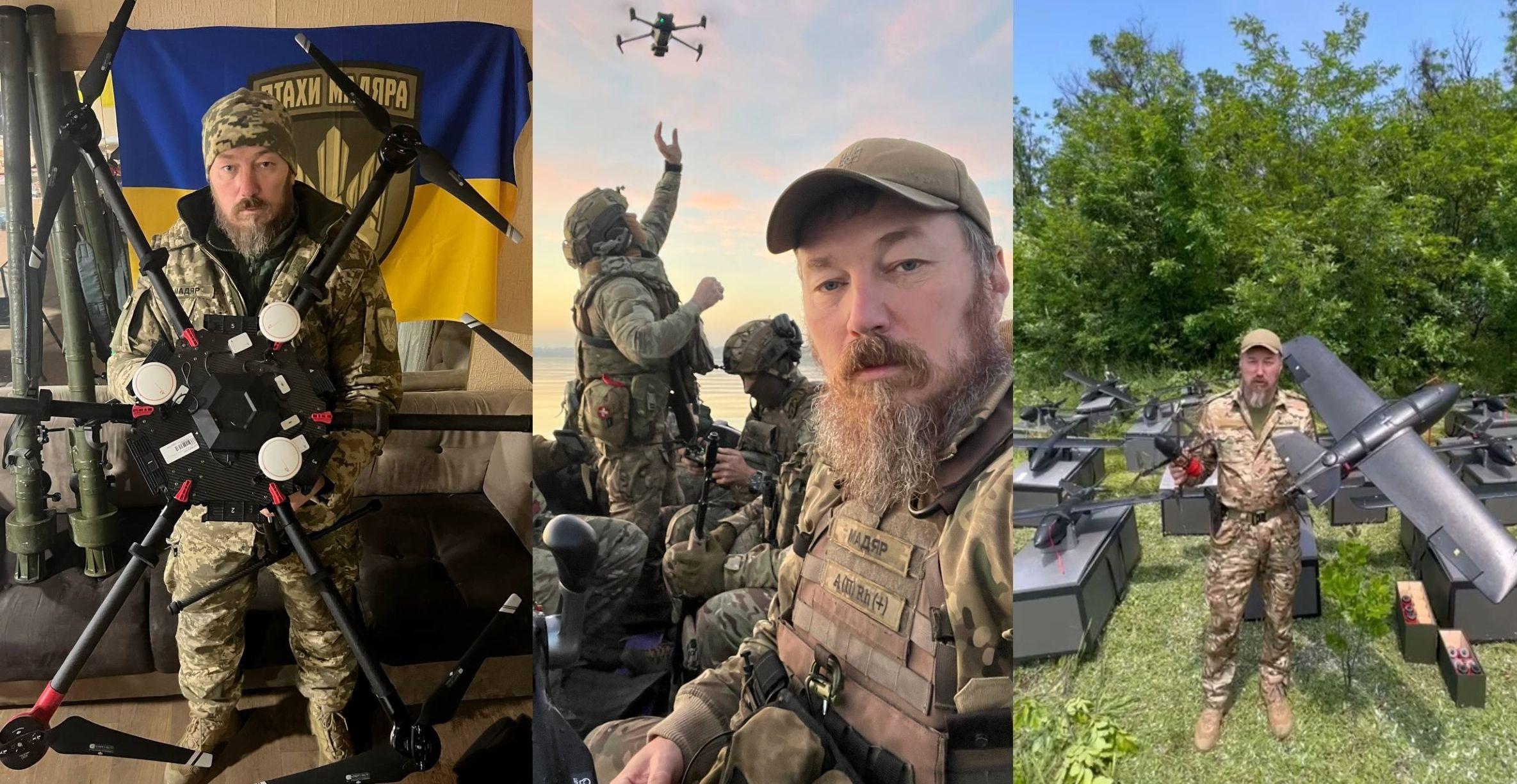
From grain trader to drone war architect: why Russia wants to silence Robert Brovdi
The making of Ukraine’s drone commander: how an entrepreneur became Moscow’s most-wanted man
Robert « Madyar » Brovdi’s transformation from international grain trader to the architect of Ukraine’s drone war is a story of rapid adaptation in a conflict where technology reshapes battlefield realities. The decision by Russian authorities to place a $20 million bounty on his head is not merely symbolic—it reflects the strategic weight Brovdi now carries in Kyiv’s modern warfare playbook.
From Oujhorod to the front lines: a civilian’s pivot to military innovation
Born in Oujhorod, a city in western Ukraine, Brovdi built his career in grain trading before Russia’s full-scale invasion in February 2022. When war arrived on Ukraine’s doorstep, he traded commerce for combat, joining the Ukrainian armed forces as a volunteer. By May 2022, he had founded « Madyar’s Birds », an elite drone unit specializing in reconnaissance and precision strikes. What began as a small tactical group evolved into the 414th Separate Brigade of Unmanned Attack Systems—a milestone in Ukraine’s military restructuring.
His approach was unconventional: instead of relying on expensive, high-end military hardware, he championed swarms of cost-effective drones capable of saturating the battlefield. This strategy would soon redefine Ukraine’s defensive and offensive capabilities, turning inexpensive tools into force multipliers.
Why drones became the new artillery: the silent revolution on the front
Drones in Ukraine are no longer just eyes in the sky—they are weapons of mass impact. From FPV drones targeting armored vehicles to medium-range systems striking deep behind enemy lines, these platforms have become central to both tactical operations and strategic disruption.
As of November 2025, Ukraine’s drone forces—officially accounting for around 2% of its armed personnel—were credited with inflicting 35% of all Russian personnel and equipment losses, according to Ukrainian military sources. While these figures are self-reported, they underscore the unprecedented role drones now play in shaping the war’s trajectory.
In Crimea, a key Russian logistical hub, Ukrainian drones have systematically targeted fuel depots, railway networks, air defense systems, and military bases. The goal is clear: sever Russia’s supply chains and degrade its operational freedom in the peninsula. A 2026 analysis by the Centre for Eastern Studies noted that drone strikes had created « corridors » enabling Ukrainian ground forces to advance more effectively toward Russian-held positions.
The unseen front: how drones redefined naval warfare in the Black Sea
While ground operations dominate headlines, Ukraine’s drone war extends beneath the waves. The development of naval drones has allowed Kyiv to challenge Russia’s dominance in the Black Sea despite its weaker conventional fleet. Research by the Royal United Services Institute (RUSI) highlights how unmanned surface vessels have neutralized Russian intelligence ships, patrol boats, and even flagship missile corvettes such as the Ivanovets, sunk in early 2024.
By mid-2026, « Madyar’s Birds » reportedly participated in over 180 drone strikes against maritime and coastal targets around Crimea, deploying FP-1 and FP-2 drones designed and manufactured in Ukraine. The objective: cripple Russia’s ability to reinforce and supply its forces from the peninsula, turning a once-secure rear area into a contested zone.
The industrial logic behind Ukraine’s drone dominance
At the core of Brovdi’s doctrine is scale. The strategy is simple on paper but revolutionary in practice: flood the battlefield with thousands of low-cost drones, train thousands of operators, and execute relentless strikes to degrade enemy infrastructure. The result? A military where ordinary citizens—trained in weeks, not years—can inflict damage once reserved for elite units.
By mid-2026, Ukrainian military reports claimed successful drone strikes on bridges, air defense radar systems, ammunition depots, and oil facilities across Crimea and occupied territories. Yet, despite these disruptions, the broader impact on Russia’s ground advance has remained limited—a sobering reminder that drones alone cannot decide a war’s outcome.
Nonetheless, this has not diminished the threat Brovdi poses to Moscow. For Russian military planners, his leadership represents a dangerous evolution: a civilian-turned-commander who has turned commercial drones into existential vulnerabilities for one of the world’s largest militaries.
The man behind the strategy: what makes Robert Brovdi a target worth $20 million?
At 48, Brovdi embodies a new kind of military leadership—one built on adaptability, innovation, and speed. His rise from grain trader to decorated war hero (awarded the title Hero of Ukraine in May 2025) mirrors Ukraine’s broader military transformation. He now leads the Unmanned Systems Forces, a dedicated branch of the armed forces tasked with scaling drone warfare across the entire theatre of operations.
To Moscow, Brovdi is not just a commander—he is a symbol of Ukraine’s asymmetric advantage. His unit’s ability to disrupt logistics, intelligence, and command structures has forced Russia to divert resources from the front line to protecting its rear areas. This shift in focus is a strategic cost that directly weakens Russian combat power elsewhere.
That is why, in September 2026, Russian authorities allegedly offered a $20 million reward for information leading to his capture or death. The bounty is not just a financial incentive—it is a psychological weapon aimed at demoralizing Ukrainian forces and deterring further innovation in drone warfare.
Beneath the surface: what the bounty reveals about modern warfare
The pursuit of Robert Brovdi is more than a personal manhunt—it is a window into how modern conflicts are waged. In an era where a single individual can orchestrate strategic disruption using off-the-shelf technology, the value of human capital has never been higher.
His story underscores a paradox of the 21st-century battlefield: the most effective weapons are no longer just tanks, ships, or missiles—they are ideas, networks, and operators like Brovdi. And as drones continue to patrol the skies over Ukraine, the sea lanes of the Black Sea, and the underground channels of Crimea, their designer remains a hunted man, his legacy as fragile as the machines he commands.
