
JNIM strikes multiple targets in Mopti amid escalating insecurity
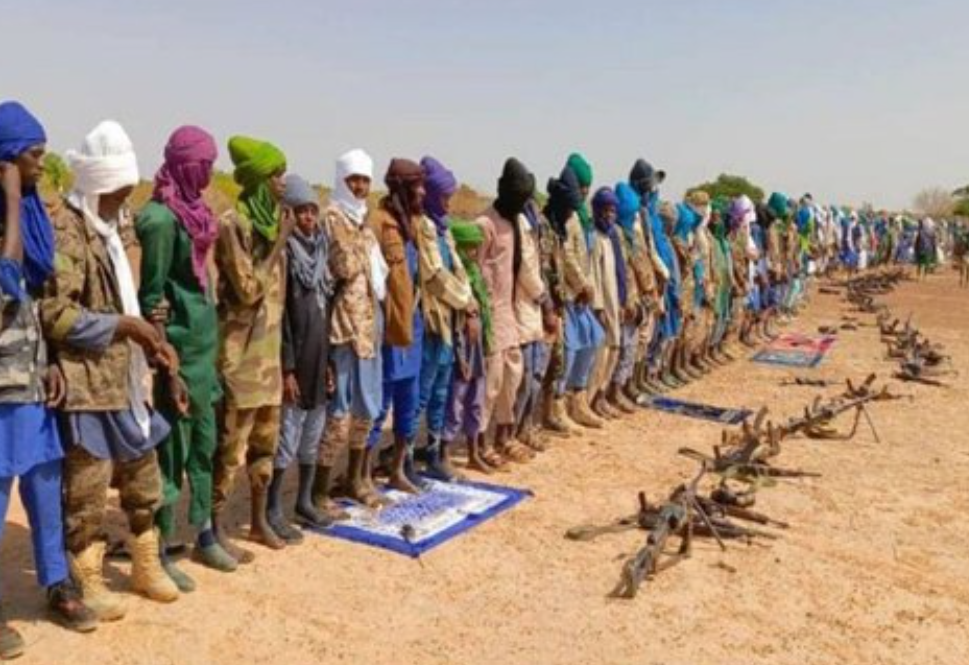
On July 19, the Group for the Support of Islam and Muslims (JNIM), an Al-Qaeda-affiliated faction, carried out a series of coordinated assaults across Mali’s Mopti region. The militants claimed responsibility for four simultaneous attacks targeting Malian armed forces, their Russian partners from Africa Corps, and local Dozo militias. This bold offensive underscores the group’s expanding operational reach and the persistent challenges facing Bamako’s security apparatus.
Coordinated assaults paralyze central Mali
The attacks unfolded in two distinct locations, revealing both tactical precision and indiscriminate targeting. In the Douentza district, JNIM deployed three improvised explosive devices (IEDs) against military convoys and patrols. The blasts struck a logistics convoy, a military truck, and a detachment of soldiers on motorcycles, killing and injuring personnel from both the Malian Armed Forces (FAMa) and Russian mercenaries operating under Africa Corps—formerly Wagner Group. Meanwhile, near Kansila, the militants launched a direct assault on Dozo militiamen, traditional hunters often deployed as auxiliary forces by the Malian government. Local reports indicate three Dozo fighters were killed in the ambush.
Five years of military rule fail to curb rising violence
Since Colonel Assimi Goïta’s seizure of power in 2019, the junta has pledged to restore state control and dismantle armed factions. Yet conflict monitoring data paints a starkly different picture. Violence has surged, with civilian casualties and military fatalities doubling or tripling in several provinces compared to pre-coup levels. The proliferation of armed groups—including Africa Corps and escalating intercommunal tensions—has fueled recruitment into jihadist ranks. Road ambushes, IED detonations, and daily firefights have become routine, crippling key supply routes and isolating vulnerable communities.
State retreat and humanitarian collapse in Mali’s heartland
The Malian government continues to claim territorial gains, such as the recapture of Kidal in late 2023. However, these victories offer little comfort to communities in the center and north, where government presence has all but vanished. Large swathes of the country now exist as ungoverned spaces, devoid of public services and under the de facto control of armed groups.
United Nations agencies report over 400,000 internally displaced persons (IDPs) across Mali. Fleeing jihadist brutality and military operations alike, families face acute food shortages as blockades and insecurity prevent humanitarian aid from reaching besieged towns. The absence of state protection has transformed a security crisis into a silent humanitarian disaster, with entire regions teetering on the brink of famine.
Africa Corps: Russia’s military gamble falls short
Facing a shortage of trained troops, Bamako turned to Moscow for support, first through Wagner Group and later via Africa Corps—a Russian Ministry of Defense-backed force. While Africa Corps has deployed hundreds of operatives, its impact has been underwhelming. Reports of civilian casualties and alleged human rights abuses—such as those linked to the Moura massacre—have eroded local trust. Far from stabilizing the region, these actions have driven civilians into the arms of insurgents, who position themselves as protectors. Militarily, Africa Corps has failed to curb jihadist advances, suffering consistent losses and lacking the manpower to conduct sustained counterinsurgency operations across Mali’s vast terrain.
Air power struggles amid technical and tactical setbacks
With ground forces stretched thin, the Malian regime invested heavily in aerial capabilities, purchasing attack helicopters and drones from Russia and Turkey. Initially effective, this strategy now faces critical flaws. Maintenance delays and the loss of several aircraft—including L-39 Albatros jets and Mi-24 helicopters—due to technical failures or enemy fire have degraded operational readiness. Worse still, insurgents have adapted. JNIM and other groups now operate in smaller, more mobile units, blending into civilian areas or exploiting dense vegetation to evade airstrikes. The result? Precision airstrikes have become rare, and collateral damage has risen.
Military-first approach leads to deadlock
The July 19 attacks in Mopti are not isolated incidents but symptoms of a systemic failure. Bamako’s all-military strategy has reached an impasse. By severing diplomatic ties with regional and Western partners, rejecting peace initiatives, and aligning with Russian mercenaries seemingly more interested in resource extraction than nation-building, the junta has isolated itself. Without a holistic approach that restores governance, reopens public services, and protects civilians, Mali risks further territorial fragmentation under the relentless pressure of a growing Sahelian jihadist movement.