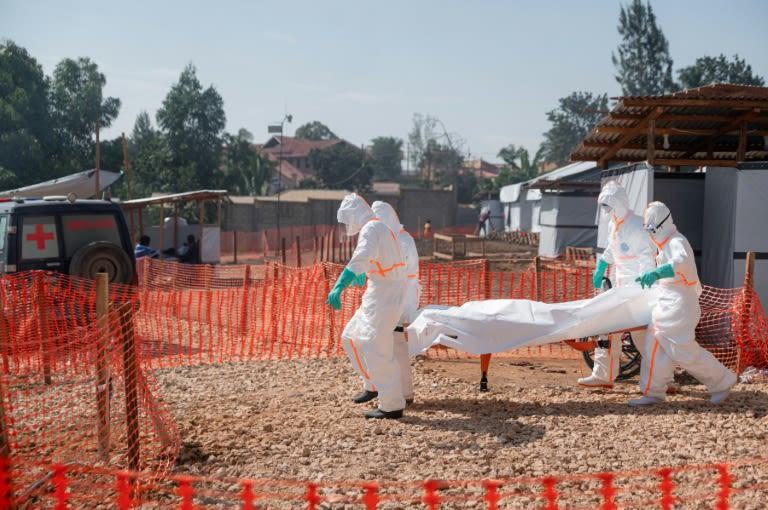
Ebola outbreak expands to sixth province in Democratic Republic of Congo
The deadly Ebola outbreak in the Democratic Republic of Congo (DRC) has now expanded to a sixth province in the northern region, intensifying fears of cross-border transmission to neighboring South Sudan. This surge marks the latest chapter in what health officials describe as one of the most devastating public health crises to strike the African nation.
The DRC declared its 17th Ebola outbreak on May 15—several weeks after initial cases emerged—making it the largest such epidemic in the country’s history. The previous deadliest wave, which lasted from 2018 to 2020, claimed nearly 2,300 lives out of 3,500 reported cases.
As of the most recent update, the current outbreak has already resulted in over 2,128 deaths from 4,566 confirmed cases—a staggering toll recorded just three months into the crisis. This represents a sharp contrast to the 2014 West African Ebola epidemic, where the same timeframe yielded only a fraction of those numbers: seven times fewer cases and five times fewer fatalities, according to health authorities.
Rapid Spread and Cross-Border Concerns
Until recently, the outbreak had been concentrated in five provinces: Ituri (bordering Uganda and South Sudan), North Kivu, South Kivu, Haut-Uélé, and Tshopo. However, health authorities confirmed a fatal case in Bas-Uélé—a province in northern DRC bordering the Central African Republic that had previously remained unaffected. The victim had traveled from the neighboring Haut-Uélé region, where Ebola cases were already documented.
The Africa Centres for Disease Control and Prevention (Africa CDC) has warned that the outbreak is progressing at an unprecedented global rate, raising alarms about the potential for further international spread. Humanitarian organization Mercy Corps has also sounded the alarm, noting that confirmed cases are now located just 35 kilometers from the South Sudan border along high-risk movement corridors.
Challenges Hampering Containment Efforts
Efforts to curb the spread face significant obstacles, including overburdened health services, limited access to clean water and sanitation, and widespread mistrust among affected communities. Security challenges further complicate response efforts, particularly in North Kivu and South Kivu, where active conflict between government forces and the M23 rebel group—allegedly backed by Rwanda—has divided regions and restricted access.
Despite the grim outlook, the World Health Organization (WHO) remains cautiously optimistic. Officials have expressed confidence that the tide of the epidemic can be turned within the next three months, though the path forward remains fraught with uncertainty.
Recent Developments and Hopeful Signs
On a positive note, the South Kivu province has not reported any new Ebola cases in over 42 days, prompting local health authorities to declare the outbreak contained. Earlier this month, a suspected Ebola-related death was reported on a boat traveling the Congo River toward Kinshasa. However, no additional cases were detected among passengers, who were permitted to disembark near the capital.
Ebola, a hemorrhagic fever transmitted through contact with bodily fluids, has claimed over 15,000 lives across Africa over the past five decades. With the current outbreak showing no signs of slowing, the global health community continues to monitor the situation closely, particularly in light of the looming threat of regional spillover.
