Eastern DRC peace process: the strategic logic behind Tshisekedi’s latest written overture to Gnassingbé
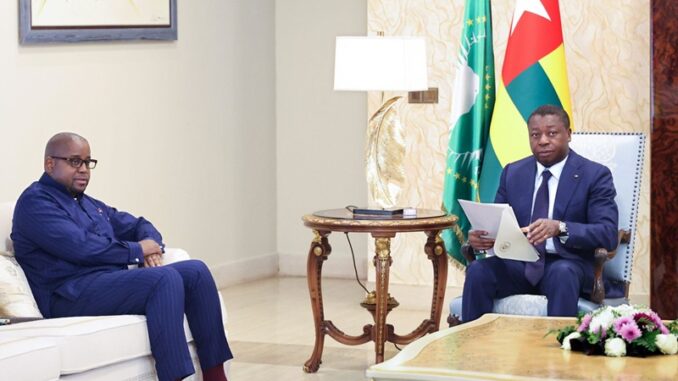
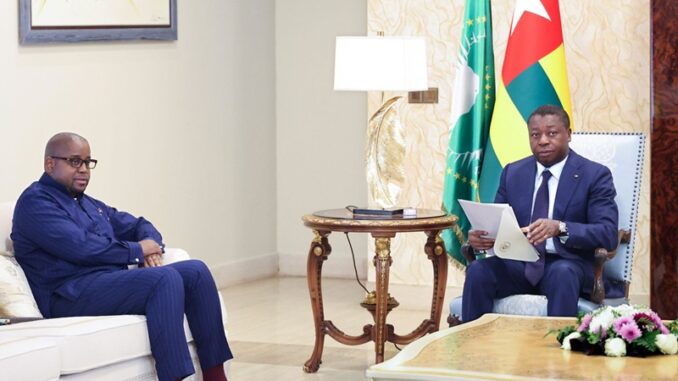
When Togolese President Faure Essozimna Gnassingbé received Floribert Anzuluni, the Democratic Republic of Congo’s Minister of Regional Integration, in Lomé on Tuesday, September 29, the meeting looked routine on the surface. In reality, it was the latest link in a chain of quiet diplomatic moves that reveal how Kinshasa is trying to keep a fragile peace process alive in eastern DRC.
Anzuluni arrived carrying a written message from Congolese President Félix-Antoine Tshisekedi Tshilombo. “We were sent to the President of the Council, Faure Essozimna Gnassingbé, to deliver a special message from the President of the Democratic Republic of Congo,” the minister explained, linking the letter directly to “the peace process in eastern DRC” — a file in which Gnassingbé is directly involved as the African Union’s mediator.
Why Kinshasa keeps going back to Lomé
The pattern is telling. This is not the first time Tshisekedi has put his thoughts in writing for Gnassingbé. The recurrence of these written messages suggests a deliberate strategy rather than a diplomatic formality. By formalising his positions in letters delivered by hand, the Congolese head of state ensures his commitment to the AU-led mediation is documented and visible — while keeping the substance of the discussions out of the public eye.
Behind the symbolism, the message also carried practical content. The Congolese envoys briefed Gnassingbé on the progress made by Kinshasa’s authorities in “demobilising movements in order to allow the consolidation of peace” in eastern DRC, a region that has seen renewed saber-rattling since late 2021.
The mediator’s mandate and the obstacles in his path
Gnassingbé has led the African Union mediation effort since April 2025, stepping in after the Angolan mediators. His mandate covers the security crisis in eastern DRC and the broader Great Lakes region — one of the most complex conflict theatres on the continent.
Securing a durable ceasefire and stabilising the Great Lakes over the long term remain the central challenges. These goals have eluded peacemakers for many months, even with the Doha process under Qatari mediation and the Washington track under American auspices running in parallel. The multiplicity of mediation channels is itself part of the problem: overlapping initiatives can dilute pressure on the armed groups and complicate coordination between sponsors.
What the latest letter signals
Read against that backdrop, Tshisekedi’s renewed written outreach to Gnassingbé points to a clear calculation. Kinshasa wants to keep the AU mediation relevant and active, even as other diplomatic tracks compete for influence. The demobilisation file, in particular, is where Congolese authorities believe progress can demonstrate good faith — and where they need regional backing to make it stick.
For now, the letter’s contents remain undisclosed. But the timing, the choice of envoy and the emphasis on demobilisation all suggest that the eastern DRC peace process is entering a phase where quiet, written diplomacy matters as much as public declarations.
