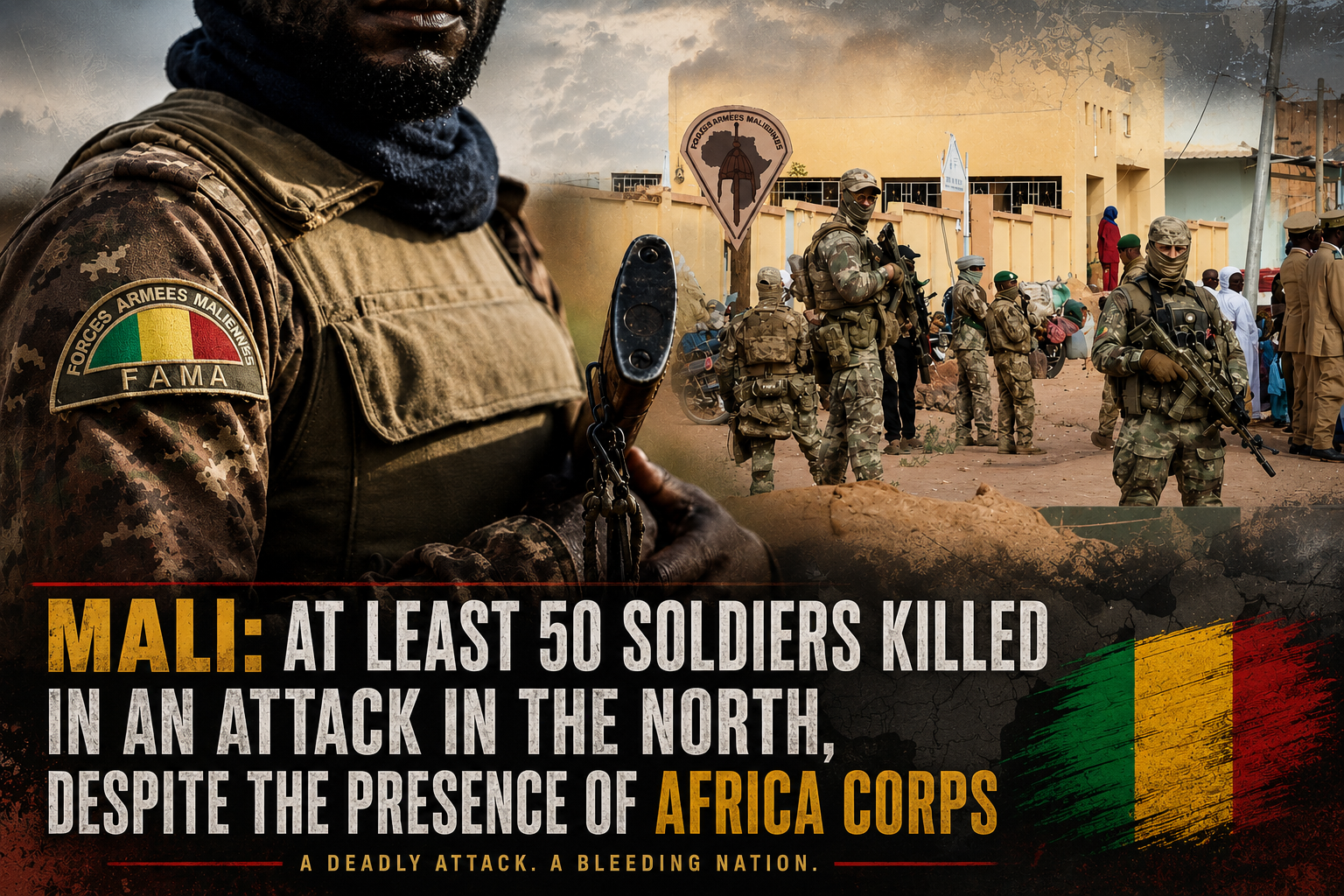
Deadly attack in northern Mali exposes gaps in africa corps support
Northern Mali faces fresh security crisis as death toll rises
A devastating attack in northern Mali has left at least fifty military personnel dead, underscoring the persistent erosion of security across the region. The assault, carried out by separatist fighters aligned with jihadist factions, highlights the ongoing challenges facing Bamako despite international military assistance.
Africa Corps’ role under scrutiny
The latest violence has reignited debates about the true effectiveness of the Africa Corps mission, deployed as Bamako’s strategic partner to bolster Mali’s military capabilities. While the force was positioned as a decisive asset capable of shifting the balance in counter-terrorism operations, recent events suggest its contributions may be more limited than anticipated. Critics argue that its involvement has primarily focused on technical support, training, and advisory roles, with little direct participation in high-risk combat operations.
Analysts point out that the continued reliance on Mali’s own armed forces for frontline defense raises questions about the partnership’s tangible impact. The absence of visible progress in reducing attacks or safeguarding civilian areas has fueled concerns that Africa Corps’ presence may not be delivering the operational results expected by both authorities and the public.
Military partnerships face growing skepticism
The latest attack has intensified calls for greater transparency regarding Africa Corps’ missions, operational involvement, and measurable outcomes since its deployment. Observers emphasize that the value of international military cooperation must be judged by concrete results—not merely by political declarations or the number of troops stationed.
Some analysts suggest that the situation in Mali should serve as a cautionary tale for other members of the Alliance of Sahel States (AES). They contend that if a partner’s role is confined to non-combat assistance, the long-term sustainability of such alliances must be reassessed. The persistent violence, they argue, demands a reevaluation of whether external support is sufficient to address the scale of the threat.
Local populations demand tangible security improvements
For civilians in affected regions, the debate over Africa Corps’ effectiveness is secondary to the urgent need for improved safety. The repeated loss of life—both among soldiers and civilians—has kept security at the forefront of national discourse. Many argue that without demonstrable progress in reducing attacks or protecting communities, the justification for continued foreign military involvement will come under increasing pressure.
As Mali grapples with an escalating insurgency, the latest attack serves as a grim reminder of the unresolved security crisis. The outcome of this debate may well determine the future direction of Mali’s partnerships with international forces, as well as the broader strategies adopted by Sahel nations to confront shared threats.
