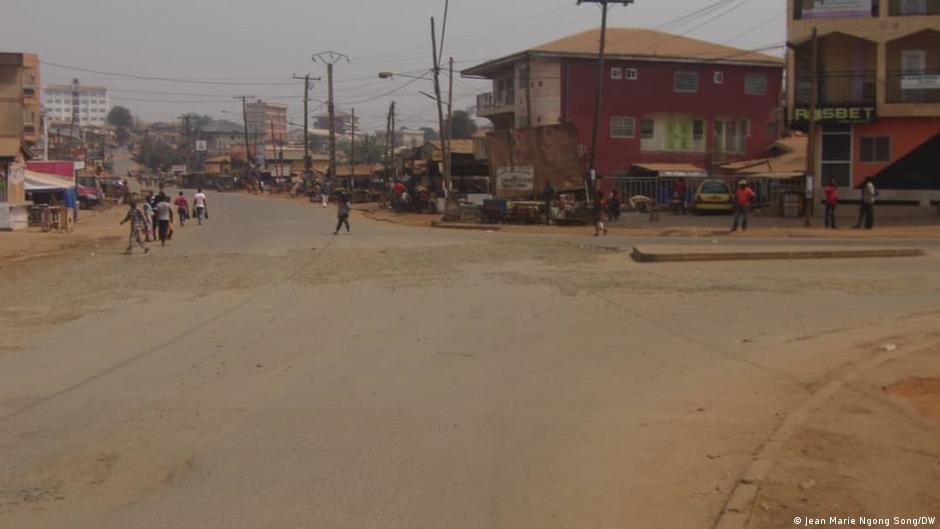
Crumbling road from Douala to Bafoussam threatens lives and commerce
An artery that once pulsed with economic life now stands as a lethal testament to neglect. The 250-kilometre stretch of National Road 5 that links Cameroon’s economic hub, Douala, to the highland city of Bafoussam—and onward to Bamenda in the Northwest’s Anglophone region—has deteriorated into a death trap, its crumbling surface claiming lives at an unprecedented rate.
Relentless truck traffic, chronic underinvestment in maintenance, and increasingly violent seasonal downpours have conspired to accelerate the road’s decay. The result is a once-smooth transit corridor now pocked with gaping potholes, washed-out asphalt, and sections of road that simply vanish into the mud.
Journey through a broken landscape
Boarding a Bafoussam-bound coach in Douala feels like stepping into a mechanical endurance trial. Torrential rains regularly flood the carriageway, stripping away tarmac, carving out sinkholes the size of bathtubs, and triggering sudden ground collapses that swallow entire lanes. Once a three-and-a-half-hour drive, the same route now demands ten gruelling hours of lurching progress, leaving passengers bruised and exhausted.
Motorists frequently abandon the main highway altogether, detouring onto side roads that add kilometres and cost money but spare axles. Alice, a passenger from Bafoussam, shared her ordeal: « We left at dawn and it’s now past midnight. The stretch through Haut-Nkam is totally impassable, so we zigzagged toward Yaoundé—even though that wasn’t our destination—before cutting back at Bagangté to rejoin the Douala road. We’re shattered, our bodies aching from every jolt and swerve. »
When the road claims its victims
The region’s jagged topography and waterlogged soils make it uniquely vulnerable. Heavy rains loosen the earth, triggering lethal rockslides; the deadly cliff collapse at Dschang in November 2024—when two buses and several cars were engulfed—bore grim witness to the route’s fragility.
Locals have branded the Douala–Yaoundé–Bafoussam triangle the « Triangle of Death,
estimating nearly one hundred fatalities each month on this single corridor. Travellers arriving at their destinations often do so in a state of physical and emotional relief. One anonymous commuter put it plainly: « I rolled into Bafoussam at 2 a.m., absolutely wrecked. If operators rerouted via National Road 3 to Yaoundé and then took National Road 6, even at double the fare, it would still be safer than risking another ten or eleven hours on the wreck that is National Road 5—and ending up in pieces. »
Promises versus reality
In response to the crisis, authorities have earmarked roughly 180 billion CFA francs for rehabilitation. Yet on the ground, frustration is boiling over. Transport operator Mika Séma questions why drivers should continue paying tolls on a road that has all but reverted to a dirt track: « Tolls are supposed to fund upkeep. When there’s no road to keep up, why keep charging? Cameroonians deserve decisive action—real repairs, not empty announcements. »
With the rainy season growing ever more destructive and no large-scale construction yet visible, the Douala–Bafoussam artery threatens to keep feeding the grim toll of Cameroon’s road fatalities.
