Cotonou revamps food safety with licensed street vendors and port canteen
Key challenge
How can Cotonou’s port-area street food vendors maintain their livelihoods while ensuring safety and hygiene for both customers and vendors?
Best practice
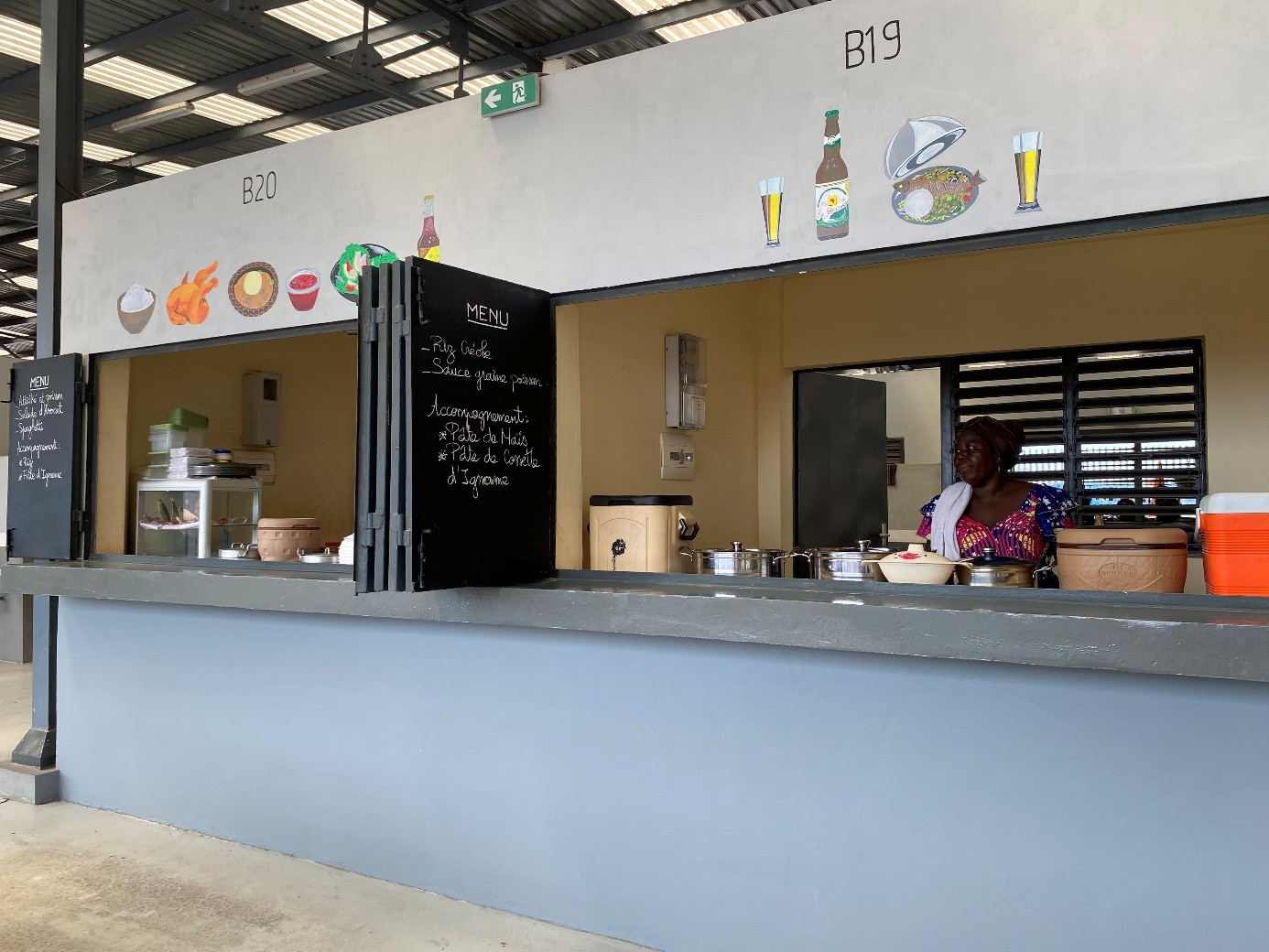
Recognizing the hazardous working conditions along the port access road and the urgent need for improved food hygiene standards, the Autonomous Port of Cotonou (PAC) launched an inclusive consultation process. This initiative resulted in the construction of modern, weatherproof stalls equipped with running water and electricity. The project underscores the port authority’s commitment to social responsibility and environmental stewardship for nearby communities.
Success story
As part of its long-term social and environmental strategy, the Autonomous Port of Cotonou has invested in modernizing its operations and supporting local communities. In 2024, the port opened a 3,000m² covered marketplace featuring fully equipped food stalls with kitchens, water, and electricity access. Previously, 98 female vendors operated roadside, exposed to traffic and harsh weather, unable to prepare meals on-site or maintain proper hygiene. Lacking sanitation facilities, they sold food in less than ideal conditions.
Today, these vendors operate from clean, secure stalls that meet hygiene standards, serving both port employees and local residents. The new setup allows them to store supplies safely and expand their customer base. This initiative, costing over 600 million FCFA, involved extensive stakeholder consultations. Early results show a 20% sales increase, and ongoing data collection will track additional benefits such as reduced incidents and waste. The project has also fostered a more inclusive environment, attracting a diverse clientele including senior staff and dockworkers.
Photo gallery
