Cotonou port’s transformation: how a logistics hub is rewriting West Africa’s trade narrative
Cotonou port’s strategic pivot: beyond hinterland dependence
The Port of Cotonou has long been viewed as primarily dependent on trade flows to its landlocked neighbors. However, recent performance data reveals a deliberate and transformative strategic shift. While regional corridors face persistent disruptions, the Béninois port is aggressively diversifying its traffic sources, expanding its operational scope, and redefining its role within the Gulf of Guinea’s logistics network.
Traffic surge and new growth engines
Between 2024 and 2025, total tonnage at the Port of Cotonou surged from 9.6 million to 14.7 million, a 52% increase. This growth was mirrored by a 74.8% rise in exports and a dramatic 312.6% leap in transshipment activities. The number of vessels calling at the port rose from 725 to 841 over the same period. These figures take on added significance when viewed against the backdrop of regional challenges, including the closure of the Bénin-Niger border, which could have crippled a port dependent on a single hinterland corridor.
From transit point to redistribution nexus
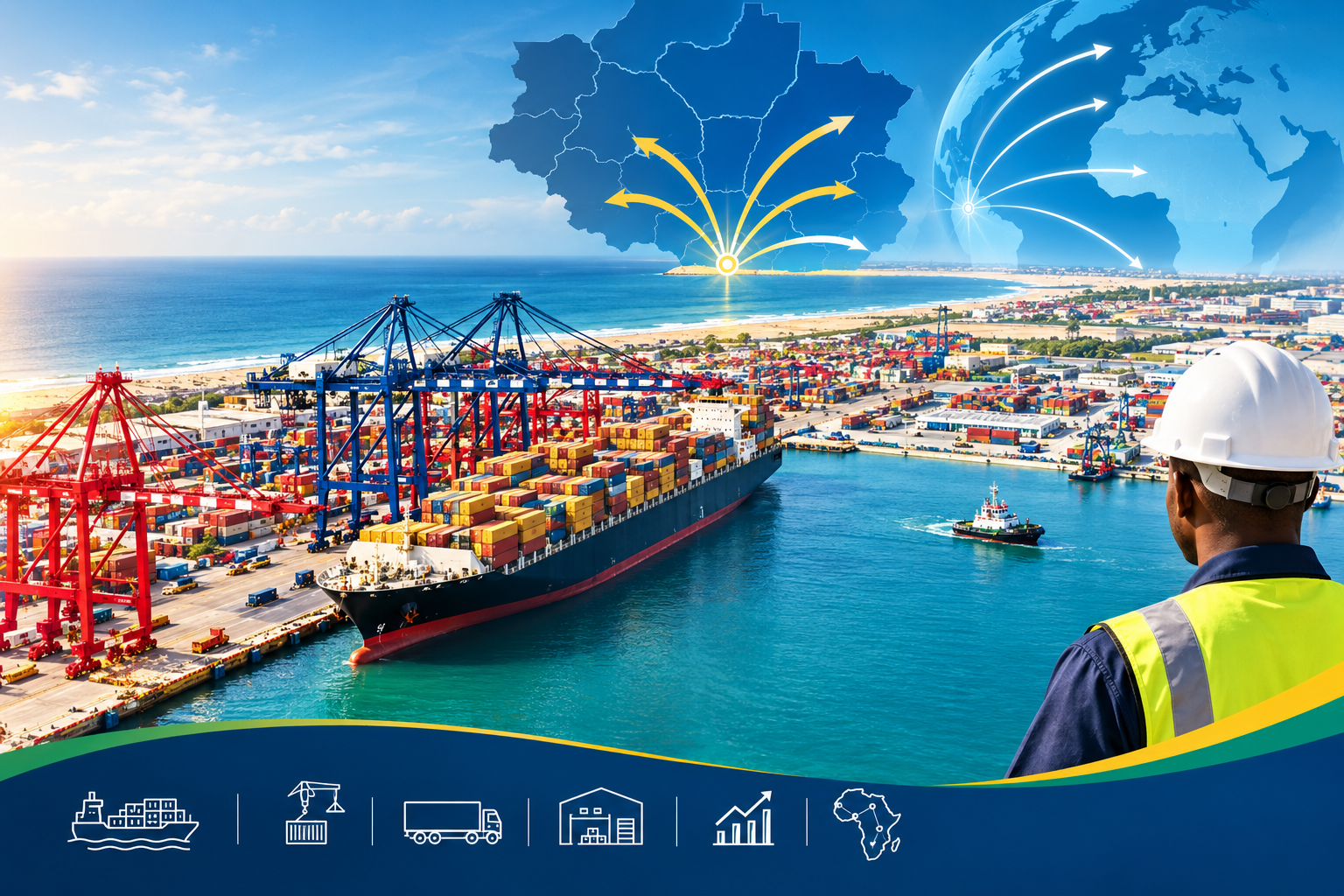
The explosive growth in transshipment jumping 312.6% in 2025 and continuing upward in early 2026 signals a fundamental strategic recalibration. Cotonou is no longer merely a gateway for goods destined for Bénin or neighboring landlocked states. It is positioning itself as a redistribution hub, facilitating the movement of cargo across a broader regional network. During the first half of 2026, transshipment volumes reached approximately 516,558 tons, more than double the 204,928 tons recorded in the same period a year earlier a 152.1% increase.
This shift reflects a deliberate move to reduce reliance on the Niger corridor, which has been affected by political and diplomatic tensions. The port’s strategy now emphasizes diversification, aiming to capture new trade flows that bypass traditional hinterland routes. By expanding its transshipment capacity, Cotonou is positioning itself to serve as a vital node in West Africa’s logistics chains, connecting markets from Nigeria to the broader Sahel and coastal nations.
The resilience factor: infrastructure and modernization
Despite regional disruptions, the Port of Cotonou has demonstrated remarkable resilience, thanks to a sustained program of infrastructure modernization. Key initiatives include the development of Terminal 5, the expansion of the port basin, modernization of quays, and improved access routes. These investments have been supported by financing from the African Development Bank, which contributed approximately 60 billion FCFA toward Terminal 5, centralized access systems, and the Zongo parking facility measures designed to enhance fluidity and operational efficiency.
Digitization has also played a critical role. Streamlined customs procedures, digital documentation, and improved intermodal connectivity have reduced processing times and increased the port’s attractiveness to international shipping lines. According to the World Bank’s Container Port Performance Index, Cotonou climbed from 402nd place among 405 ports in 2023 to 303rd in 2024 a gain of nearly 100 positions, signaling improved competitiveness and operational reliability.
A multi-vector strategy: exports, GDIZ, and economic integration
Another key dimension of the port’s transformation is the surge in Béninois exports. In the first half of 2026, export tonnage reached 2.87 million, up 33.3% from 2.16 million in the same period in 2025. This growth is closely tied to the expansion of industrial production and the export of Nigerian crude oil via Cotonou. It reflects a broader shift in Bénin’s economic model one that is moving away from re-export trade toward higher-value domestic production and export of processed goods.
The development of the Glo-Djigbé Industrial Zone (GDIZ) has been instrumental in this transition. Increased production capacity and the search for new international markets have given the Port of Cotonou a dual role: facilitating imports and supporting the country’s industrialization agenda. As Bénin strengthens its manufacturing base, the port becomes not just a transit point but a strategic enabler of national economic transformation.
Looking ahead: challenges and opportunities
Despite these advances, significant challenges remain. Ensuring the fluidity of regional corridors, reducing logistics costs, enhancing security, and accelerating digital adoption are all priorities. Re-engaging with traditional hinterland markets, particularly in Niger and Burkina Faso, will require sustained diplomatic and logistical efforts. However, the trajectory is clear: the Port of Cotonou is no longer content to maintain its historical role it is actively pursuing a new one.
The combination of rising traffic volumes, expanded transshipment, growing exports, and major infrastructure upgrades is redrawing the map of West African trade flows. For Bénin, this is not just about port performance it is about securing a long-term competitive advantage, integrating more deeply into regional value chains, and positioning Cotonou as a gateway that connects West Africa to global markets.
The bigger picture: Cotonou’s bid for regional leadership
The Port of Cotonou’s transformation is part of a broader regional dynamic. With Lagos’ Apapa port facing congestion and Abidjan’s port expanding capacity, Cotonou is positioning itself as a complementary hub capable of handling overflow, serving landlocked markets, and offering alternative routing options. This strategic repositioning comes at a time when West African trade is being reshaped by geopolitical tensions, security concerns, and the need for supply chain diversification.
If successful, Cotonou’s strategy could make it not just a major port, but a vital logistics ecosystem that supports trade resilience, economic integration, and industrial growth across the subregion. The question is no longer whether Cotonou can keep pace it is whether it can convert its current momentum into lasting regional leadership.
