Côte d’ivoire’s bold vision: balancing growth with justice
Côte d’Ivoire’s bold vision: balancing growth with justice
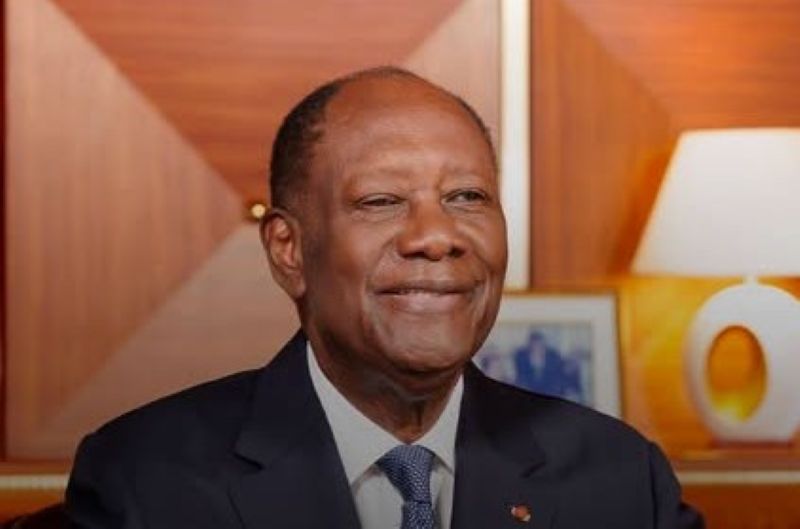
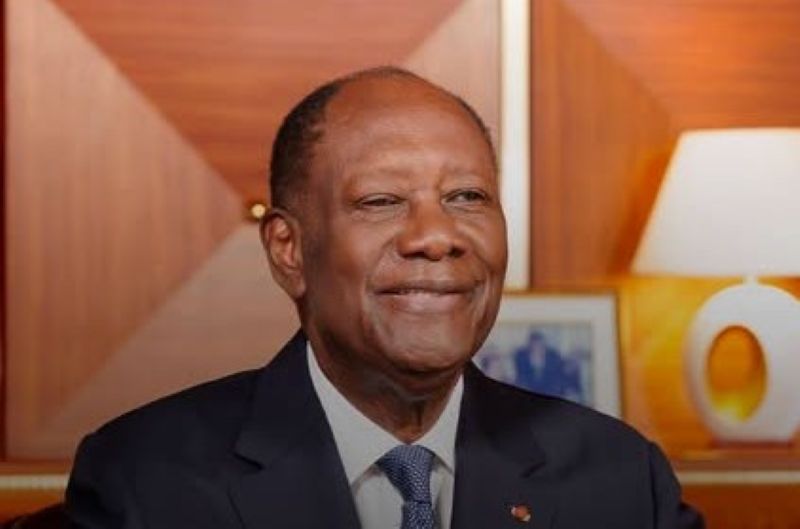
Abidjan, August 7, 2026 — As Côte d’Ivoire marks 66 years of independence, President Alassane Dramane Ouattara is setting the stage for a transformative chapter in the nation’s history. His address to the nation transcends traditional economic assessments or security assurances, instead weaving together two critical imperatives: accelerating the country’s development while reinforcing the foundations of justice and rule of law.
At the heart of this vision lies a fundamental question: How can Côte d’Ivoire leverage its economic momentum and political stability to create shared prosperity for all its citizens?
From ambition to action: the « great Côte d’Ivoire » initiative
The president’s call for a « Great Côte d’Ivoire » is more than a slogan—it’s a rallying cry for collective action. He has invited institutions, the private sector, political parties, civil society, traditional authorities, religious leaders, and the diaspora to contribute to this national endeavor. This framing underscores a shift from top-down governance to a collaborative effort that unites the country across divides.
The timing of this push is strategic. Côte d’Ivoire’s economy is on an upward trajectory, buoyed by significant investments in infrastructure, transportation, energy, and port capacity. The 2026–2030 National Development Plan serves as the blueprint for this next phase, with the explicit goal of propelling the nation to new heights of prosperity. Yet, success cannot be measured solely by skyscrapers in Abidjan or highways connecting regions. True progress will be defined by the country’s ability to bridge gaps between regions, empower its youth, and translate growth into tangible improvements in daily life.
In essence, the « Great Côte d’Ivoire » will only be as strong as the social cohesion it fosters.
Building with justice: no shortcuts to development
The president’s televised address on Thursday evening highlighted a dual commitment: accelerating urban modernization while ensuring that all actions remain within the bounds of the law. This balance is crucial. While rapid development and disaster prevention—such as addressing flood risks from heavy rains—may justify urgent measures, they cannot be used as justification for bypassing due process.
Reports of irregular operations in areas like Koumassi have prompted investigations, with the president emphasizing accountability and legal consequences for any violations. This stance sends a clear message: Côte d’Ivoire’s growth must not come at the expense of justice. Modernization can be bold and swift, but it must never be arbitrary.
The president’s approach redefines the relationship between progress and governance. Development and justice are not opposing forces; they are complementary pillars that must stand together.
The ultimate measure: coherence
Côte d’Ivoire stands at a pivotal moment where economic ambition must align with social equity and institutional integrity. The president’s vision challenges the nation to prove that rapid development, regional leadership, and citizen protection can coexist without compromise.
For the « Great Côte d’Ivoire » to succeed, it must resonate across all segments of society. Every Ivorian must feel they have a stake in the country’s future. Similarly, the rule of law must be more than a legal framework—it must be a lived reality, even in the execution of state-led projects.
President Ouattara’s message is deceptively simple: Build faster, secure more, modernize the nation—but never lose sight of the people for whom this transformation is intended. The « Great Côte d’Ivoire » will not be judged by its infrastructure alone, but by its ability to harmonize public power, justice, and inclusion. It is this coherence—far more than political rhetoric—that will determine whether this new chapter represents a true leap forward for the nation.
