CNSA’s bold move: easing tensions ahead of Congo’s inclusive talks
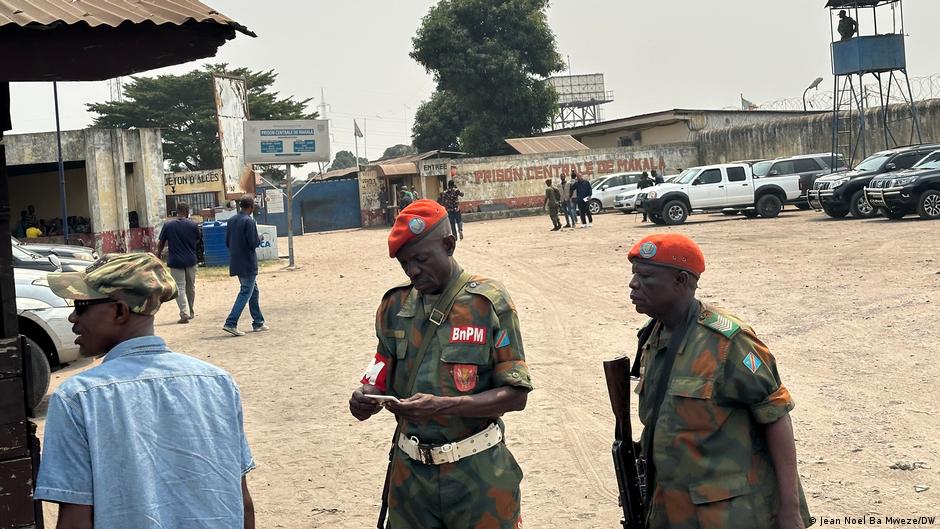
In the Democratic Republic of Congo, the National Council for Monitoring the Agreement and Electoral Process (CNSA) has launched a comprehensive review of political and opinion prisoners—a move seen as a critical step toward fostering an environment conducive to an upcoming inclusive national dialogue.
The initiative, which aims to identify eligible individuals for possible amnesty, is being closely watched as a potential turning point in the country’s political landscape. The CNSA has emphasized that justice must be blind, stating that the rule of law applies equally to all, regardless of affiliation.
Uniting behind the principle of justice
The CNSA’s president, Joseph Olenghankoy, has underscored the urgency of addressing legal irregularities in detention cases. “Within 48 hours of arrest, individuals must be brought before a judge. Yet reports indicate some have been held for six months without due process,” he noted. “This is a clear violation of rights. Justice is not selective—it must prevail for all.”
The Council is compiling a detailed list of detainees, including high-profile figures, to present to President Félix Tshisekedi before the dialogue begins. Among those whose names are circulating are Aubin Minaku and Emmanuel Ramazani Shadary, prominent members of the PPRD, the party of former President Joseph Kabila.
PPRD welcomes the initiative
The PPRD has publicly endorsed the CNSA’s efforts, calling for the release of its detained leaders. “If this initiative leads to the freedom of our comrades—Aubin Minaku, Emmanuel Ramazani Shadary, Dunia Kilanga, Parole Kamizelo, and others—it deserves our full support,” stated Lucain Kasongo, a senior PPRD cadre.
Human rights organizations have also weighed in, with Justicia ASBL recently submitting a list of over 100 individuals it considers political prisoners to the Minister of Justice.
Death sentences complicate the path to dialogue
The issue of death sentences looms large over the CNSA’s mission. Former President Joseph Kabila and Corneille Nangaa, coordinator of the AFC/M23 rebellion, are among those facing capital punishment. Timothée Mbuya, coordinator of Justicia ASBL, argues that annulling these sentences would be a vital confidence-building measure. “Political decisions must be made to overturn these convictions. This is essential for creating the trust needed for a successful inclusive dialogue,” he asserted.
As calls for national reconciliation grow louder, all eyes are on the CNSA’s next steps. Will its actions translate into tangible easing of tensions—or will the road to dialogue remain fraught with unresolved legal battles?
