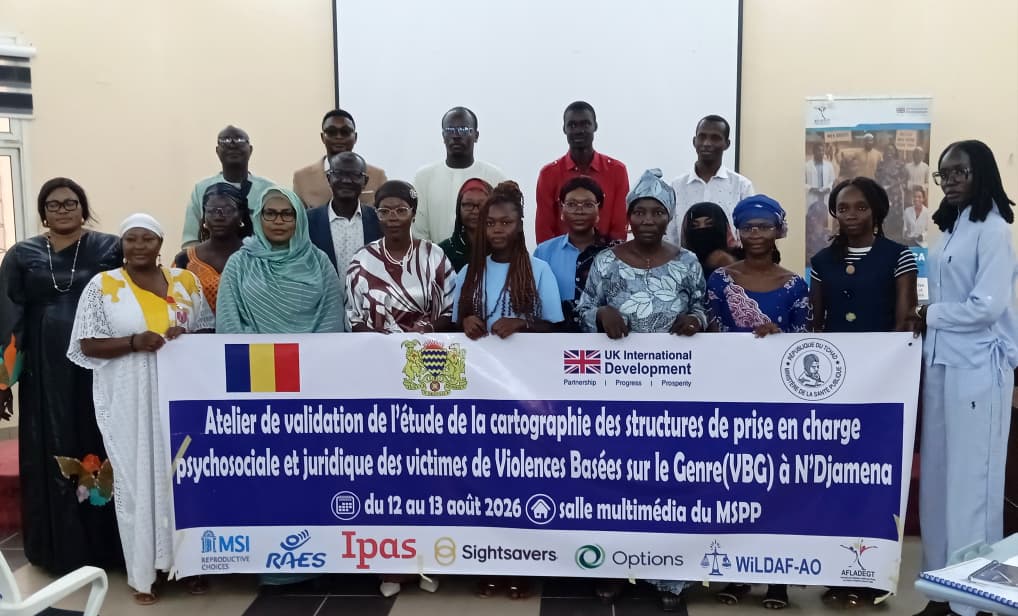
Chad tackles gender-based violence with service mapping validation in N’Djamena
The Association of Leading Feminists for Gender Rights and Equity in Chad (AFLADEGT) is hosting a two-day validation workshop in N’Djamena from August 12 to 13, 2026. The event will focus on reviewing the study mapping legal and psychosocial assistance services for gender-based violence (GBV) survivors. Developed under the WISH 2-WACA project, this mapping aims to enhance victim referrals and strengthen coordination among support services.
The workshop brings together representatives from relevant ministries, civil society organizations, technical and financial partners, and specialized agencies. Participants will evaluate and refine the findings of the GBV service mapping to ensure accuracy and relevance.
During the opening session, AFLADEGT President Wouténé Mélissa emphasized the critical role of this tool in improving survivors’ access to available services. She stressed that the mapping should not be viewed as just another document but as a vital instrument for guidance, coordination, and advocacy with policymakers.
« Survivors need to know where to turn for help, which services to access, and how to receive appropriate care without delay, » she stated.
The study highlights significant gaps in service coverage, victim awareness, referral mechanisms, and resource availability. Wouténé Mélissa believes these findings should lead to actionable recommendations to bolster existing services, streamline referrals, and mobilize additional resources.
The mapping also reveals disparities in service distribution across N’Djamena’s districts, a lack of secure spaces for confidential victim reception, and urgent needs for human and material resources.
Dr. Kadidja Amadaye Abgrene, Director of Reproductive Health, underscored the severe impact of GBV on human dignity and fundamental rights. She acknowledged government efforts, including legal framework strengthening and the establishment of integrated multisectoral service centers. However, she noted persistent challenges, particularly in legal and judicial assistance.
According to the data presented, fewer than 11% of identified survivors receive effective legal support. Key issues include the prevalence of out-of-court settlements, insufficient awareness among survivors, and weak coordinated referral systems.
For Dr. Kadidja Amadaye Abgrene, the study’s results must now serve as a practical guide to improve survivor referrals, enhance cross-sector coordination, and inform public policy decisions.
