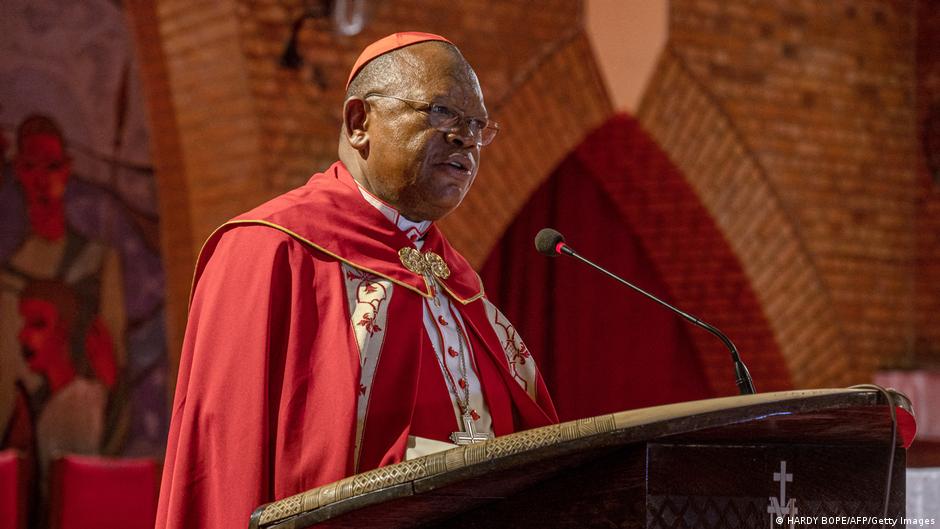
Cardinal Ambongo urges peace over constitutional reform in DRC
Cardinal Ambongo urges peace over constitutional reform in DRC
In a solemn address marking the 66th anniversary of independence, Cardinal Fridolin Ambongo of Kinshasa delivered a sobering assessment of the Democratic Republic of the Congo’s current crisis. Speaking at Notre-Dame du Congo Cathedral, he highlighted persistent insecurity, armed conflict, foreign military presence, rampant poverty, and the resurgence of Ebola. Against this backdrop, he firmly rejected the notion that constitutional reform should take precedence.
“Do we truly believe that altering the Constitution—often touted as a solution to these profound challenges—would effectively address the suffering of the Congolese people? With the nation facing such grave circumstances, we see neither the necessity nor the urgency for constitutional changes. The Democratic Republic of the Congo’s top priority must be peace. This is why the National Episcopal Conference of the Congo continues to advocate for and commit to fostering an inclusive, nationwide dialogue,” Ambongo declared.
Opposition unites against constitutional reform
His stance resonates with the Laity Coordination Committee, the National Episcopal Conference of the Congo (Cenco), and the Church of Christ in Congo, all of which oppose constitutional reform as either necessary or timely in the current climate.
Civil society mobilizes for July 8 protests
Marie-Ange Mushobekwa, a former minister and leading figure in the Common Front for Congo (FCC)—the political platform of former President Joseph Kabila—reiterated her coalition’s opposition to any modification of Article 220 of the Constitution.
“Article 220 is non-negotiable. The Constitution clearly states that every elected president is entitled to a single renewable term. Once two terms are completed, power must be handed over to the successor chosen by the Congolese people. All political parties and platforms within the FCC will now participate in demonstrations to block any constitutional amendments. We will take to the streets on July 8 to defend and protect our Constitution,” Mushobekwa affirmed.
Civil society voices echo this sentiment. Plamédie Bamata, a leader of the Patriotism movement, has called on the youth of the DRC to join the opposition’s planned July 8 march.
“We are determined to put an end to this third-term project, for which Congolese have already shed too much blood in defense of this Constitution. We will march to the Palais de la Nation on July 8 to voice our discontent and reject any attempt to destabilize our nation,” Bamata vowed.
Meanwhile, the government has forwarded a bill to the presidency that outlines the legal framework for a potential constitutional referendum. While authorities frame it as a tool to regulate the referendum process, opposition groups warn it could pave the way for fundamental constitutional changes.
