Can France’s student protests spiral out of control before the government’s emergency response?
As France’s ongoing student-led protests against recent education reforms reached a critical threshold on October 1st, the nation stood at a crossroads: would the escalation of urban violence force the government into desperate measures? That question took center stage Thursday afternoon as Prime Minister Sébastien Lecornu convened an emergency interministerial crisis cell at the Ministry of the Interior—a move usually reserved for natural disasters or national security threats.
From peaceful protest to urban warfare: how Thursday turned into a day of reckoning
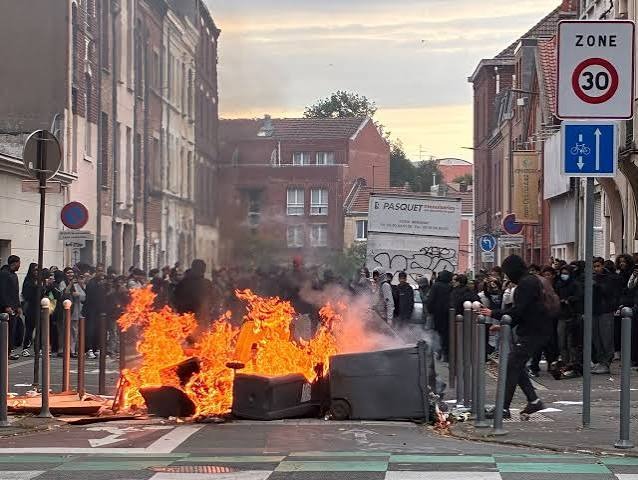
The unrest began two weeks ago as a series of coordinated student walkouts, but by mid-morning on October 1st, the movement had morphed into a coordinated campaign of disruption and destruction across Paris, Lyon, Marseille, Nantes, and Lille. What started as symbolic sit-ins outside high schools quickly escalated into coordinated attacks on public infrastructure, with barricades erected from burning trash containers and torn-up street furniture blocking major arteries.
In Paris, the area around Lycée Voltaire in the 11th arrondissement became a flashpoint. Flash mobs of students were joined by unaffiliated groups, and within hours, flames engulfed the entrance of a prominent Lyon high school after fireworks were detonated inside. Firefighters, supported by elite riot units, were forced to intervene under heavy projectile fire as the blaze spread to nearby structures.
By afternoon, the Ministry of National Education tallied over fifty schools severely damaged—windows shattered, walls spray-painted with political slogans, and educational materials destroyed. The toll on public property was mounting, and with it, the state’s ability to maintain order.
Public transit paralyzed: when daily life grinds to a halt
The violence spilled into city centers, turning streets into battlegrounds. Police forces, deployed en masse, faced volleys of bricks, paving stones, and even improvised mortars. In response, riot police conducted repeated charges, deployed tear gas, and used water cannons in an attempt to disperse crowds. Dozens of protesters and officers sustained light injuries, and over 160 arrests were made nationwide.
The ripple effect was immediate. Public transit systems in Marseille, Nantes, and Bordeaux were shut down entirely by midday. Bus and tram routes ground to a halt, stranding hundreds of thousands of commuters and leaving workers scrambling for alternative transport. The paralysis of urban mobility exposed the fragility of France’s infrastructure under pressure.
Lecornu takes command: a crisis cell convenes amid political turmoil
With the situation spiraling beyond control, Prime Minister Sébastien Lecornu took personal command of an emergency crisis cell at the Ministry of the Interior, joined by key ministers including Education and Transport. The cell, typically activated only for catastrophic events, signaled the gravity of the crisis.
In a brief address from Matignon Palace, Lecornu condemned the violence unequivocally: “Nothing justifies the destruction of our schools or the endangerment of law enforcement. Protest is a democratic right—but vandalism and disorder have no place in the Republic.” He pledged a “firm and absolute” response from the state.
The political storm: opposition demands crackdown, left denounces overreach
The crisis triggered a political firestorm. Right-wing and far-right lawmakers accused the government of “security surrender” and called for targeted curfews and bans on gatherings near schools. Meanwhile, left-wing figures acknowledged the protests’ legitimacy but blamed government “tone deafness” toward youth discontent and condemned the use of excessive force by police.
Union leaders and parent associations, including the FCPE, issued urgent statements distancing themselves from the violence. “What we’re seeing today is not the student movement,” said one inter-union spokesperson. “Our struggle is political and social—not about destroying the places where we learn.”
What comes next: anticipation of a Friday showdown
As night fell, tensions remained high in working-class districts of Paris and major provincial cities. With schools shuttered and public anger palpable, all eyes were on Lecornu’s crisis cell. Analysts anticipate immediate security reinforcements nationwide, with a massive deployment of riot police expected by dawn.
The question now is whether this escalation can be contained—or if France is entering a new phase of prolonged civil unrest. One thing is clear: the events of October 1st have irrevocably altered the landscape of the protest movement—and the government’s response will shape the nation’s future.
