
Absence of a 93-year-old leader sparks governance crisis
The Cameroonian nation finds itself in uncharted waters as President Paul Biya, the world’s longest-serving leader, remains unaccounted for after 57 days abroad. His departure on June 7, 2026, for what was officially described as a “brief private stay in Europe,” has triggered unprecedented turbulence within the country’s military and political spheres.
Military reshuffle raises ethnic succession concerns
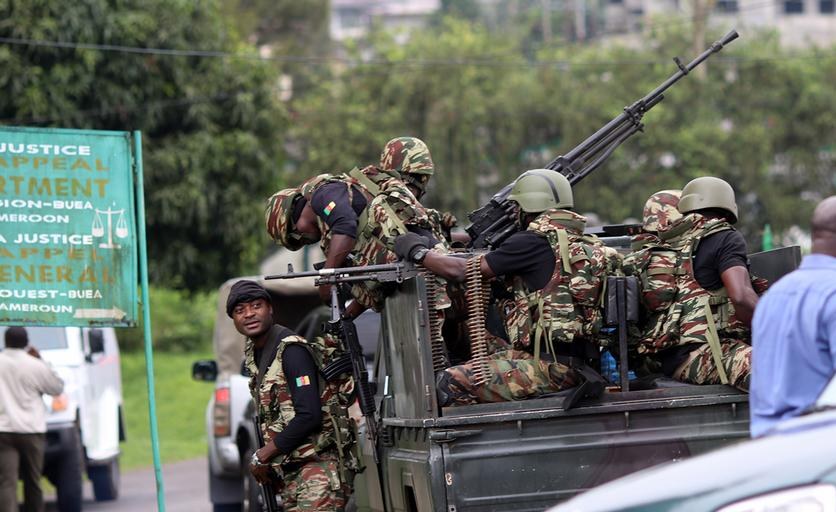
During Biya’s prolonged absence, a series of controversial military appointments has reshaped the country’s security apparatus. Five new brigade generals, a new presidential guard commander, and a new army chief of staff were installed through presidential decrees. These moves, particularly the appointment of General Beko’o Abondo Raymond Jean Charles as head of the Presidential Guard, have ignited fears of a militarized ethnic succession.
The strategic timing of these appointments—while Biya remains out of public view—has raised eyebrows among military observers. “Only the head of state can authorize such high-level military changes,” noted a retired colonel who requested anonymity. The accumulation of these decisions, taken without Biya’s visible endorsement, suggests preparations for a potential power transition driven by factional interests.
Health rumors and institutional paralysis
Speculation about Biya’s health has intensified, with reports suggesting he underwent knee surgery in early July but faced complications. While government officials assert he remains in “good health” and will return soon, the lack of public appearances has fueled distrust. Opposition figures, including Roger Justin Noah of the MRC party, have demanded transparency: “Does the president face health issues? The Cameroonian people deserve to know the truth.”
The institutional vacuum has been further exacerbated by a constitutional revision in April 2026 that reintroduced the vice-presidency—yet left the position vacant. This has effectively blocked the automatic succession mechanism, leaving the country in a constitutional deadlock.
Clan warfare and the specter of ethnic division
Behind the scenes, Yaoundé’s corridors of power are rife with factional infighting. Two dominant camps have emerged: one rallying around Biya’s eldest son, Franck Biya, seen as the guarantor of regime continuity, and another centered around First Lady Chantal Biya and Ferdinand Ngoh Ngoh, the powerful Secretary-General of the Presidency.
Analysts warn that the militarization of ethnic loyalties could mirror past tragedies. “The reintroduction of tribalism into the military is a dangerous path,” cautioned political commentator Jean-Pierre Bekolo. “History remembers not just the actions, but the silences that enabled them.”
Opposition demands accountability
The political opposition has not remained idle. Deputies from the MRC have petitioned the Constitutional Council to declare a power vacuum, with Jean-Michel Nintcheu stating: “The Council must recognize the vacancy at the helm of the state.” However, without a vice-president to trigger the succession process, such efforts face insurmountable hurdles.
What lies ahead for Cameroon?
The nation stands at a precipice. Key measures could avert disaster: full transparency about Biya’s health and return timeline, national dialogue to ease ethnic tensions, and the swift appointment of a vice-president to restore institutional stability. Yet the longer the uncertainty persists, the greater the risk of irreversible damage to Cameroon’s fragile social fabric.
“Playing with fire has consequences,” warns Bekolo. “Tomorrow may be too late to say, ‘We didn’t know.'”