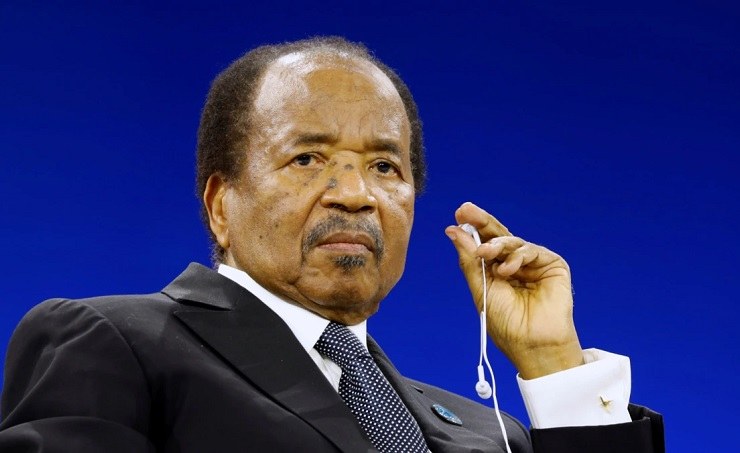
Cameroon’s Paul Biya alive amid 56-day absence concerns
Government breaks silence after 56 days of uncertainty
After 56 days of absence and swirling rumors, Cameroon’s government has finally addressed the nation’s growing concern: President Paul Biya is alive and his return is imminent. Yet the announcement, while reassuring, has done little to dispel the lingering doubts.
The government’s long-awaited statement came this Sunday, August 2, 2026, delivered by Communication Minister and government spokesperson René Emmanuel Sadi over national airwaves. “The president is alive,” he declared firmly. “There is no power vacuum.”
Paul Biya: Africa’s longest-serving leader at 93
To grasp the significance of this moment, one must consider the man at the center of it all. Paul Biya, at 93 years old, holds the title of the world’s oldest sitting head of state. His 43-year reign over Cameroon, unbroken since 1982, has been a source of both admiration and criticism—some hail his leadership as a stabilizing force, while others decry it as stagnation.
His latest disappearance began on June 7, 2026, when he left Yaoundé alongside his wife for what was officially described as a “short private stay in Europe.” What was expected to be a brief respite has stretched into an unprecedented 56-day absence, leaving the nation in a state of suspended animation.
A media blackout fuels speculation
Official activity during this prolonged absence has been minimal. Presidential decrees have continued to be signed, and the civil cabinet’s social media accounts posted routine messages, such as congratulations to French President Emmanuel Macron on Bastille Day. Yet not a single image, statement, or public appearance from Biya himself has been released. The resulting void has been eagerly filled by speculation and rumor.
Local media outlets have not held back in their criticism. “50 days is too long!” declared the front page of Le Messager, a leading Douala-based newspaper. “Departing Cameroon on June 7 with his wife for a private European stay, Paul Biya has already spent 50 days outside national territory, leaving a country at a standstill, a powerless government, and a sovereign people in stress and uncertainty about tomorrow.”
Political tensions rise as opposition demands answers
The silence has not gone unchallenged. The ruling party, RDPC, attempted to quell concerns with reassurances of its own. “Power is not vacant. The Lion has not left,” wrote Christophe Mien Zok, the party’s propaganda director, in a July 15 editorial for L’Action.
But such statements have done little to ease the growing frustration. Opposition figures have grown bolder. Jean-Michel Nintcheu, an opposition deputy, formally petitioned the Constitutional Council to declare a power vacuum. The UDC party went further, arguing that “the stability of a republic cannot rest on silence or assumptions,” and highlighting the absence of a vice president—a position left vacant since a constitutional revision in April 2026.
Government confirms Biya’s survival but offers no clarity
It was in this charged atmosphere that René Emmanuel Sadi stepped forward with his official statement. In an exclusive interview, he moved swiftly to dismiss claims of a power vacuum. “Opposition figures clamoring for a declaration of vacancy should, in my view, take a more rigorous and objective look at the constitution,” he asserted.
He went on to reaffirm what should have been obvious: “President Paul Biya is alive. President Paul Biya has not resigned.” Yet when pressed for specifics—such as an exact return date—he offered little. “I cannot tell you with certainty when President Paul Biya will return. And even if I knew, it would not be my place to announce it here.” His only concession: “I can assure you he will return very soon.”
An unprecedented absence that defies convention
This latest absence is not just long—it is historic. It surpasses even his 42-day absence in late 2024, making it the longest private trip abroad in his 43-year presidency. Over the decades, Biya has spent an estimated 2,600 days—nearly seven years—outside Cameroon, a record among African heads of state for extended private stays.
Rumors persist that close allies, including members of his family, are currently in Switzerland. While unconfirmed by authorities, such reports only deepen the mystery surrounding his whereabouts and well-being.
The constitutional debate: can absence lead to vacancy?
The legal debate has taken center stage. An opposition deputy has formally requested the Constitutional Council to declare a power vacuum, with some analysts arguing that absences exceeding 45 days should trigger such a review. Yet the reality is less straightforward.
The Cameroonian Constitution contains no provision specifying a time limit for presidential absences abroad. “No legal text regulates the duration of the head of state’s absence from national territory,” the UDC pointed out. The government has exploited this legal gray area, while the opposition condemns it as institutional weakness.
A nation holds its breath
The country remains in limbo. Cameroonians have taken to social media, their reactions sharply divided. Some express relief, others skepticism. “Paul Biya is the luckiest president in the world,” wrote one user. “He can do as he pleases, when he pleases, with no consequences.”
Others focus on the implications. “Fifty days absent—a new record for Biya, and his longest foreign stay yet. No wonder rumors about his health persist.”
The government’s vague promise of an imminent return may do little to calm the waters. The lack of a firm date, coupled with the opacity surrounding his absence, risks reigniting demands for greater transparency rather than easing them.
The unspoken question: what comes after Biya?
Beyond the immediate uncertainty, a deeper issue looms: succession. At 93, Biya personifies a regime that has lasted for decades. But for how much longer?
“The question of what comes after Biya is no longer just about rumors of his health, with a 93-year-old president absent for seven weeks,” observers note. Many prefer to avoid the topic, yet it now demands attention.
The UDC has called for an “institutional framework to regulate prolonged presidential absences,” a demand that, while cloaked in transparency, raises broader questions about governance in a post-Biya Cameroon.
What remains unknown
Despite the government’s statement, critical questions persist:
- Where exactly is Paul Biya? Reports suggest Switzerland, but no official confirmation exists.
- What is the true nature of his stay? Officially private, yet the duration and circumstances raise eyebrows.
- When will he return? “Very soon,” says the minister—a promise, not a date.
- What is his state of health? The government confirms he is “alive.” That’s all.
Did the government’s statement go far enough?
The government faced a delicate balancing act. Coming too late, its statement allowed rumors to flourish. Coming too vague, it risks failing to convince.
René Emmanuel Sadi stood firm, addressing criticisms, reiterating constitutional principles, and offering a pledge of return. Yet in a nation where information is tightly controlled and power is deeply personalized, the words of a minister often carry less weight than the silence of a president.
Waiting for the Lion’s return
Cameroon holds its collective breath. The promise of an imminent return is now the nation’s most anticipated development, one that may finally put an end to two months of uncertainty.
Yet beyond this moment, a larger question emerges: How can a country maintain stable governance when its president, now 93, routinely embarks on extended foreign absences?
“The stability of a republic cannot rest on silence or assumptions,” the UDC reminds us. A lesson Cameroon’s government may need to take to heart.
For now, the nation waits. It waits for its president. It waits for answers. Above all, it waits to see whether the “Lion” will truly roar again.
