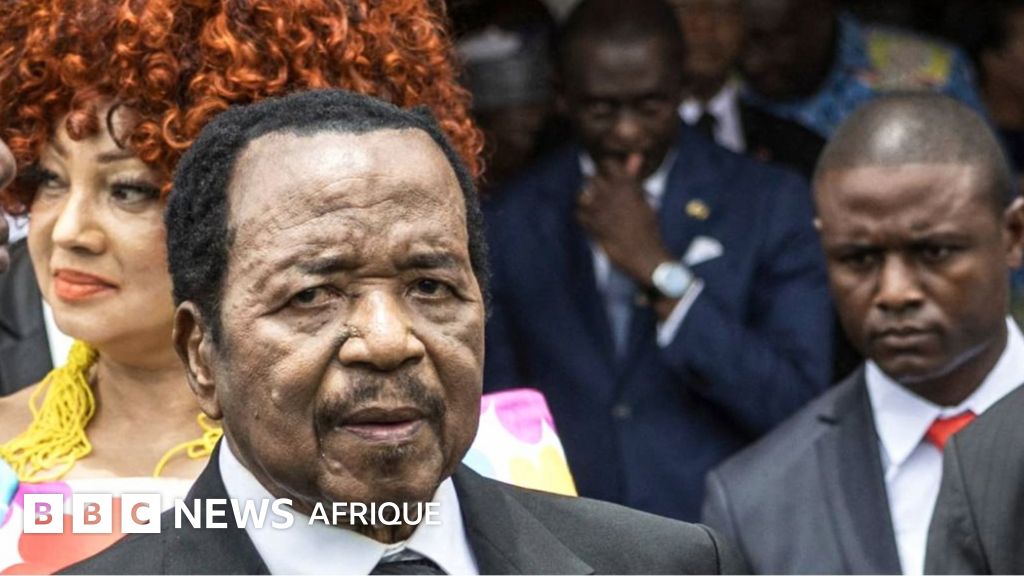
Cameroon’s biya makes military changes amid swiss sojourn
Crédit photo, AFP via Getty Images
Cameroonian leader Paul Biya, a prominent national figure who has been absent from public view for nearly two months, has enacted a significant military reshuffle amid growing concerns over his prolonged stay abroad.
The 93-year-old president appointed new officials to critical positions within the armed forces and elevated five colonels to the rank of brigadier general.
Such military realignments are not uncommon under President Biya’s administration, particularly during periods of intense public scrutiny or perceived vulnerabilities.
Following an unexpected coup three years ago in neighboring Gabon, which saw the overthrow of the Bongo dynasty and sent shockwaves across the continent, Cameroon promptly reorganized its military command structure.
Subsequently, during his controversial bid for an eighth term in last year’s presidential election, President Biya once again restructured the senior ranks of the army.
Just last June, he further promoted several members of the defense and security forces to higher ranks.
The circumstances surrounding these latest changes have ignited considerable debate, especially across social media platforms.
President Biya issued these distinct decrees on Monday from Geneva, Switzerland, where he has resided since departing Cameroon on June 7 for what his office described as a “brief private stay.”
Within Cameroon, many have voiced criticism regarding the scarcity of information about his activities and the ongoing uncertainty surrounding the duration of his international trip.
After last year’s elections, he pledged to form a new government, a promise that remains unfulfilled. The position of vice-president, established last April, continues to be vacant.
During his nearly 60-day absence abroad, he has signed various other decrees, including some that authorized his government to secure loan agreements with international financial institutions.
His prolonged absence has fueled renewed speculation about his health, though the government has consistently refuted reports suggesting the head of state was hospitalized.
Press freedom organizations expressed outrage two years ago when it was announced that Cameroonian media were prohibited from reporting on President Biya’s health status.
Cameroon’s Minister of Communication, René Emmanuel Sadi, affirmed in an interview that the president is alive and would soon return to the country.
He also dismissed opposition claims that the nonagenarian leader’s absence constituted a vacancy in the head of state position, asserting that President Biya continues to carry out his duties from Geneva.
However, the extended absence of President Biya signifies a “flagrant institutional vacuum” in Cameroon, according to Mamadou Mota, Vice-President of the opposition CRM party.
“Executive power is exercised at the heart of the nation, not through smoke signals or telepathy from hotel suites across the globe,” he stated last month.
