
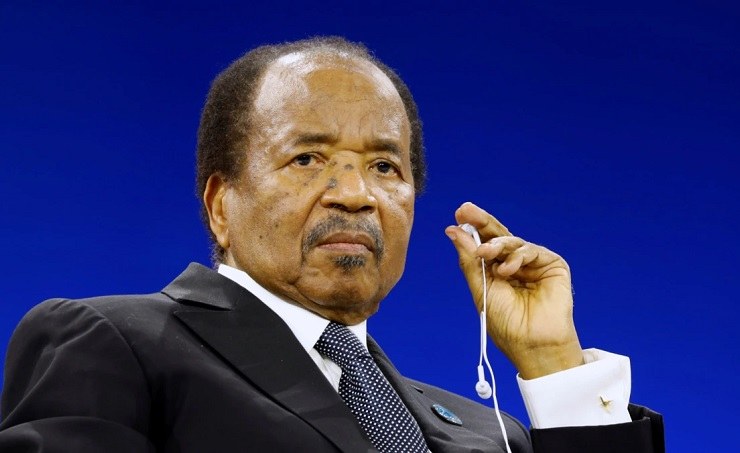
The recent prolonged absence of Cameroon’s Head of State has ignited intense debate across the nation. At 93 years old, President Paul Biya, born on February 13, 1933, has not been seen in public for nearly two months, fueling widespread speculation about his health and the continuity of governance.
Responding to mounting concerns, government spokesperson and Minister of Communication René Emmanuel Sadi confirmed on August 2, 2026, that the President is set to return to Cameroon imminently. His statement, delivered exclusively, aimed to quell rumors while firmly rejecting claims of a power vacuum. « The President is alive… There is no power vacuum! » he asserted, addressing opposition allegations directly.
Opposition demands transparency amid institutional uncertainty
Opposition figures, including Jean-Michel Nintcheu and the Union démocratique du Cameroun (UDC), have intensified calls for full disclosure regarding the President’s condition and the stability of state institutions. They argue that prolonged silence and unconfirmed reports undermine national confidence. Nintcheu has urged the Constitutional Council to formally acknowledge a potential power void, warning that the Republic’s stability cannot depend on conjecture or secrecy.
Critics within the opposition coalition have gone further, describing the situation as a « institutional void » and accusing the ruling camp of maintaining control through distant governance without public accountability. Meanwhile, the presidential camp insists that President Biya remains firmly in charge, despite his prolonged absence from the public eye.
Legal framework outlines process for presidential vacancy
Under Article 6, paragraph 4, of Cameroon’s Constitution, a presidential vacancy—whether due to death, resignation, or permanent incapacitation—must be confirmed by the Constitutional Council. Once validated, a new election must be organized within 20 to 120 days following the declaration of vacancy.
During this interim period, presidential powers are transferred to the President of the Senate, currently Aboubakary Abdoulaye (64), or, in case of his inability, to the first vice-president of the Senate, Naomie Mikel Bégala épouse Akono (63), according to the order of precedence. It’s important to note that the interim leader is constitutionally barred from altering the Constitution, reshuffling the government, calling a referendum, or running in the subsequent presidential election.