Burkina Faso’s wheat paradox: how Russian grain expose the cracks in food sovereignty claims
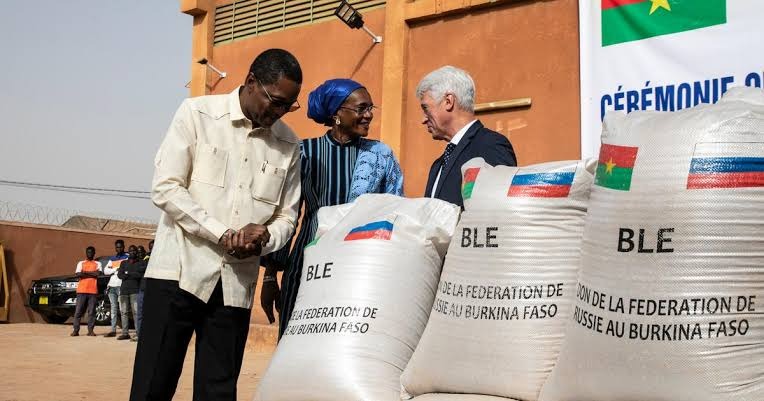
The gap between Burkina Faso’s bold food sovereignty declarations and the harsh realities on the ground has reached a breaking point. While transitional leader Captain Ibrahim Traoré continues to champion alleged agricultural breakthroughs and a claimed return to self-reliance, the regime’s actions tell a different story. On September 23, 2026, authorities staged another public ceremony to officially accept a shipment of 25,000 tonnes of wheat donated by the Russian Federation — a visual spectacle staged just days after similar deliveries.
From rhetoric to reality: the widening divide in food security
At the heart of the contradiction lies a carefully crafted narrative of national triumph. Official speeches paint Burkina Faso on the brink of feeding itself entirely, thanks to sweeping agropastoral offensives and a newly restored sovereignty. Yet behind the stage-managed announcements, the country’s agricultural foundation is crumbling. Large areas of arable land remain inaccessible due to ongoing insecurity, while rural communities displaced by conflict have abandoned their fields, leaving gaping holes in local production.
When the rhetoric of self-sufficiency clashes with the daily reality of imported grain, the illusion shatters. The arrival of 25,000 tonnes of wheat from Russia — not once, but in successive waves — reveals a deeper truth: Burkina Faso’s food security is not self-made, but externally salvaged. Grain reserves in national silos cannot fill the demand, especially in displaced persons’ camps and urban centers. The emergency shipments from the Black Sea arrive not as reinforcements, but as life-support systems masking a systemic failure.
The hidden cost of Russia’s “gift”: more than just wheat
Behind the diplomatic curtain, this so-called humanitarian gesture carries unspoken strings. In international relations, the term “free donation” often serves as a smokescreen for transactions that are anything but altruistic. Multiple diplomatic sources suggest this shipment is neither free nor purely humanitarian; it is a strategic exchange cloaked in generosity.
Analysts point to a political barter in which food aid is traded for geopolitical allegiance. In return for the wheat, Russia gains enhanced influence over Burkina Faso’s security posture, economic policy, and diplomatic alignment. The gold mining sector, lucrative trade contracts, and unreserved political support are likely part of the implicit cost borne by the Burkinabe state — and ultimately, by its citizens. This is not a gift, but a deferred payment, one that accumulates interest in the form of dependency.
Sovereignty in name, dependence in truth
Presenting an imported food shipment as a triumph of national sovereignty is a profound inversion of meaning. True food sovereignty is built on domestic production, protected by national security forces, distributed through local markets, and grounded in the resilience of the soil. When the state must stage public ceremonies to celebrate deliveries of foreign grain as if they were national victories, it exposes the hollowness of its claims.
The arrival of Russian wheat is not a step toward autonomy — it is evidence of its absence. Each truck convoy unloading shows that Burkina Faso’s food self-sufficiency remains a mirage, sustained only by repeated external interventions. Until the state can feed its people without parading foreign supplies as achievements, the illusion of sovereignty will continue to unravel in real time.
What lies ahead after the wheat shipment
The coming months will reveal whether this shipment marks a turning point or a mere continuation of a failing strategy. With over 2 million internally displaced persons and persistent security threats in rural zones, the pressure on food systems will not ease. If the government doubles down on rhetoric without investing in local farmers, irrigation, and land security, future deliveries — whether from Russia or elsewhere — will become the norm, not the exception.
The lesson is clear: sovereignty cannot be proclaimed — it must be built. And so far, Burkina Faso’s claims stand on shaky ground, shored up not by domestic strength, but by foreign grain.
