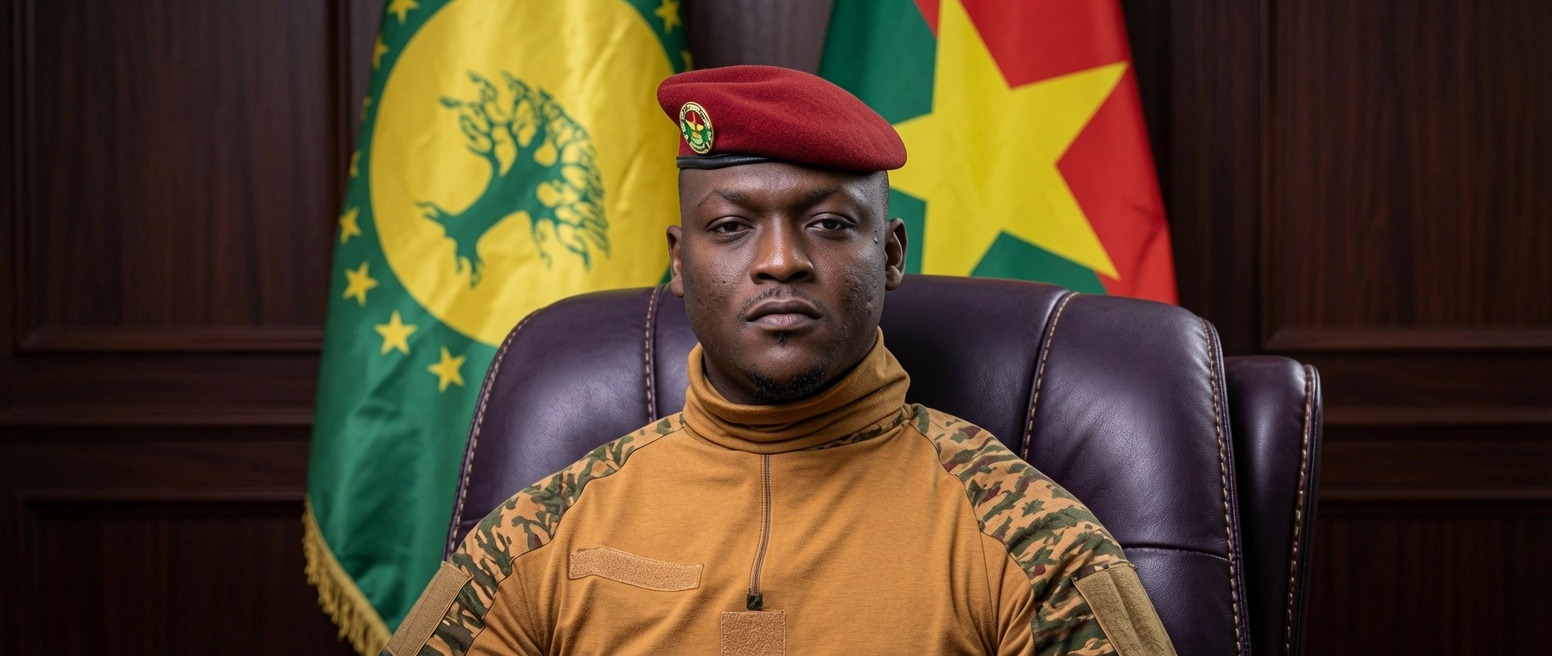
Burkina Faso’s territorial control claims: a reality check
The transitional government in Burkina Faso has been actively promoting a narrative of successful territorial reconquest, asserting control over nearly 75% of the national landmass (officially stated as 74.53%). However, a closer examination of independent data, humanitarian reports, and the daily experiences of citizens suggests that this official rhetoric might be more aligned with political communication strategies than with verifiable military gains on the ground.
Distinguishing mere presence from genuine territorial control
To arrive at such a high figure for Burkina Faso territorial control, the state employs a considerably broad definition. The simple deployment of military detachments, the transit of escorted convoys, or patrols by mobile volunteer units (VDP) are often deemed sufficient to classify an area as “under control.”
Yet, true territorial control necessitates the continuous exercise of sovereign state functions: functional public administration, an active justice system, unimpeded movement without the constant threat of ambushes, and enduring security for civilians. In stark contrast, armed terrorist groups, particularly the JNIM, persistently engage in asymmetric warfare, routinely block crucial roadways, and impose sieges on several strategic locations as soon as military convoys withdraw.
Information suppression and statistical denial
The noticeable disparity between official statements and the on-the-ground reality stems from a stringent media lockdown:
- Independent data restricted: Security observers, local non-governmental organizations, and independent media outlets face surveillance or outright prohibitions against publishing contradictory security assessments. Such actions are often justified by accusations of “demoralizing the troops.”
- Absence of independent verification: No impartial third-party or international body has been permitted to validate the geographical mapping presented by the Ministry of Defense. Conversely, think tanks and specialized organizations focusing on the Sahel region, alongside conflict monitoring entities like ACLED, consistently record a high concentration of violent incidents across significant portions of the country, challenging official claims about the Burkina Faso security situation.
Social and humanitarian indicators contradict reconquest narrative
If 75% of the territory were genuinely secured and re-administered, one would expect a dramatic improvement in crisis indicators. However, socio-economic and humanitarian data paint a different picture:
- Persisting internal displacement crisis: Returns to ancestral villages remain minimal and fraught with extreme risks. The number of individuals reliant on urgent humanitarian aid remains critically high, highlighting the ongoing internal displacement crisis in Burkina Faso.
- Public services remain halted: In many areas purportedly “under control,” thousands of schools remain shuttered. Healthcare personnel are reluctant to return without assurances of permanent security, and civil administration struggles to establish a presence beyond fortified regional capitals, contradicting the Burkina Faso government claims of widespread stability.
This triumphant narrative emanating from Ouagadougou appears primarily driven by domestic political imperatives:
- Legitimizing the transition: Presenting territorial victories is crucial for justifying the extension of the transitional period and the war efforts (including new taxes and public mobilizations) demanded from the populace.
- Masking tactical setbacks: Emphasizing overall percentages serves to divert public attention from the frequent attacks suffered by isolated detachments and local militias (VDP) in critical regions such as the North, East, and the Boucle du Mouhoun, where armed groups in Burkina Faso continue to pose significant challenges.
