Burkina Faso’s staggering debt amid sovereignty rhetoric: a closer look at the numbers behind the paradox
The rise of debt under Ibrahim Traoré’s sovereignty narrative
Ibrahim Traoré has repeatedly emphasized Burkina Faso’s need to rely on its own resources, rejecting excessive external borrowing to fund development. His administration frames this stance as a departure from past practices, advocating for economic independence through reduced foreign dependence and increased domestic financing. Yet, the trajectory of the country’s public debt tells a more complex story.
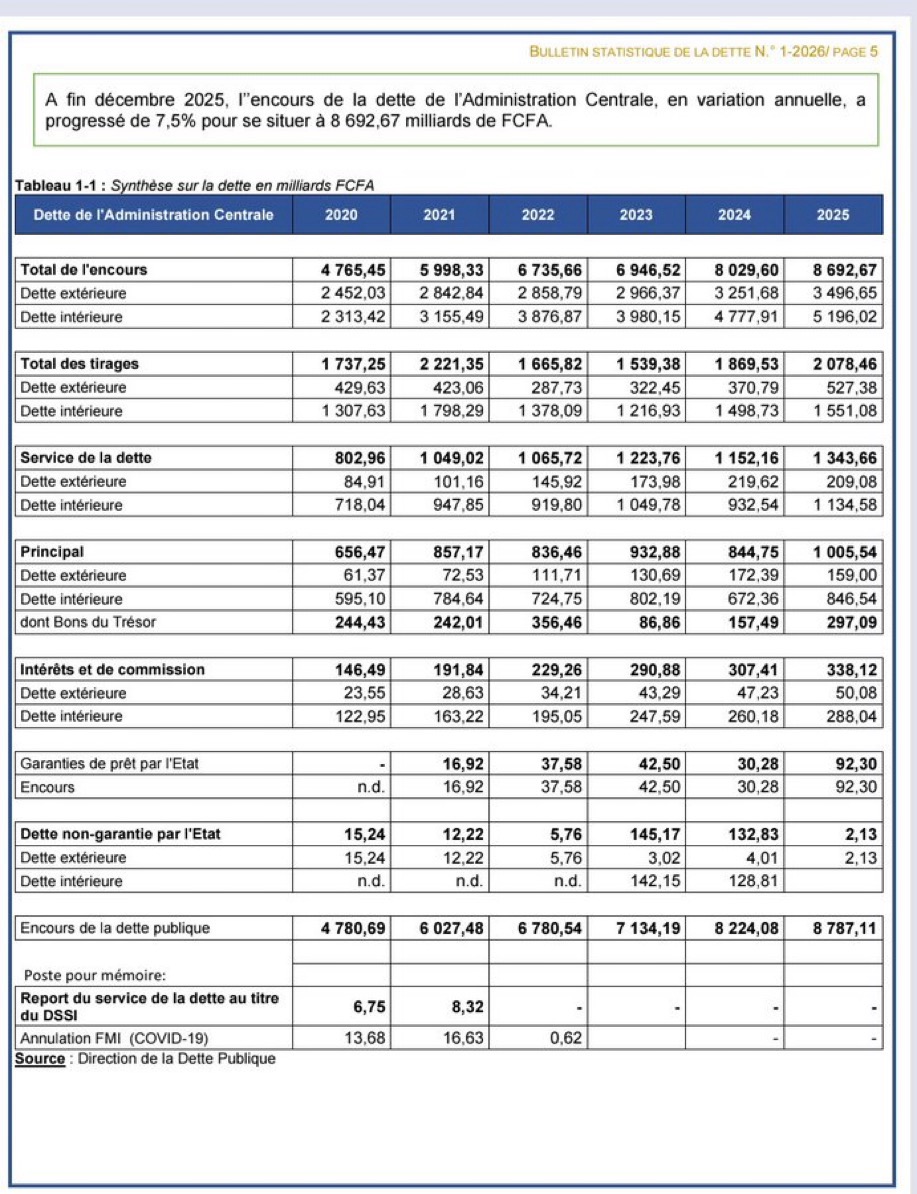
The stark contrast between rhetoric and reality is evident when examining the official figures. From December 2020 to March 2026, the central government’s debt soared from 4,765.45 billion FCFA to 8,731.5 billion FCFA a near doubling in just five years. This escalation challenges the assumption that Burkina Faso is charting a debt-free path to prosperity.
The hidden costs of domestic borrowing
While Traoré’s administration emphasizes sovereign financing, the mechanics of domestic debt reveal its own financial burdens. By the end of 2025, over 60% of Burkina Faso’s central government debt approximately 5,196 billion FCFA was composed of government securities, including short-term Treasury bills and bonds. This shift toward internal borrowing may reduce reliance on foreign lenders, but it does not eliminate financial obligations. Servicing this debt has become increasingly costly, with debt service payments reaching 407.1 billion FCFA in Q1 2026 a 31.5% year-on-year increase.
The implications are clear: while domestic borrowing may align with ideological goals, its burden on public finances cannot be ignored. The challenge now lies in managing this debt sustainably while maintaining investments in infrastructure, security, and social programs.
Gold reserves and the paradox of wealth versus liquidity
Burkina Faso’s gold reserves represent one of its most valuable economic assets, yet their presence does not automatically translate into sufficient liquidity for development initiatives. Despite the country’s mineral wealth, the state has continued to accumulate debt, raising questions about the efficiency of resource mobilization and fiscal management.
Gold exports, while lucrative, are subject to volatility in global markets. Relying on these revenues to service debt or fund projects without a diversified income stream risks financial instability. The International Monetary Fund’s 2026 assessment underscores this vulnerability, classifying Burkina Faso at a moderate risk of debt distress while acknowledging that the debt remains manageable in the medium term. However, the IMF warns of risks tied to refinancing domestic debt and the country’s dependence on gold exports, further complicating fiscal sustainability.
From promises to performance: the accountability gap
The central question now is whether the government can reconcile its sovereignty-driven rhetoric with the reality of its debt trajectory. Public borrowing, if strategically deployed, can yield long-term benefits, but only if each franc borrowed generates measurable value. Yet, the data suggests that while debt has risen, so too have the costs of servicing it.
The government must address critical inquiries: Where did the borrowed funds go? What projects did they finance, and what tangible outcomes have they produced for citizens? Without transparent reporting on the allocation and impact of these funds, the contradiction between anti-debt rhetoric and fiscal reality grows harder to justify.
Sovereignty at what cost? The fiscal balancing act
Traoré’s administration faces a daunting task: balancing economic independence with the practical demands of development financing. While sovereign debt may offer greater control over allocation, it also demands rigorous fiscal discipline. The increasing service of debt payments leaves less room for discretionary spending, potentially constraining future investments.
Ultimately, sovereignty in economic terms is not merely about rejecting foreign partnerships or declaring financial autonomy. It is about demonstrating the capacity to grow revenues, manage expenditures, and ensure that every borrowed franc contributes to sustainable progress. Burkina Faso’s debt surge presents a test of this principle, one that will shape the country’s economic future for years to come.
By Maimouna Kaboré — Editor-in-Chief
