Burkina Faso’s shifting security narrative: how today’s army falls short despite Moscow’s training
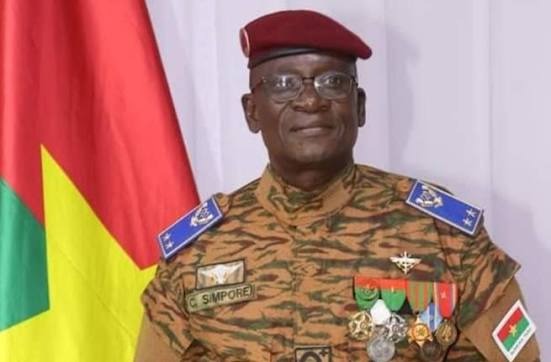
The general manager of Burkina Faso’s national broadcaster, RTB, may have expected a routine appearance when General Célestin Simporé, the defense minister, took the stage. Instead, what unfolded was anything but predictable. Behind the carefully rehearsed praise for the current junta’s security record, Simporé’s admission that Burkina Faso’s army was historically ‘poorly trained’ did more than just reveal a crack in the official narrative—it exposed the widening gap between propaganda and battlefield reality.
From battlefield to airwave: the narrative backfires
General Simporé’s televised statement was meant to reassure the nation that the current regime was turning the tide against armed groups. Instead, it backfired spectacularly. By framing today’s failures as the result of yesterday’s training gaps, the minister inadvertently highlighted the stark contrast between past resilience and present collapse.
Under previous administrations, despite limited resources and structural weaknesses, the military managed to hold critical provincial capitals and maintain coherent territorial defense lines. Today, with 30 new battalions raised and Russian-led retraining programs in full swing, the state’s grip has slipped to the point where over 65% of Burkina Faso’s territory lies outside government control. The question lingers: how did an army deemed ‘defective’ once hold the line more effectively than today’s supposedly superior force?
Russian doctrine and the myth of the ‘modernized’ army
The junta’s pivot toward Moscow’s Africa Corps was sold as a game-changer—a bold effort to modernize Burkina Faso’s security apparatus. Yet, the results tell a different story. The Russian training model, which prioritizes overwhelming force and frontal assaults, proves woefully mismatched against the asymmetrical tactics of armed groups operating in nimble, decentralized units. The results have been catastrophic:
- Unprecedented casualties: From the tragic losses in Mansila to recent reversals in the Centre-Nord region, hastily trained units have paid a devastating price in human lives.
- Failed counterinsurgency strategies: The Russian approach, which relies on brute firepower rather than coordinated action or civil-military cooperation, has proven ineffective against terrorists using motorized units and improvised explosive devices.
- Erosion of public trust: By abandoning the importance of local intelligence and ethical conduct in favor of scorched-earth tactics, the new doctrine has alienated rural communities, stripping soldiers of their most valuable weapon: the support and information of the people.
The human cost of a narrative in ruins
Reducing the heroic efforts of Burkina Faso’s rank-and-file soldiers to a mere ‘training deficit’ is more than just a misstatement—it’s a betrayal of their sacrifice. For years, these soldiers endured extreme hardships, operating with minimal supplies and outdated equipment, yet they managed to prevent large-scale territorial losses. Today, entire regions are ceded under the guise of ‘tactical withdrawals,’ most infamously in the case of Boussouma, where communities were abandoned without recourse.
The general’s RTB appearance was not just a misstep in messaging; it was a confession. Two years into the current regime’s rule, clinging to the idea that yesterday’s shortcomings are to blame for today’s failures reveals a deeper truth: it is not the weapons of the past that were inadequate, but the strategies of the present that are collapsing under the weight of empty rhetoric.
Beyond the propaganda: what’s really at stake
The junta’s security policy is not merely failing—it is exposing the hollowness of its own narrative. By shifting blame instead of confronting hard truths, the regime risks losing what little credibility it has left. The military’s performance is not a reflection of past inadequacies; it is a clear indictment of today’s flawed approach. As long as the focus remains on rewriting history rather than addressing current realities, Burkina Faso’s security crisis will only deepen, with soldiers and civilians alike paying the ultimate price.
