Burkina Faso’s security landscape: persistent vulnerabilities and governance challenges
A persistent security crisis in Burkina Faso
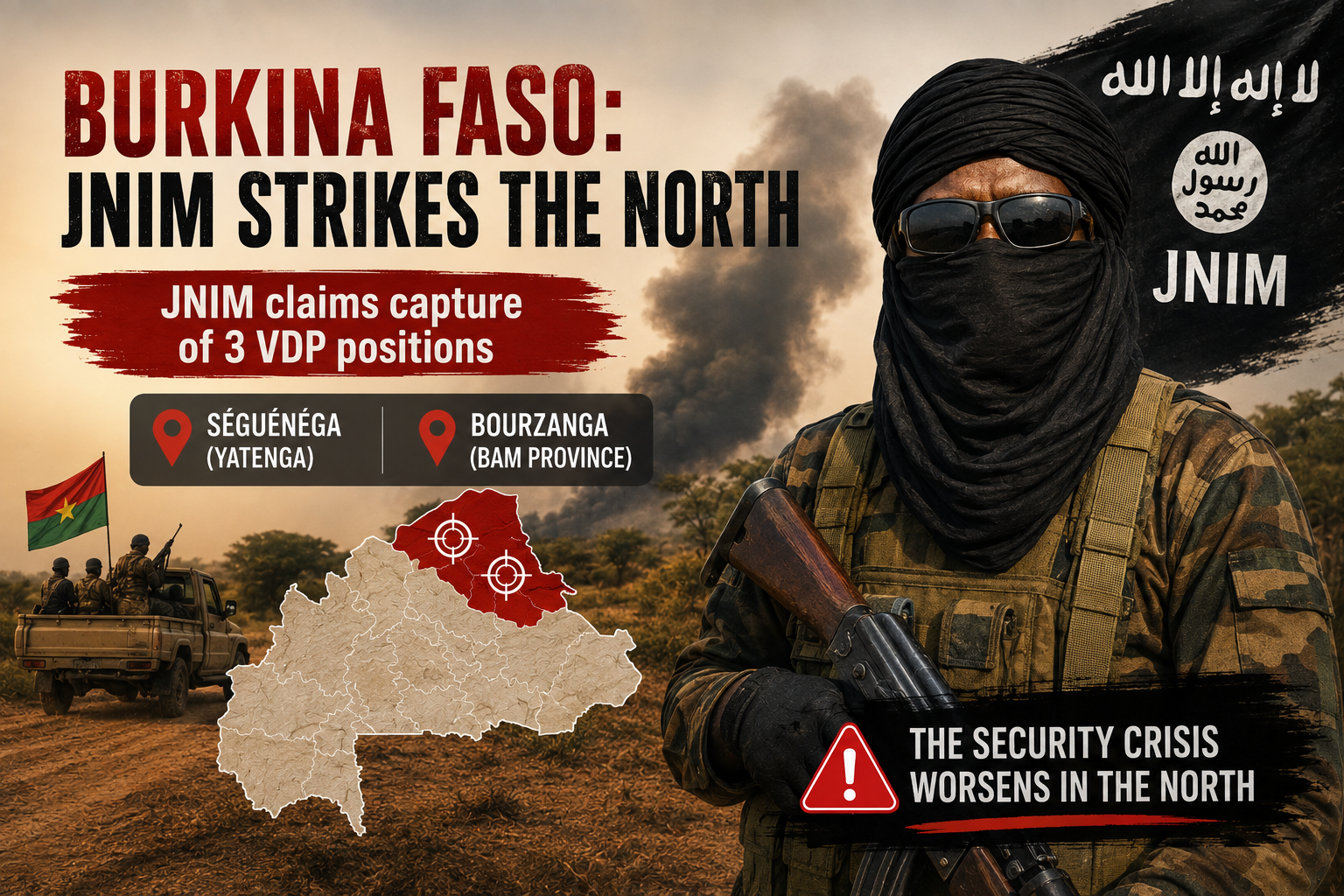
Burkina Faso continues to grapple with an escalating security crisis, prompting growing scrutiny of the ministerial authorities’ communication strategy. On Wednesday, August 19, the Jama’at Nusrat al-Islam wal-Muslimin (JNIM) claimed control over three strategic outposts previously held by the Volunteers for the Defense of the Homeland (VDP) in the country’s northern regions. These aggressive assaults targeted Séguénéga in Yatenga province and Bourzanga in the Bam province. This tactical setback further underscores the expanding influence of armed factions across the territory.
This latest offensive reignites concerns regarding the operational forces’ enduring capacity to secure and maintain control over areas they have reclaimed. The proliferation of attacks, the relentless pressure exerted on civilian populations, and the sustained vulnerability of certain positions indicate that military reconquest alone is insufficient. Such efforts must be complemented by a sustained state presence, robust intelligence gathering, adequate logistical support, and, critically, effective protection for civilians.
The situation is particularly alarming given that the VDP, integral to the nation’s security framework, frequently finds itself on the front lines against armed groups possessing significant mobility and destructive capabilities. Consequently, each lost position represents more than just a military defeat; it can erode local community trust, precipitate civilian displacement, and further complicate humanitarian access.
Political rhetoric versus on-ground realities
In light of this continuous deterioration on the security front, Captain Ibrahim Traoré’s political response warrants close examination. Instead of offering a candid assessment and addressing the security deficiencies, the transitional leader has increasingly resorted to disjointed media appearances. These public statements, devoid of clear direction and steeped in populist rhetoric, appear more as an avoidance tactic than a coherent crisis management strategy. Such maneuvers seem designed to divert public attention from the daily erosion of security, which has left the populace increasingly frustrated.
In a situation of such gravity, political communication cannot serve as a substitute for tangible results on the ground. While discourses on national sovereignty, resilience, or a break from past alliances may resonate with a segment of the public, they are insufficient to safeguard villages, secure vital transportation routes, or prevent assaults on military and auxiliary positions. Citizens primarily demand concrete and measurable outcomes.
The fundamental question, therefore, transcends mere political discourse; it concerns what genuinely changes in the daily lives of Burkinabè citizens. When a locality remains exposed, when residents are forced to abandon their homes, or when a position falls despite deployed resources, the issue extends far beyond the realm of communication. It directly reflects the efficacy of the security strategy and the state’s ability to uphold its commitments.
The suppression of critical voices
Compounding the challenges, the space for critical analysis has been severely curtailed. The Burkinabè press, once vibrant, now operates under stringent restrictions. Journalists and dissenting voices attempting to investigate or report factual realities face systematic repression. Silenced, detained, or even forcibly dispatched to so-called ‘rehabilitation’ camps or conscripted to the front lines under the guise of patriotism, information professionals are penalized simply for seeking to convey the truth.
This pressure on media outlets creates an additional problem: in a wartime context, independent information is precisely the tool needed to gauge successes, identify shortcomings, and highlight the difficulties faced by the populace. Silencing those who document the situation does not make the problems disappear. On the contrary, it risks fostering a widening disparity between the official narrative and the lived realities on the ground.
By tightening control over the national narrative, the authorities might create an illusion of managing public perception of the crisis, yet this does not equate to controlling the crisis itself. Attacks, population displacements, and human casualties remain stark realities that institutional communication cannot indefinitely obscure.
The paradox becomes evident: the more the security situation demands transparency, evaluation, and open debate, the more the arena for critique appears to shrink. Nevertheless, an effective strategy necessitates acknowledging setbacks, understanding their root causes, and promptly rectifying errors. While rejecting contradiction might offer short-term political satisfaction, it deprives decision-makers of crucial information essential for strategic adjustments.
By denying citizens access to free and independent information, the government risks entrenching itself in a denial of reality that does nothing to resolve the urgent security challenges on the ground. The fight against terrorism undeniably requires firmness and collective mobilization, but it equally demands transparency, accountability, and a willingness to confront difficulties.
Beyond official declarations and slogans, the ultimate indicator remains the safety and security of the population. As long as armed groups continue their assaults, gain ground, or maintain constant pressure on specific regions, the authorities must accept accountability for the outcomes of their strategy. Communication may win a battle of image; it cannot, by itself, win the war against terrorism.
