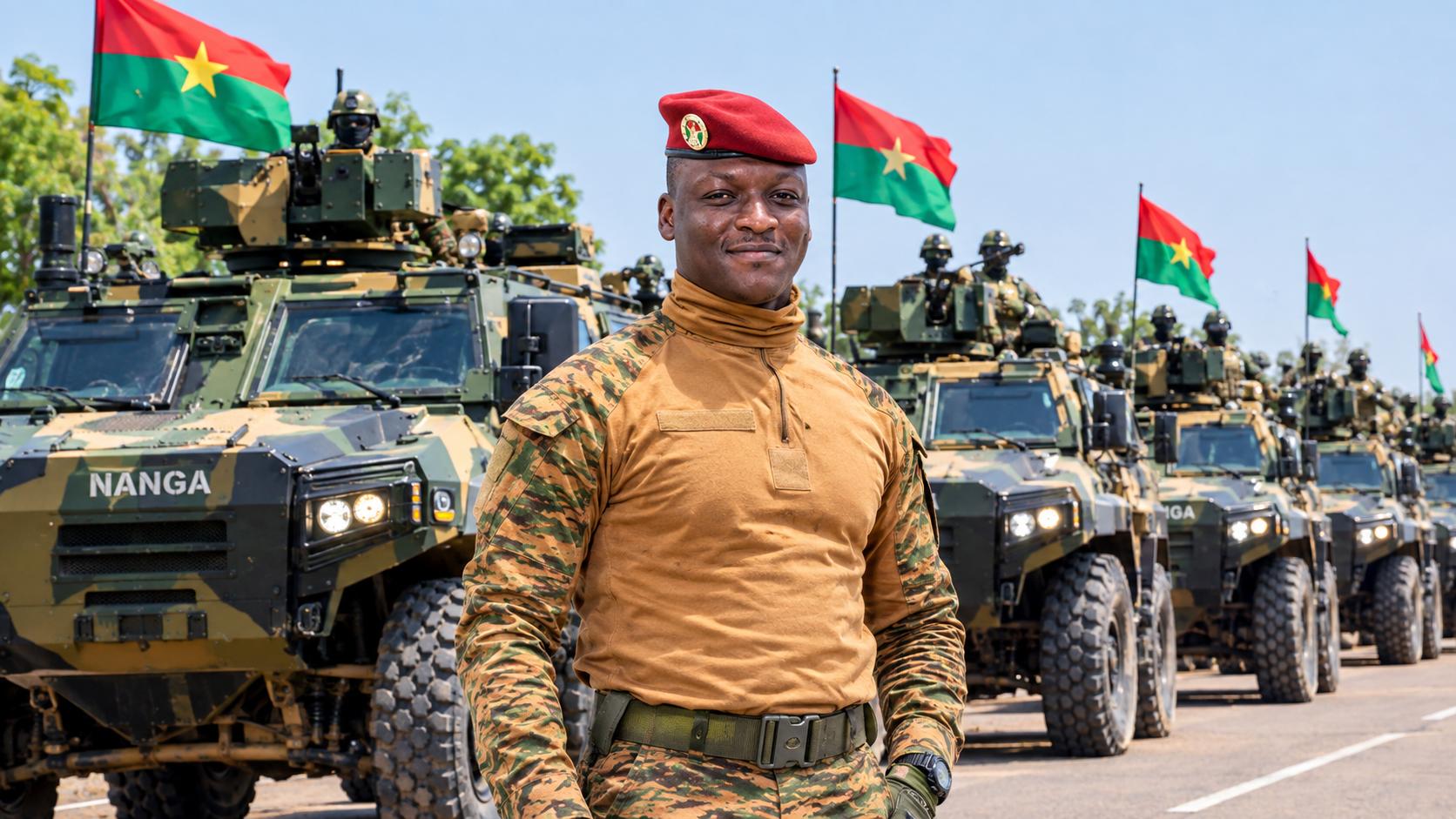
Burkina Faso’s Nanga armored vehicles: investigating the hidden truth behind the 300-unit claim
The announcement came with great fanfare: Burkina Faso’s self-proclaimed military independence had reached a new milestone. In late 2025, the transitional government led by Captain Ibrahim Traoré declared that local engineers had produced or modified nearly 300 armored vehicles known as ‘Nanga’ (scorpion), all under the banner of Faso Armored, a state-backed entity. The claim painted a picture of rapid industrial transformation, positioning Burkina Faso as a rising defense manufacturer in West Africa. Yet, behind the nationalist rhetoric, serious questions linger: if Faso Armored truly exists, why is its factory invisible to the public—and to international defense analysts?
From concept to camouflage: the illusion of local defense manufacturing
At first glance, producing 300 armored vehicles in under a year seems like a monumental achievement for a landlocked nation facing insurgent pressure. But the mechanics of armored vehicle production tell a different story. True armored development requires specialized steel foundries, certified ballistic plates, reinforced engines, and precision engineering—elements typically absent in a newly established facility operating in secrecy.
The makeover myth: repurposed civilian frames masquerading as armored assets
Analysts familiar with regional defense markets have raised red flags. Most of the Nanga vehicles appear to be little more than reinforced commercial pickup trucks—specifically Toyota Hilux and Land Cruiser chassis—imported from secondary markets in Eastern Europe or the Middle East. These vehicles undergo minimal ballistic reinforcement, often limited to bolt-on steel plating in local workshops rather than full structural integration. The result? A hybrid vehicle that meets neither international armor standards nor the demands of modern asymmetric warfare.
This practice, known in defense circles as ‘up-armoring,’ is common in low-budget procurement programs but falls far short of true indigenous armored vehicle manufacturing. True armored production involves casting, welding, and testing of ballistic materials—a process that cannot be rushed in makeshift facilities. The claim of 300 units in ten months, without verifiable infrastructure or skilled labor pools, strains credibility. For context, even established manufacturers like Paramount Group in South Africa or Otokar in Turkey require multi-year cycles to deliver armored vehicle batches of comparable size.
The secret defense paradox: opacity serving as a financial veil
The government justifies the lack of transparency by invoking “defense secrecy,” a legal doctrine typically reserved for protecting strategic military programs. But in this case, the classification appears misapplied. If Faso Armored’s operations were genuine, a controlled media tour, even partial, would serve as powerful propaganda for a regime desperate to project competence and sovereignty.
Instead, the veil of secrecy functions as a financial firewall. By cloaking the program in confidentiality, the authorities:
- Block public procurement oversight, allowing multi-billion FCFA contracts to bypass parliamentary scrutiny and audits by the Court of Auditors
- Obscure the true origin and inflated costs of materials, making it difficult to trace kickbacks or price-gouging in the supply chain
- Prevent independent ballistic testing, leaving soldiers and civilian auxiliaries (VDP) vulnerable to improvised explosive devices (IEDs) and small arms fire
No certified resistance tests—such as NATO STANAG standards for mine and IED protection—have been presented, raising grave concerns about battlefield readiness. The Nanga, as deployed, may offer the illusion of protection but provide little real defense against the threats faced in Burkina Faso’s conflict zones.
The politics of symbolism: why these vehicles matter more than they function
The Nanga rollout aligns with a broader narrative of self-reliance promoted by Captain Traoré’s government. Following high-profile inaugurations of state-backed textile complexes like TEXFORCES-BF, the regime has sought to project an image of total economic and military sovereignty. In a climate of declining public trust, symbolic victories are crucial to maintaining legitimacy.
Yet on the ground, the military situation continues to deteriorate. Despite the fanfare, insurgent attacks persist across several regions, revealing a gaping divide between political messaging and operational reality. The Nanga vehicles, as currently deployed, do not address strategic gaps in mobility, firepower, or communications—core requirements for counter-insurgency operations. Their symbolic value outweighs their tactical utility, serving more as propaganda than as genuine battlefield assets.
The cost of illusion: financial and human consequences of hidden procurement
By wrapping military purchasing in layers of secrecy, the Burkinabè government risks more than reputation. The public purse is exposed to financial abuse, with public funds potentially funneled into overpriced contracts and unaccountable intermediaries. Citizens, already grappling with economic hardship and inflation, bear the indirect burden—whether through lost tax revenue, inflated prices, or misallocated national budgets.
The human cost may prove even greater. Volunteers for the Defense of the Homeland (VDP) and regular soldiers, deployed in untested, under-protected vehicles, face heightened risk. Reports from conflict zones suggest that these ‘armored’ pickups offer little more protection than civilian SUVs, rendering them sitting targets for ambushes or suicide bombings.
In the name of national pride, Burkina Faso may be paying a heavy price—not for security, but for an illusion of industrial progress. The Nanga program, cloaked in secrecy and driven by political optics, risks becoming a cautionary tale about the dangers of governance by obfuscation rather than transparency.
