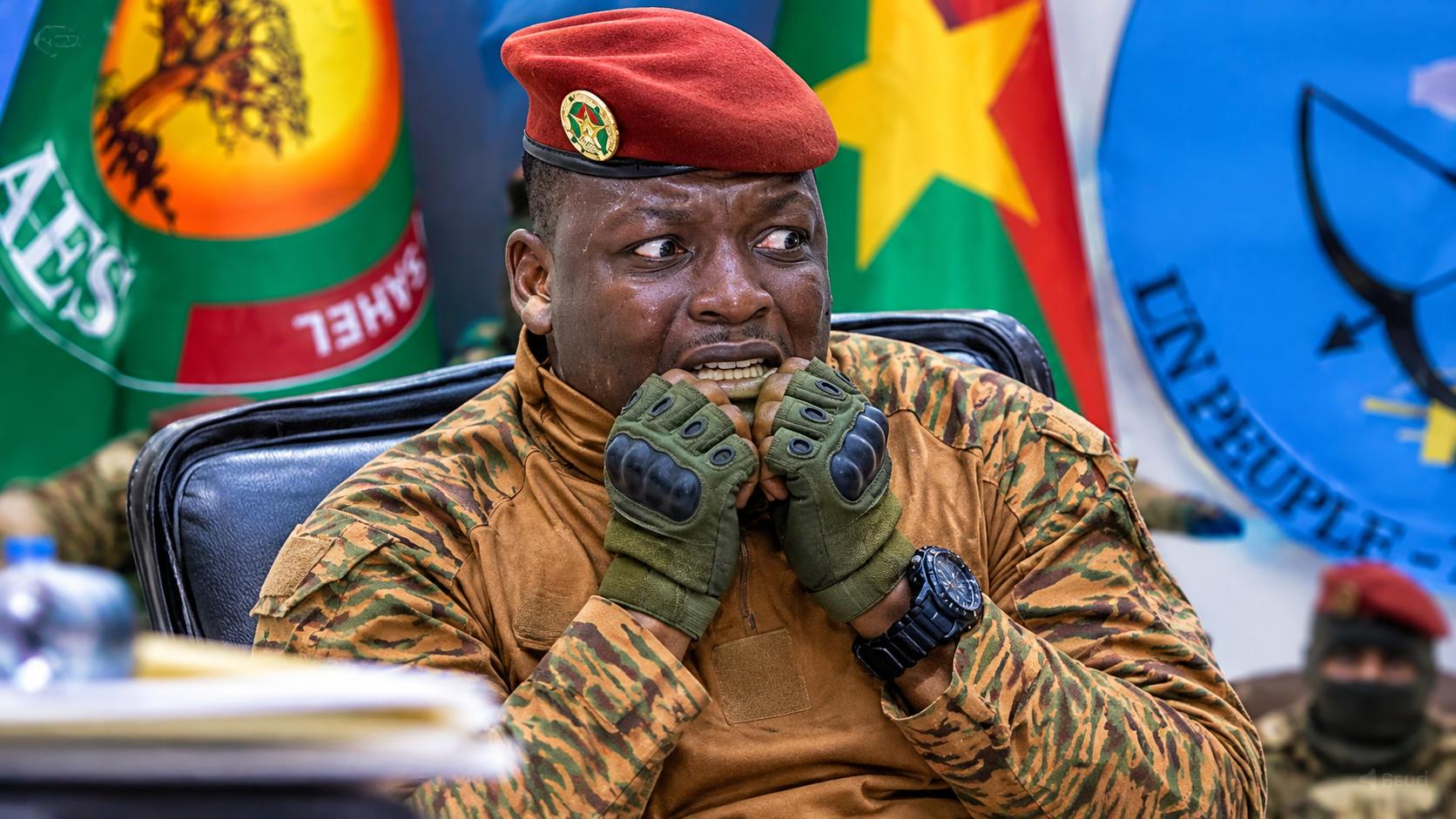
Burkina Faso’s Moscow snub: behind Traoré’s absence amid internal power fears
Diplomatic absence sparks questions over Burkina Faso’s internal stability
Ibrahim Traoré’s decision to skip the Russia-Africa summit has intensified speculation about the stability of his leadership. While the Burkinabè leader has cultivated a strong image of political resolve and strategic realignment with Moscow, his absence raises concerns about potential vulnerabilities within his own government.
From strategic partnership to internal uncertainty
The long-standing diplomatic alignment between Burkina Faso and Russia has been a cornerstone of Traoré’s political narrative, emphasizing sovereignty and resistance to foreign influence. This positioning has been reinforced through high-profile diplomatic engagements and public messaging, positioning Traoré as a decisive figure on the continental stage.
However, reports suggesting Traoré’s absence stems from fears of a potential coup within his inner circle introduce a critical contradiction in this narrative. If confirmed, such concerns would expose a gap between the image of unshakable leadership presented abroad and the realities of political fragility at home.
The double-edged sword of political propaganda
Traoré’s administration has heavily relied on a carefully curated public image, portraying him as a young, sovereignist leader who challenges traditional power structures. This messaging, amplified through state-aligned media and social platforms, has framed Burkina Faso’s shift away from Western partners as a necessary step toward national renewal.
Yet this strategy carries risks. When a government overemphasizes propaganda and personal leadership narratives, it risks creating expectations that outpace tangible outcomes. Disillusionment within the ranks among both military officials and civilian allies could emerge if security challenges, economic struggles, and governance failures persist without clear progress.
Military alliances: loyalty tested under pressure
In post-coup regimes like Burkina Faso’s, the cohesion of the security apparatus is non-negotiable. The network of officers and officials who supported Traoré’s ascent hold significant influence, and their interests may not always align with his long-term vision for the country.
Key factors such as control over security structures, access to decision-making circles, and the distribution of influence can breed rivalries. While personal loyalty is often cited as the bedrock of such regimes, it is not immune to erosion under political or strategic disagreements.
Reports of Traoré’s reluctance to leave Ouagadougou for Moscow, if substantiated, could signal deeper fissures. Yet without concrete evidence verified statements, corroborated testimonies, or material proof such claims remain speculative. The distinction between heightened caution and an active threat to his rule is critical.
The paradox of projecting strength while facing internal doubt
Traoré’s international posture rests on his ability to present Burkina Faso as a sovereign actor, free from external dependency. His engagement with Moscow has been pivotal in this strategy, offering an alternative to traditional partnerships perceived as unreliable or conditional.
However, a leader’s global standing is only as strong as the domestic foundation supporting it. If internal divisions persist whether driven by military rivalries, political dissent, or unmet public expectations they can undermine even the most carefully constructed diplomatic image.
The critical question now is whether Traoré’s absence from the Russia-Africa summit reflects a deliberate diplomatic choice, a security precaution, or a symptom of deeper instability within his government. Until further clarity emerges, the balance between external perception and internal reality remains precarious.
What lies ahead for Burkina Faso’s leadership
The stakes are high. A government that relies heavily on symbolic diplomacy and centralized control must balance its international ambitions with the realities of domestic governance. If Traoré’s absence is driven by concerns over a coup, it would not only signal immediate instability but also raise long-term questions about the durability of his leadership.
Yet without definitive proof, such interpretations remain hypotheses. The true nature of the situation will only become clear through verified statements, official explanations, and independent assessments. Until then, Burkina Faso’s political landscape remains shrouded in uncertainty one where the line between strategic caution and systemic fragility has never been thinner.
By Maimouna Kaboré — Journalist
