Burkina Faso’s military leader rejects democracy as unworkable
Burkina Faso’s military leader rejects democracy as unworkable
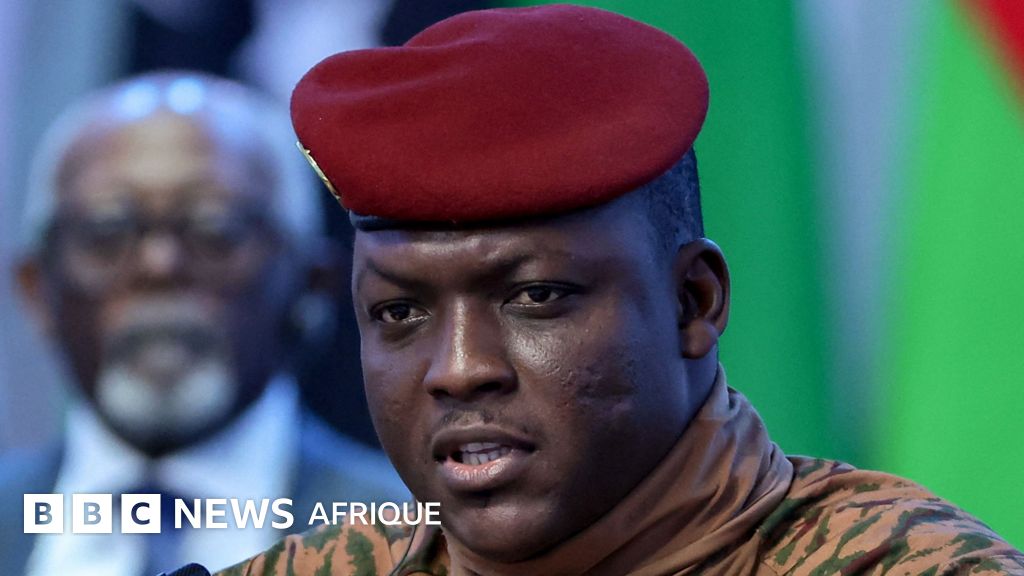
Captain Ibrahim Traoré, Burkina Faso’s military leader, has declared that the nation must “forget” democracy, calling it fundamentally incompatible with the country’s needs. Speaking in a televised interview, the 38-year-old head of state argued that Western-imposed democratic systems have repeatedly led to instability across Africa.
Traoré, who seized power in a 2022 coup, had previously pledged to restore civilian rule by July 2024. However, with the deadline approaching, his government announced a five-year extension of military rule, citing the need for a “revolutionary approach” to governance.
In January, Burkina Faso’s junta banned all political parties, consolidating state control over their assets. Traoré defended the move, describing political parties as divisive and counterproductive to his vision of national unity. “In Africa, especially here in Burkina Faso, a politician is often just a liar, a flatterer, and a loudmouth,” he stated.
The military leader did not outline a concrete alternative to democracy but insisted Burkina Faso would forge its own path. “We have our own way. We don’t even try to copy others. We are here to completely change how things are done,” he asserted.
Traoré’s model prioritizes sovereignty, patriotism, and grassroots mobilization, with traditional leaders and local structures playing key roles. He also emphasized economic and military self-reliance, arguing that Burkina Faso cannot develop with the standard six-to-eight-hour workdays seen in wealthier nations.
His government has cracked down on dissent, targeting opposition figures, media outlets, and civil society groups. Critics have accused Traoré’s administration of silencing opponents by deploying them to frontline combat against Islamist militants.
Despite repression, Traoré has cultivated significant support across Africa for his anti-Western rhetoric and panafricanist stance. Burkina Faso, along with neighboring military-led governments in Mali and Niger, has distanced itself from Western partners—particularly France—in the fight against Islamist insurgencies that have plagued the Sahel for over a decade. Instead, these nations have turned to Russia for military assistance, though violence in the region continues unabated.
Human rights organizations have documented a sharp rise in civilian casualties since Traoré’s takeover. A recent report by Human Rights Watch (HRW) estimates over 1,800 civilians have been killed in Burkina Faso since 2023, with two-thirds of the deaths attributed to state forces and allied militias.
The junta’s rejection of democracy and suppression of political pluralism mark a stark departure from Burkina Faso’s recent history. Traoré’s vision, rooted in revolutionary nationalism, remains divisive both domestically and internationally as the country grapples with ongoing insecurity and economic challenges.
