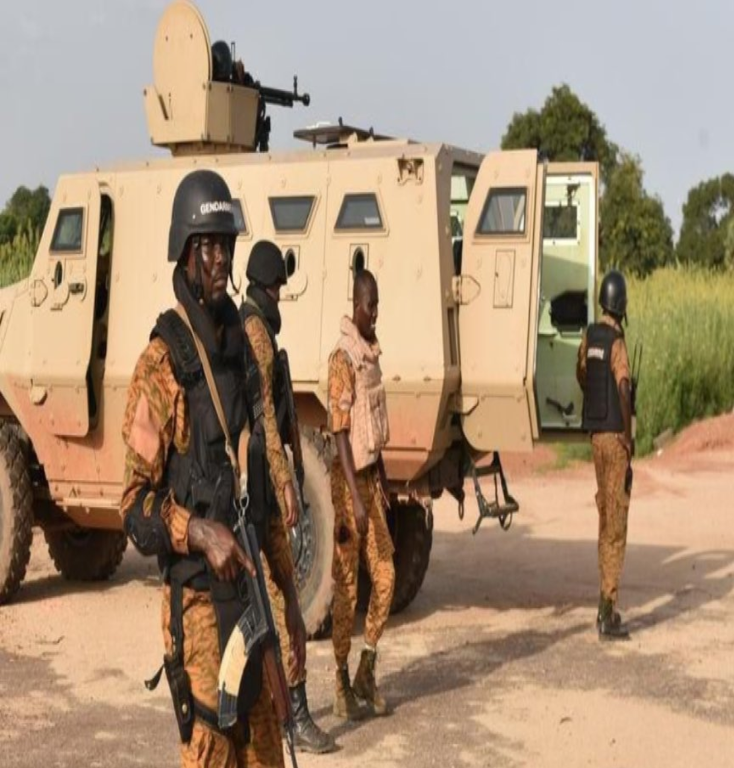
Burkina Faso’s jihadist attacks escalate: armored vehicle struck and VDP casualties reported
The jihadist group Jama’at Nusrat al-Islam wal Muslimin (JNIM), affiliated with Al-Qaeda in the Sahel, has claimed responsibility for two recent attacks in Burkina Faso, including the destruction of an armored military vehicle and the killing of three local militia members.
JNIM targets military armor in Fada N’Gourma
The armed group asserts it detonated an improvised explosive device against a Burkina Faso army armored vehicle near Fada N’Gourma in the country’s eastern region. The strategic city, a key transit hub, has become a frequent battleground as insurgents exploit vulnerabilities in military convoys and supply routes.
While independent verification remains pending, the incident highlights the persistent threat posed by explosive devices to armored units in high-risk zones. Such attacks not only inflict material damage but also disrupt logistical operations, forcing military adjustments in movement and deployment strategies.
Three VDP militiamen killed in Bam province ambush
In a separate operation, JNIM reported engaging and killing three members of the Volunteers for the Defense of the Homeland (VDP), a civilian auxiliary force supporting the national military. The group also claimed to have seized automatic weapons during the confrontation.
The attack in Bam province underscores the risks faced by local militias, who operate with limited protection yet play a critical role in counterinsurgency efforts. Their exposure to ambushes and raids has intensified concerns over the circulation of seized military equipment among armed factions, further destabilizing already vulnerable communities.
Deepening insecurity reshapes Burkina Faso’s stability
Beyond these incidents, Burkina Faso continues to grapple with a severe security crisis that has engulfed multiple provinces, including the East, North, and Central-North. Civilians bear the brunt of the violence, facing displacement, economic collapse, and restricted access to essential services such as healthcare, education, and markets.
Roads, once vital arteries for trade and mobility, now serve as perilous passages where convoys are frequently targeted. Schools and health centers frequently close due to threats or attacks, while agricultural output plummets in isolated villages. The humanitarian toll is exacerbated by the displacement of tens of thousands, straining local resources and aid infrastructure.
Military and state responses under scrutiny
The latest claims by JNIM intensify pressure on Burkina Faso’s military and allied forces, prompting urgent questions about their ability to secure key routes, outposts, and civilian concentrations. While military operations continue, the insurgency’s adaptability—through ambushes, roadside bombs, and propaganda—demands a broader strategy beyond sheer firepower.
For authorities, the dual challenge remains: restoring security while ensuring the uninterrupted delivery of public services to affected regions. For local communities, the objective is clear—a return to stability that enables economic recovery and daily life free from fear.
Until independent confirmation of these claims is released, the focus remains on the evolving tactics of jihadist groups and their impact on Burkina Faso’s fragile security landscape. The resilience of both state institutions and civilian populations will determine the trajectory of this crisis in the months ahead.
