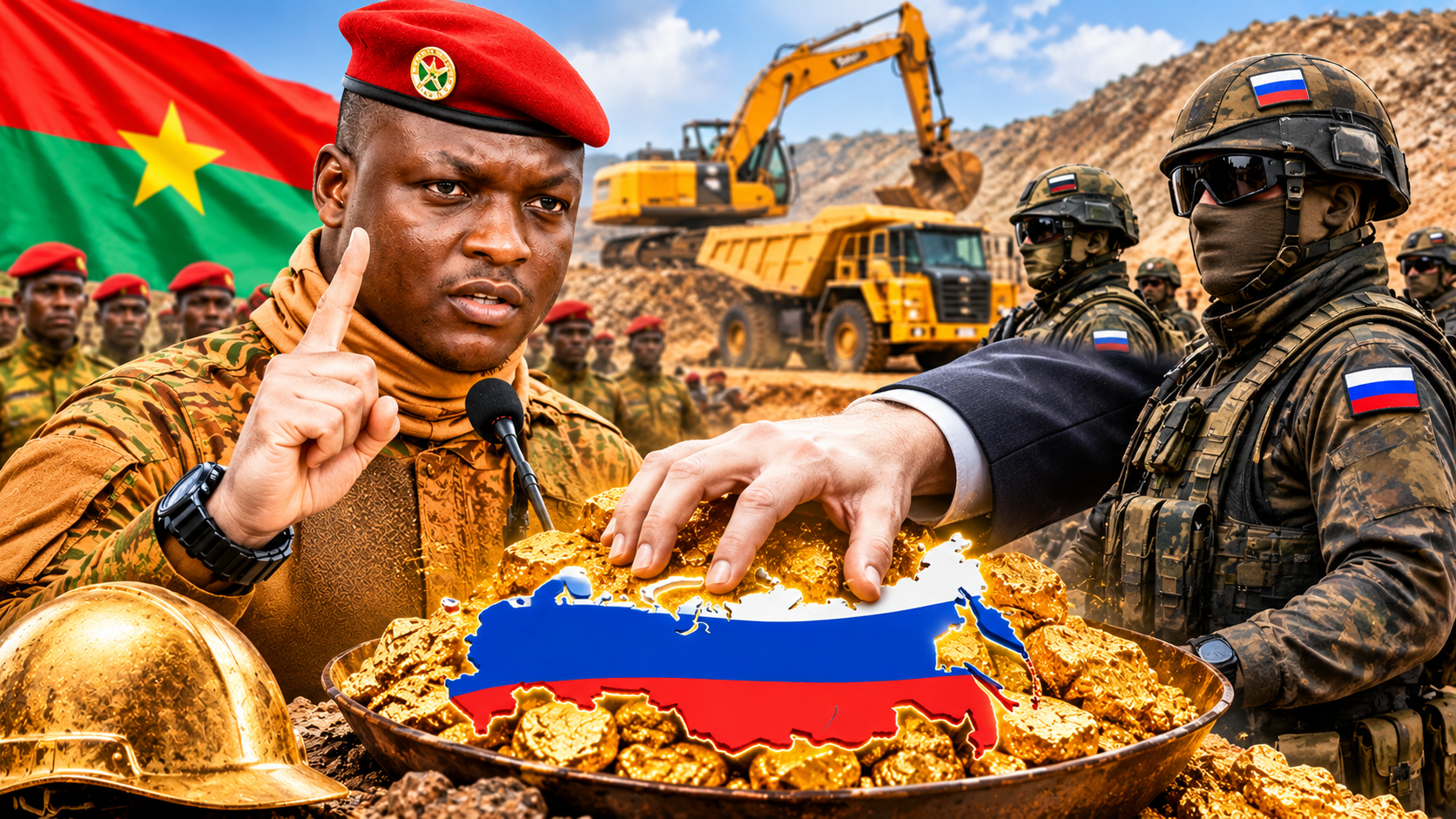
Burkina Faso’s gold pledge: foreign security firms’ growing role sparks sovereignty debate
Burkina Faso asserts gold sovereignty amid foreign security influence
Burkina Faso’s military leadership has repeatedly declared that its gold resources belong exclusively to the nation. Yet, the increasing presence of Russian security firms in safeguarding mining sites raises critical questions about the reality of this proclaimed sovereignty. As these entities expand their influence within the gold sector, the gap between political rhetoric and operational control becomes impossible to overlook.
Since seizing power, the junta led by Captain Ibrahim Traoré has positioned securing control over natural resources as a cornerstone of its economic sovereignty agenda. Gold, in particular, has been framed as a national asset meant to benefit the Burkinabè people. However, the practical implications of this strategy are now under scrutiny as foreign actors take on pivotal roles in the protection and exploitation of these resources.
How Russian security firms are reshaping Burkina Faso’s mining landscape
The collaboration with Russian security companies is justified by Ouagadougou as a strategic pivot away from traditional partners and a means to reclaim territorial control. Yet, when foreign entities become central to the security framework of gold mines, the issue transcends commercial competition. It directly challenges the state’s ability to maintain autonomy over its most valuable strategic asset.
A gold mine is not merely an extraction site; it is an intricate economic hub encompassing operational security, mineral transit, financial interests, and regulatory oversight. The engagement of foreign security providers in such sensitive domains demands clarity regarding their authority, contractual obligations, and the mechanisms in place to ensure national oversight remains intact.
The disconnect between rhetoric and ground realities
Captain Traoré’s administration insists that Burkina Faso’s gold is entirely under national control. Yet, sovereignty extends beyond declarative policies or regulatory reforms. It hinges on the state’s capacity to independently decide how its resources are exploited, who secures them, and how the financial benefits are allocated to serve the population.
The paradox is stark: how can a nation claim absolute mining sovereignty while outsourcing critical security functions to foreign entities? This scenario does not necessarily imply that foreign actors control the mines themselves, but it underscores a critical distinction between legal ownership and operational control a distinction that cannot be ignored.
Transparency and accountability must define Burkina Faso’s mining partnerships
The core challenge for Burkina Faso is not merely replacing one set of foreign partners with another. It is ensuring that every agreement, regardless of the origin of the provider, aligns with national interests and remains transparent and subject to institutional oversight. Allowing any external power including Russia to dominate the security landscape risks undermining the very sovereignty the regime claims to uphold.
Burkinabè citizens deserve clear answers: Who precisely safeguards the mines? Who profits from security contracts? Who dictates operational protocols? And where do the financial benefits ultimately flow? The nation’s gold must not serve as a tool for foreign interests or a select group of beneficiaries; its primary purpose must be the sustainable development of Burkina Faso and the improvement of living standards for its people.
While Ibrahim Traoré may assert that Burkina Faso’s gold is 100% Burkinabè, true sovereignty is proven not through public statements but through tangible control, transparent contracts, and uncompromised national decision-making.
By Maimouna Kaboré — Journalist
