Burkina Faso’s gold mines and Russian security ties: what’s really driving Traoré’s regime?
Burkina Faso’s strategic pivot: gold, security, and Moscow’s growing influence
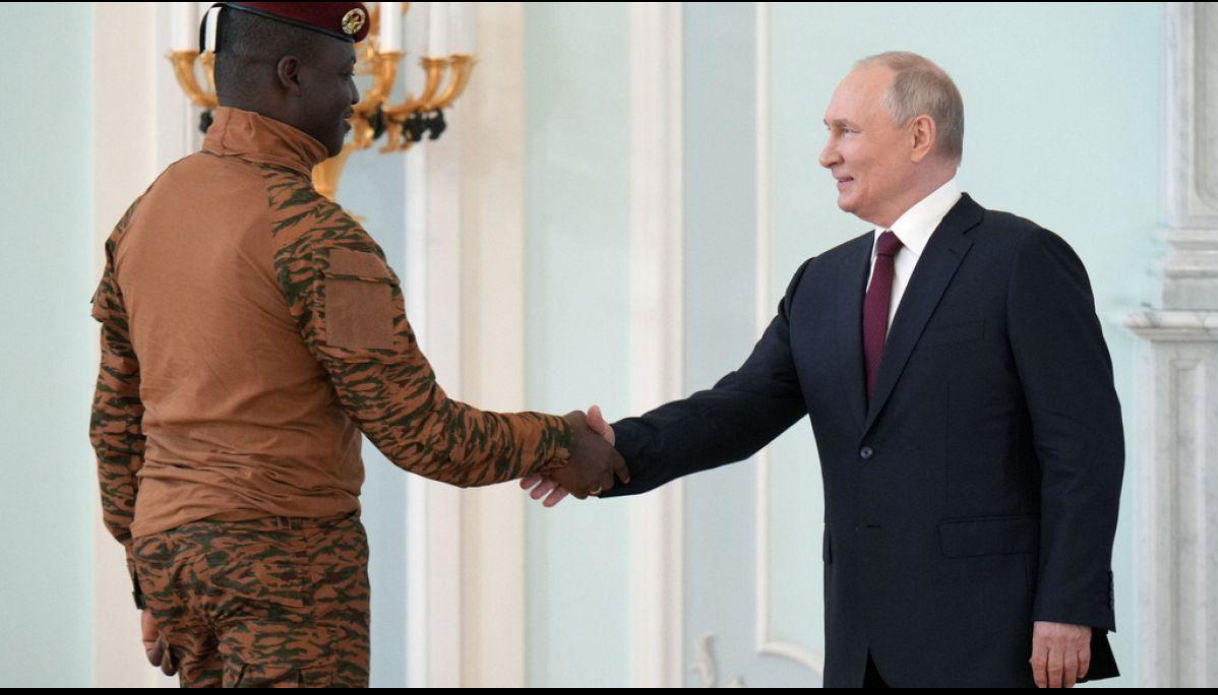
In Burkina Faso, gold has become more than a national resource—it’s now a pillar of political survival. Since Captain Ibrahim Traoré took power in September 2022, Ouagadougou has deepened its alliance with Moscow, reshaping the country’s security and economic landscape. But a critical question lingers: how do Burkina Faso’s gold reserves and Russian-backed security deals intersect to reinforce Traoré’s grip on power?
Bissa mine: a flashpoint for Russian security firms and political leverage
The Bissa gold mine, operated by the Russian mining giant Nordgold, has become ground zero for a behind-the-scenes battle between Russian security firms vying for influence. The dispute between RSB-Group—recently ousted from the mine’s security contract—and its rivals exposes the delicate balance between mining protection, corporate rivalries, and regime security.
RSB-Group’s attempts to rally Burkinabè officials against its competitors reportedly hinge on claims that rival security operations have exacerbated violence against Fulani villages. While these accusations require independent verification, they underscore a troubling reality: the fight to secure Burkina Faso’s gold isn’t just about protecting mines—it’s about shaping political power.
Security contracts as political currency
The Kremlin’s role in Burkina Faso extends beyond counterterrorism. Since a failed coup attempt in September 2023, Traoré’s regime has prioritized safeguarding the president and his inner circle. Reports of Russian paramilitaries operating in Ouagadougou—deployed near the presidential palace and intelligence agencies—highlight Moscow’s dual agenda: protecting the regime while advancing its own strategic interests.
This raises a key question: Is Traoré’s security reliance on Russia part of a broader quid pro quo, where mining concessions are exchanged for protection? While no public agreement confirms this, the pattern mirrors Russia’s approach in other African nations, where military support often aligns with economic concessions.
Nordgold’s footprint: Russia’s economic stakes in Burkina Faso’s gold rush
Nordgold, controlled by Russian oligarch Alexei Mordashov, holds significant stakes in Burkina Faso’s gold sector, including the Bissa and Bouly mines. For Moscow, these assets aren’t just profitable—they’re strategic. The February 2023 government seizure of 300 kg of gold from Bissa Gold, ostensibly for public necessity, signals how Ouagadougou now views gold as a critical state resource.
Securing these mines isn’t just about protecting production; it’s about safeguarding tax revenues, foreign investment, and regime stability. For Russian firms, gaining privileged access to security arrangements strengthens their standing with Burkinabè authorities. Analysts at West Point’s Combating Terrorism Center suggest Moscow’s initial interest in Burkina Faso may have been tied to protecting its mining interests—though their presence today is more about propping up Traoré’s regime.
The blurred lines between security and corporate power plays
The rivalry at Bissa reveals a fractured Russian presence in Burkina Faso. Not all Russian security firms share the same goals, and competition for contracts can spill into political maneuvering. The ousting of RSB-Group and its counter-campaign to discredit rivals demonstrate how security markets in Burkina Faso operate: as arenas for influence, not just protection.
For local communities, the stakes are dire. Security operations around mines must not exacerbate communal violence or violate human rights. Yet the blurred lines between corporate security, regime protection, and foreign interests make accountability elusive. The question isn’t just who controls Burkina Faso’s gold—it’s who controls the narrative of security around it.
A partnership built on mutual reinforcement
Ouagadougou’s alliance with Moscow serves two clear purposes: strengthening Traoré’s regime through Russian-backed security and granting Russian firms deeper access to Burkina Faso’s mineral wealth. While no formal agreement links the two, the convergence of interests is undeniable. Russian security forces provide more than muscle—they offer political cover in a region roiled by instability.
For Moscow, the benefits are twofold: expanding influence in Africa’s gold-rich nations and securing lucrative mining deals. For Traoré, Russian support bolsters his legitimacy and defense against internal and external threats. The real story of Burkina Faso’s gold isn’t just about wealth—it’s about power, and who gets to wield it.
