Burkina Faso’s education minister sparks outrage with ultimatum to critical students abroad
Minister’s threat escalates crackdown on academic freedom
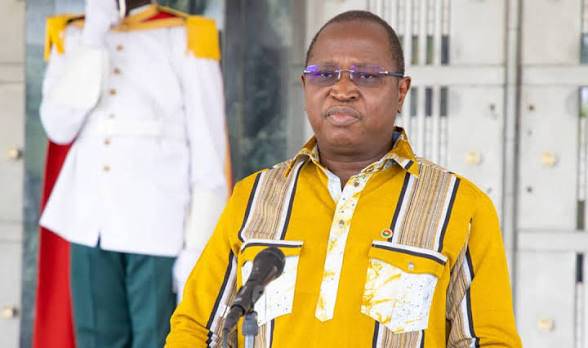
The Burkinabè government has escalated its assault on higher education freedom, with the Minister of Higher Education, Professor Adjima Thiombiano, issuing a blunt ultimatum to diaspora students who dare criticize the country’s realities. Addressing a flag-raising ceremony at the education ministry, Thiombiano declared that students questioning the status quo should either fall in line or leave Burkina Faso permanently, declaring: « Those who find our nation unsuitable can return to where they came from. »
Criticism criminalized under new ideological purge
This inflammatory rhetoric signals a deliberate strategy to silence dissent within universities. Students whose only crime is voicing concerns—whether about education quality or governance failures—are now framed as « lost children » destined to face confrontation from « every Burkinabè. » The minister’s language doesn’t merely discourage debate; it constructs an environment where questioning authority is treated as sedition. By instructing officials to « stand as a bulwark against rebellious behavior, » Thiombiano is openly advocating for institutionalized surveillance, encouraging the profiling of students who express independent thought.
What does Burkinabè citizenship mean when dissent is forbidden?
The minister’s ultimatum exposes a troubling shift in national identity under this regime. Is Burkinabè citizenship now contingent on unquestioning loyalty to official narratives? The government’s treatment of diaspora students—many of whom were encouraged to study abroad with promises of future contributions—reveals a profound contradiction. These young people, shaped by diverse experiences, bring global perspectives that could strengthen Burkina Faso. Instead, they’re pushed to the periphery as soon as they exercise their right to critique.
The NEKRÉ Pact: A façade of educational reform
Thiombiano’s crackdown is being promoted under the banner of the « NEKRÉ Pact, » a government initiative supposedly designed to overhaul Burkina Faso’s education system from preschool to university. Yet how can genuine reform occur when intellectual dissent is labeled subversive? Universities have always thrived as spaces for debate, innovation, and the collision of ideas. By transforming lecture halls into ideological training grounds where blind patriotism substitutes for academic rigor, the regime undermines its own stated goals of educational « rebirth. » A system that fears student criticism fundamentally distrusts its own foundations.
Academic freedom under siege
The minister’s actions reveal a government terrified of its own people’s intellect. By equating critical thinking with betrayal and demanding unconditional obedience, the authorities aren’t building a stronger nation—they’re dismantling the very institutions meant to uplift it. When universities become instruments of fear rather than enlightenment, Burkina Faso’s future grows darker by the day. The question now is whether this generation of students, both at home and abroad, will accept this authoritarian turn—or fight back against the suffocation of their voices.
