Burkina Faso’s controversial migrant deal: expelled gold miners face Ukraine frontline recruitment
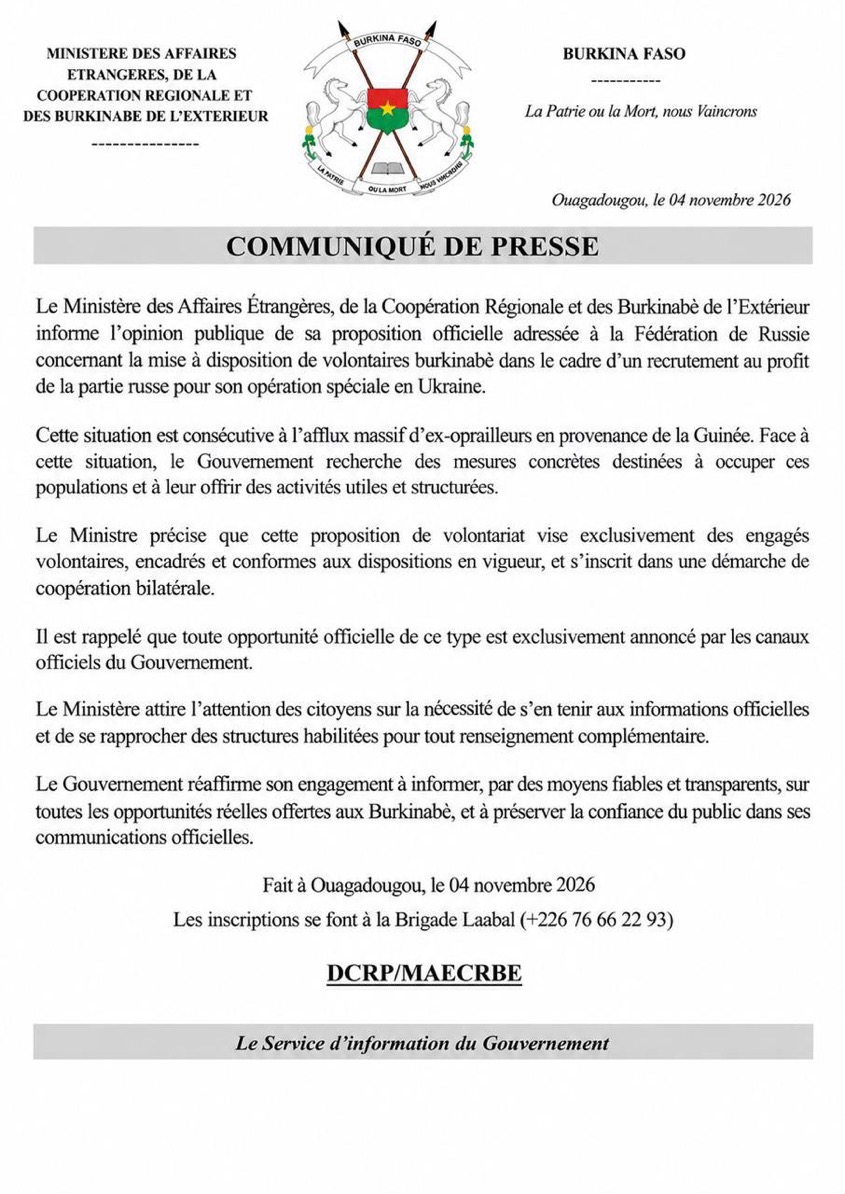
Ouagadougou and Moscow are reportedly negotiating the transfer of Burkinabè gold miners expelled from Guinea to potentially reinforce Russian forces in Ukraine. This developing alliance raises serious questions about the human cost of geopolitical partnerships and the fate of vulnerable migrants caught in the crossfire of foreign conflicts.
From gold pits to war zones: the troubling journey of expelled miners
The proposed arrangement centers on Burkinabè nationals who were forcibly removed from Guinean mining sites under unclear circumstances. Their precarious economic situation following deportation may now be leveraged as a solution to Moscow’s manpower shortages in Ukraine. Reports indicate their movement toward Burkina Faso’s capital could be the first step toward military enlistment rather than humanitarian resettlement.
Key concerns include:
Whether these individuals were fully informed of potential combat roles in a foreign war
The transparency of recruitment terms, including duration, risks, and compensation
Whether their economic desperation is being exploited as a recruitment tactic
Russia’s growing presence in West Africa
Since Ibrahim Traoré’s leadership took power, Burkina Faso has increasingly pivoted toward Moscow for security cooperation. Documented paramilitary deployments in mid-2024 underscore the deepening defense ties between the two nations. While officials frame this partnership as a sovereign choice, critics argue that the transfer of expelled miners to Ukraine would extend this alliance into uncharted and ethically fraught territory.
Sovereignty versus human cost: a critical debate
Burkina Faso’s leadership has emphasized its right to diversify international alliances. However, sovereignty also demands responsibility: protecting citizens from coercion into high-risk military roles abroad. Questions persist over:
Who authorized the grouping and transportation of these migrants?
What guarantees exist for their safety and informed consent?
How would their status as combatants or civilian volunteers be defined?
The human dimension behind geopolitical moves
Behind the diplomatic maneuvering lie individuals uprooted from their livelihoods, facing uncertain futures. Their potential deployment to Ukraine would transform a humanitarian crisis into a military one, with irreversible consequences. The lack of clarity on their final destination whether resettlement or frontline combat highlights a troubling ambiguity in this partnership.
The ultimate question remains: Are these migrants being offered a path to recovery, or are they being treated as expendable assets in a distant war?
By Maimouna Kaboré — Journalist
