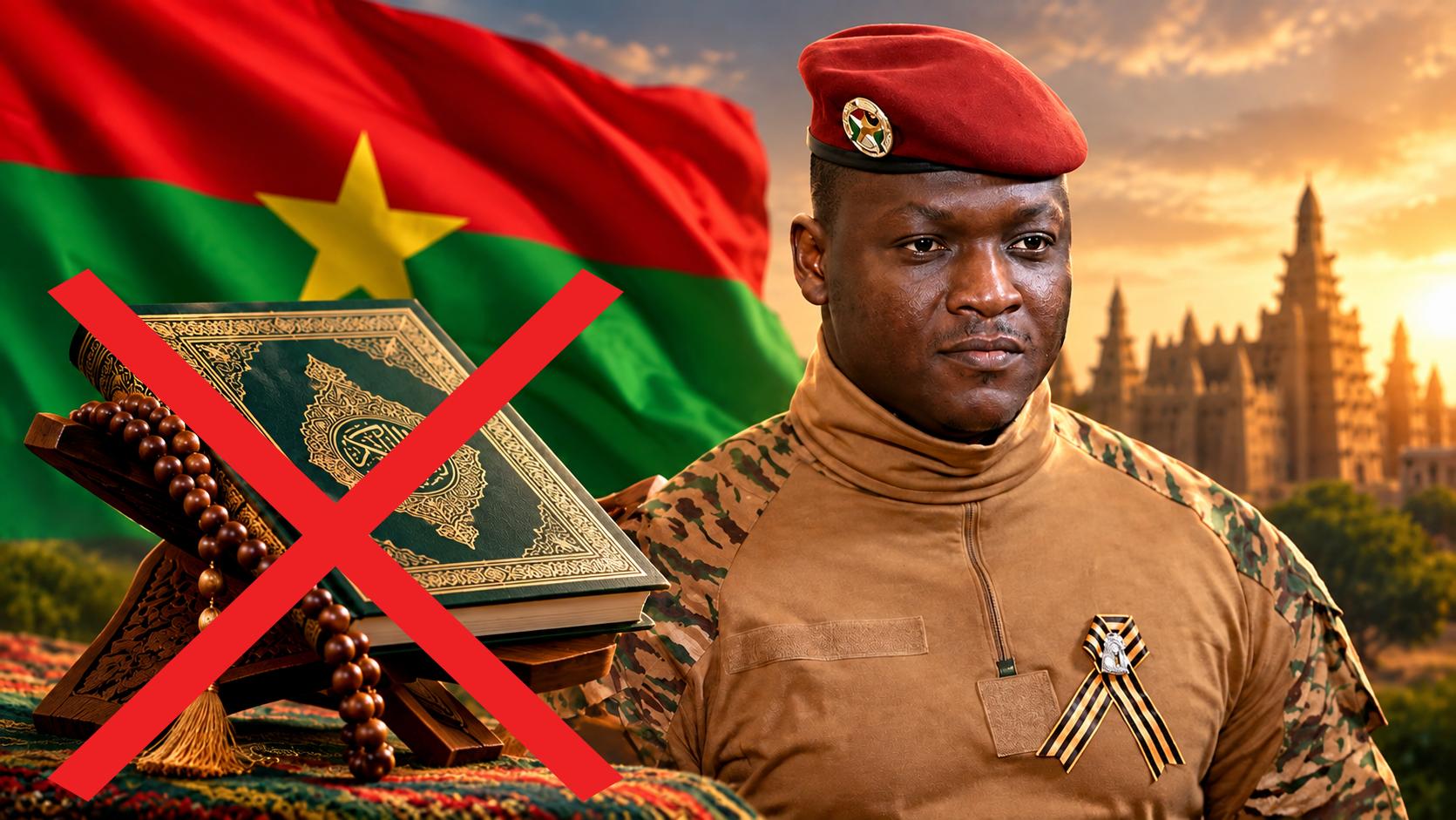
Burkina Faso’s anti-terror crackdown: the unseen consequences for Muslim leaders and national unity
In Burkina Faso, the line between fighting armed extremism and suppressing religious freedoms has blurred beyond recognition. Under the guise of eradicating the terrorist threat plaguing the nation, the transitional government led by Captain Ibrahim Traoré is pursuing an unprecedented strategy to control and repress the country’s majority Muslim community—a move that has sparked deep concern among both citizens and observers.
The official narrative of « national security » masks a calculated campaign to bring Muslim clerics and institutions under tight supervision in Ouagadougou. What began as a security operation has quietly morphed into a systematic effort to silence dissenting religious voices, raising serious questions about the true motives behind this crackdown.
The mechanics of repression: how imams are being targeted
Since early 2023, the government’s security rhetoric has served as a justification to systematically target independent religious leaders. Moderate imams, influential preachers, and leaders of Muslim associations have faced arbitrary arrests, secret detentions, or forced conscription into the Volunteers for the Defense of the Homeland (VDP). Their alleged offense? Questioning the junta’s handling of the security crisis, criticizing its methods, or even advocating for the protection of civil rights.
Mosques and Quranic schools in high-risk zones have been subjected to relentless inspections, sudden closures, and baseless accusations of collaboration with armed groups. By labeling any unaligned religious discourse as « subversive » or « complicit with the enemy, » authorities have fostered an atmosphere of fear within a community long recognized for its role in fostering social cohesion and mediation.
Why this strategy is backfiring
The junta’s hardline approach appears to serve a dual purpose: eliminating potential sources of organized dissent while asserting absolute control over public discourse. By focusing on local Islamic networks, the transitional regime aims to enforce ideological conformity and stifle any form of organized opposition.
Yet, far from weakening jihadist groups operating in the region, this aggressive campaign risks fueling the very instability it claims to combat. By stigmatizing Burkina Faso’s Muslim majority, eroding customary and spiritual networks, and removing moderate religious figures, the government is deepening a sense of injustice and alienation among the population.
In framing religion as an internal enemy under the banner of sovereignty and security, Ibrahim Traoré’s administration is gambling with national unity. The strategy threatens to fracture the social fabric of a country already pushed to its limits, potentially driving more citizens toward resentment or even radicalization.
The role of the VDP: coercion disguised as patriotism
The forced recruitment of imams and religious leaders into the VDP is more than a security measure—it’s a symbolic assertion of control. By integrating these figures into a state-backed militia, the junta transforms them from community leaders into instruments of its own authority. This not only undermines their spiritual influence but also sends a chilling message to the broader population: dissent is not tolerated, regardless of its religious or moral basis.
What lies ahead for Burkina Faso’s Muslim community
As the crackdown intensifies, the long-term consequences for social trust and national cohesion remain uncertain. Moderate leaders, once pillars of stability, are being sidelined or silenced. Mosques, the heart of community life, now face the threat of permanent closure. And the faithful, caught between state surveillance and jihadist violence, are increasingly vulnerable.
While the junta insists it is protecting the nation, many see its actions as a dangerous overreach that risks exacerbating the very divisions it claims to prevent. The question now is whether Burkina Faso can recover from this erosion of trust—or if the strategy of repression will define the country’s future.
