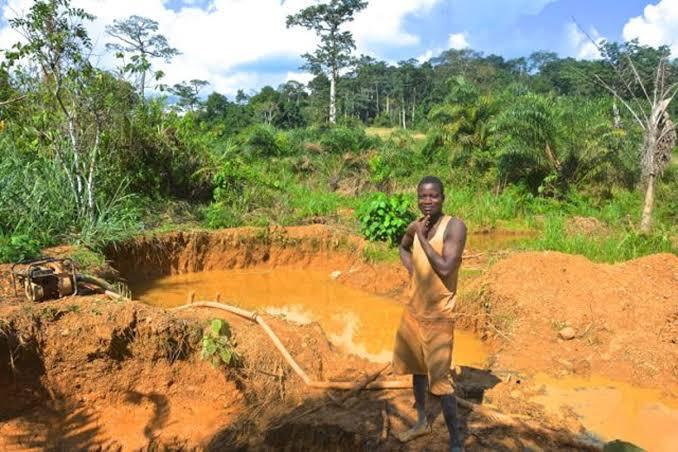
Burkina Faso youth face crackdown in Guinea after fleeing home
Young miners from Burkina Faso, fleeing worsening security crises and political turmoil at home, are now being forcibly uprooted from unregulated gold mines in Guinea after a sweeping government crackdown. The recent military operations in Siguiri’s informal mining zones—particularly in Kouremalé, Djatéla, and Bouré-Kourda—have left hundreds stranded with no legal protections, no livelihoods, and no clear path forward.
The brutal choice: dictatorship at home or exploitation abroad
The collapse of governance in Burkina Faso has left its youth with a stark dilemma: remain under the rule of an authoritarian junta that fails to ensure safety or basic freedoms, or risk the dangers of clandestine migration in search of economic survival. With rural areas plagued by extremist violence and urban centers choked by political repression, thousands have chosen flight over resignation—only to find themselves trapped in a new cycle of hardship.
The exodus is not born of ambition, but of necessity. Disillusioned by empty promises of security and progress from military leaders, these young Burkinabè set out with one goal: to escape the suffocating grip of the regime. Their destination? The gold-rich but lawless mining belts of neighboring Guinea, where hope of prosperity quickly gave way to exploitation and despair.
Gold fields become death traps: the human cost of unregulated mining
Arriving in Siguiri, many were recruited into artisanal gold mining—an industry notorious for its lack of oversight, dangerous working conditions, and rampant abuse. These migrants became part of an underground economy, stripped of rights, vulnerable to extortion, and forced to work in hazardous pits for meager returns. Their labor fueled Guinea’s shadow gold trade, enriching middlemen while they struggled to survive on starvation wages.
But their fragile existence came crashing down when Guinean security forces launched a nationwide crackdown. In a single week, authorities destroyed makeshift camps, burned storage hangars, and dismantled the last vestiges of their livelihood. With no legal recourse, no compensation, and no government outreach, these Burkinabè miners now face a harrowing journey home—if they can even afford the transport.
From exile to expulsion: a failed safety net
The current crisis reveals a tragic paradox: young Burkinabè were forced out of their country by violence and repression, only to be violently expelled from their adopted refuge. The Guinean operation underscores the reality that unregulated mining zones are not safe havens, but zones of lawlessness where migrants are treated as disposable labor.
Now stranded, these young men and women—many of whom left Burkina Faso with little more than the clothes on their backs—are caught between two failed states. Neither Ouagadougou nor Conakry offers them protection or opportunity. Their plight is not just a humanitarian emergency; it’s a damning indictment of governance failures across West Africa, where autocratic rule and economic mismanagement continue to manufacture refugees and outcasts.
The human toll: families torn apart and dreams shattered
Abandoned by official channels, these miners are resorting to informal networks to return home. Families have been separated, bank accounts drained, and futures indefinitely delayed. Many report psychological trauma after witnessing camp demolitions and facing physical threats from both authorities and armed groups operating in the mines. Survivors describe a sense of betrayal—not just by their own government, but by the very idea of seeking refuge beyond their borders.
What lies ahead: no easy solutions
As the Guinean government tightens control over illegal mining, the displaced miners have little choice but to return to Burkina Faso, where the security situation remains dire. But return is not rescue. It’s a return to the same instability, the same lack of opportunities, and the same cycle of forced migration. Without structural reforms in governance, economic policy, and regional cooperation, the story of these young Burkinabè will continue to repeat itself—across borders, and across generations.
One thing is clear: when young people are given no path to dignity at home, they will risk everything to find one abroad. And when even that fails, the consequences are not just personal—they ripple across nations, deepening insecurity and eroding trust in governance across West Africa.
