Burkina Faso secures €40 million Belgian aid despite political tensions
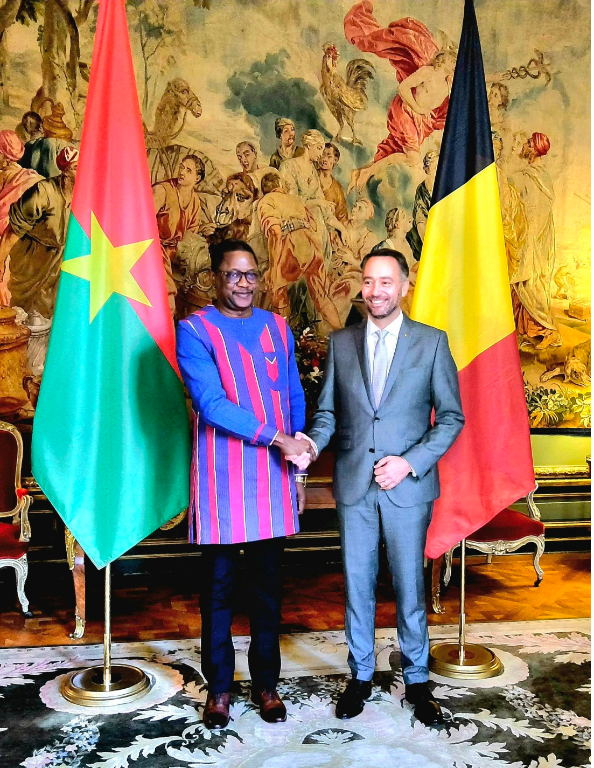
Burkina Faso’s foreign minister, Karamoko Jean-Marie Traoré, concluded a two-day working visit to Brussels on 5 November 2026 with a firm financial commitment from Belgium: €40 million in development aid for the post-2027 period. The pledge arrives amid growing strains between Ouagadougou and Western capitals, raising questions about the future of Burkina Faso’s international partnerships under President Ibrahim Traoré.
Belgium reaffirms financial support despite diplomatic friction
The announcement follows talks between Traoré and Belgian counterpart Maxime Prévot, where both sides highlighted the continuity of bilateral cooperation through Belgium’s development agency, Enabel. The €40 million pledge extends a €34.5 million cooperation package already in place for 2023–2027, focusing on sustainable development and improving living conditions for Burkinabè citizens.
While the funds have not yet been disbursed, the commitment signals Belgium’s intent to uphold its partnership with Burkina Faso—a nation facing significant economic, social, and security challenges. For Brussels, maintaining engagement in the Sahel aligns with broader strategic interests.
Brussels meetings go beyond money: a broader diplomatic agenda
The Belgian visit was not confined to financial discussions. Traoré also held talks with Kaja Kallas, the European Union’s High Representative for Foreign Affairs and Security Policy, on 4 November. The meeting covered Burkina Faso’s evolving relationship with the EU and its vision for international partnerships.
The next day, Prévot and Traoré reviewed bilateral cooperation, regional dynamics, and future collaboration opportunities. These exchanges underscore that, despite recent tensions, diplomatic channels between Ouagadougou and European institutions remain operational.
Can sovereignty and foreign aid coexist under Traoré?
Since taking office in September 2022, President Traoré has championed national sovereignty, seen in the withdrawal of French troops, criticism of Western policies, and closer ties with Russia. Against this backdrop, Belgium’s continued financial support may appear contradictory.
One explanation lies in separating political opposition from complete diplomatic rupture. States can challenge a partner’s policies while still engaging in economic and institutional cooperation. Burkina Faso may reject Western influence in some areas while accepting aid that aligns with its development goals.
The country’s strategy of diversifying partnerships also plays a role. Strengthening ties with Moscow does not necessarily preclude maintaining links with Brussels, provided each relationship serves distinct purposes.
Pragmatism over alignment: what’s next for Burkina Faso-Belgium relations?
Does Traoré’s Brussels visit mark the start of a Western rapprochement? The evidence so far suggests otherwise. While the €40 million aid pledge and high-level meetings reflect a willingness to keep dialogue open, meaningful reconciliation would require concrete steps—new agreements, renewed cooperation projects, or the actual implementation of financial commitments.
For Belgium, preserving engagement in the Sahel is a priority. For Burkina Faso, the challenge lies in securing external resources while asserting independence in partner selection.
Ultimately, the €40 million pledge does not signal a return to alignment with the West. Instead, it highlights a pragmatic reality: despite bold sovereignty rhetoric, Ouagadougou and Brussels continue to find common ground. In the balance between national pride and economic need, Ibrahim Traoré’s diplomacy seeks a sustainable middle path.
