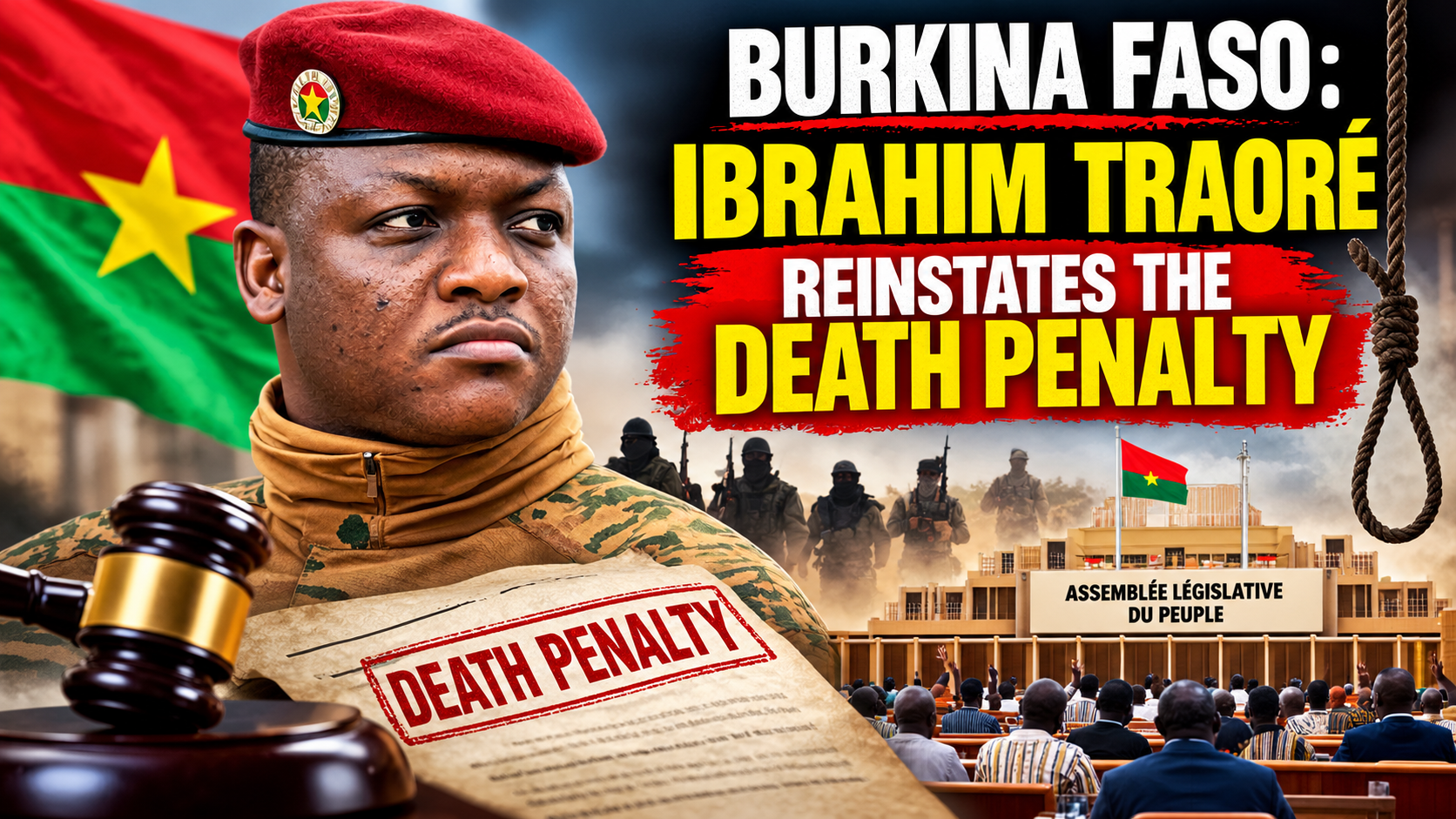
Burkina Faso reinstates death penalty amid security crisis
Government defends harsher penalties as solution to jihadist violence
The Burkina Faso military leadership has escalated its crackdown on crime by reinstating the death penalty, following legislative approval of a new penal code that abolishes a 2018 ban. The move, framed as a measure to bolster national security, has intensified debates about whether extreme penalties can curb jihadist violence or merely deepen societal fear.
New penal code targets terrorism and trafficking
The reformed legislation imposes capital punishment for crimes including terrorism, espionage, treason, and parricide. It also extends the penalty to individuals found guilty of importing expired or prohibited goods that result in death. Authorities argue these measures reflect a commitment to restoring public order amid escalating insurgent attacks.
However, critics warn that punitive measures alone cannot address the root causes of insecurity. Effective security policy requires robust intelligence gathering, preventative action by defense forces, and legal frameworks that ensure fair trials elements not guaranteed by stricter penalties alone.
Public safety hinges on more than extreme sentencing
The government’s emphasis on harsh penalties contrasts with ongoing challenges in protecting civilians. Since 2015, Burkina Faso has faced relentless attacks by armed groups, displacing over two million people and leaving rural communities vulnerable. While citizens demand safety, the new penal code risks prioritizing retribution over prevention.
Analysts point out that the death penalty may satisfy demands for decisive action but fails to address systemic weaknesses in security infrastructure. Without improved military presence, intelligence capabilities, and judicial transparency, severe penalties risk becoming symbolic gestures rather than solutions.
Freedom of expression under threat in new legal framework
Critics also highlight concerns over press freedoms, as the revised penal code re-criminalizes certain journalistic activities under national security provisions. This follows reports of detentions of journalists and critics, raising fears that the legislation could be used to silence dissent.
In a climate where state critics face arbitrary arrests and forced conscriptions into security operations, the death penalty’s reinstatement further complicates the balance between security and civil liberties. Legal experts argue that irreversible punishments demand ironclad judicial guarantees to prevent abuse.
Can Burkina Faso’s government balance deterrence and human rights?
President Ibrahim Traoré has framed the reforms as a necessary shift toward absolute authority in the face of treason and espionage. Yet, the absence of independent judicial oversight raises questions about the regime’s commitment to fair trials. A justice system that values severity over due process risks undermining public trust.
For ordinary Burkinabè, the priority remains tangible security: safe markets, functioning schools, and protection from armed attacks. The government’s ability to meet these needs will determine whether harsh penalties yield real stability or merely entrench a culture of fear.
Will Burkina Faso’s punitive turn deliver security or deepen crisis?
The death penalty’s return is not merely a legal adjustment but a defining policy choice. Advocates argue it deters severe crimes, while opponents warn it could erode democratic norms without curbing violence.
As the nation grapples with jihadist threats, the critical test lies in whether the regime can demonstrate measurable improvements in civilian protection without sacrificing the rule of law.
By Maimouna Kaboré — Journalist
