Benin’s UN security pitch uncovers the hidden mechanics of regional cooperation
What Benin’s UN speech reveals about the unseen gears of Sahel security
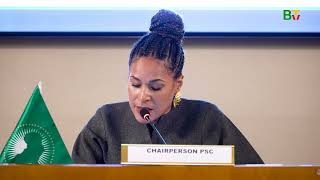
The Bénin delegation stepped into the spotlight at the United Nations headquarters in New York, not with abstract proposals, but with a detailed roadmap already in motion across West Africa. Foreign Minister Corinne Amori Brunet delivered the country’s national statement on the final day of the 81st UN General Assembly session, flanked by Ambassador Marc Hermanne Araba, Permanent Representative of Benin to the UN. Her timing was deliberate: following the high-profile speeches of Mali, Burkina Faso and Niger.
From UN podium to operational doctrine: Benin’s three-tier security blueprint
The address was more than diplomacy—it was a snapshot of a working security doctrine that Benin has been refining at home and exporting across the region. As its term at the helm of the African Union’s Peace and Security Council draws to a close, Bénin is showing what it takes to back up international rhetoric with boots on the ground.
Tier one: securing borders, protecting people — the Mirador mission
The government launched Operation Mirador to lock down northern border zones, especially around Pendjari and W National Parks, long exploited as rear bases by armed groups. Rather than waiting for threats to arrive, the strategy positions troops proactively, conducts frequent patrols and fills manpower gaps through accelerated recruitment and training of new security personnel.
Tier two: regional coordination that moves at the speed of threat
Bénin is a driving force behind the Accra Initiative, a regional security compact with Ghana, Togo, Côte d’Ivoire and Sahel partners. Unlike traditional alliances that stall in committees, this framework delivers:
- Real-time intelligence sharing: weekly tactical exchanges between intelligence services to track cross-border movements and dismantle safe havens.
- Joint strike packages: synchronized military operations to prevent militant groups from slipping between borders.
Tier three: development as deterrence — investing beyond the battlefield
The Bénin government argues security cannot be waged with guns alone. Through the Beninese Agency for Integrated Border Area Management (ABeGIEF), it directs infrastructure funding to the country’s far north: schools, water points, health centers and rural roads. The goal is to shrink recruitment pools for extremist networks by giving communities tangible alternatives to militancy.
Why citizen involvement is the secret weapon in Benin’s security playbook
One of the least discussed but most critical elements of Bénin’s approach is its early-warning system powered by local communities. Hotlines and neighborhood alert networks turn ordinary citizens into eyes and ears of the state. This grassroots intelligence feeds directly into military planning, creating a feedback loop of prevention rather than reaction.
The takeaway for West Africa: a model built on action, not just words
Bénin’s UN address wasn’t a call for new ideas—it was a demonstration of a doctrine already producing measurable results: fewer cross-border incursions, stronger local trust and faster military responses. In a region where many nations talk security but struggle to implement it, Bénin is showing how cooperation, investment and community partnership can turn strategy into stability.
