
Bénin’s agricultural backbone at risk: degraded soils threaten food security
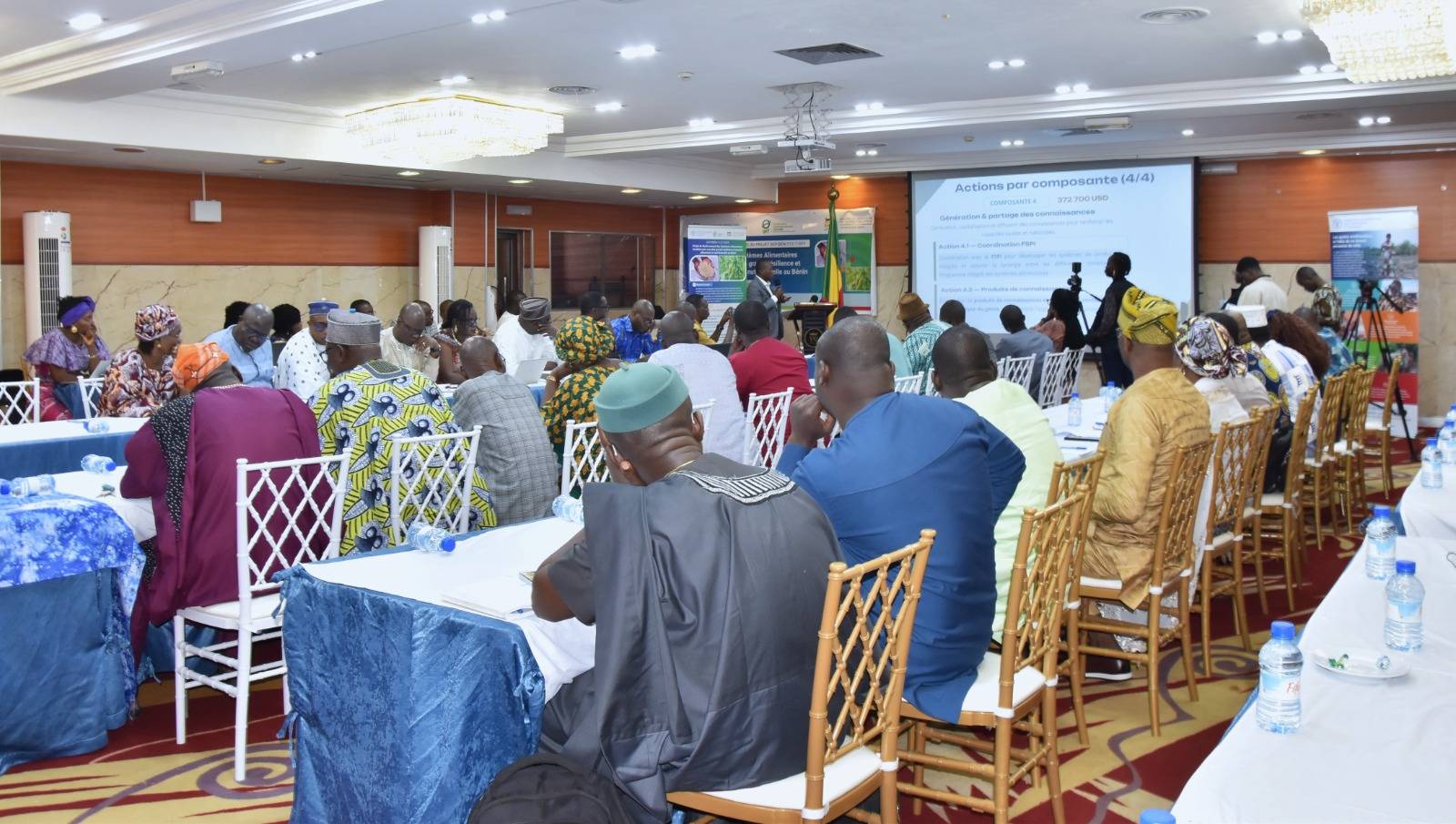
Bénin’s economy thrives on agriculture, accounting for 70 % of jobs, 26 % of GDP, and 80 % of export revenues. Yet this vital sector is under severe strain due to a silent crisis: the alarming depletion of soil fertility. During the launch of the Food Systems initiative on July 24, 2026, at the Bénin Royal Hotel in Cotonou, Minister of Agriculture Adin Yeton Bloukounon Goubalan delivered a stark warning.
« Degraded soils mean lower yields, pushing farmers into a cycle of poverty and food insecurity, » the minister declared before agricultural leaders and institutional partners. Recent national studies reveal a troubling reality: nearly 40 % of Bénin’s population—over 5 million people—are directly affected by land degradation. Shockingly, 38 % of the country’s total land area is now classified as degraded, a condition that has slashed agricultural output by at least 50 %. This decline not only threatens rural livelihoods but also undermines access to essential resources like clean water and nutritious food.
Food Systems: a transformative vision for maize and rice production
The Food Systems project—officially titled Sustainable Food Systems for Resilience and Food Security in Bénin—represents a bold national response to this ecological and economic emergency. Developed in partnership with the Food and Agriculture Organization (FAO) and the Global Environment Facility (GEF), the initiative is not merely a short-term fix but a systemic overhaul of the country’s agricultural framework.
The project’s primary goal is to modernize public agricultural policies, enhance production efficiency, and strengthen market access. It focuses on two staple crops—maize and rice—both widely consumed in rural and urban areas. The aim is to shift these value chains from low-productivity, environmentally harmful practices toward integrated, high-performing systems that deliver tangible socio-economic benefits.
A strategic investment with measurable impact
To achieve its objectives, the initiative has secured a total budget of $20,766,207, funded through a tripartite partnership. The Global Environment Facility contributed $5,966,207, while the Bénin government provided $14,800,000 in national co-financing. Implementation will unfold across five strategically selected communes: Karimama, Malanville, Glazoué, Kétou, and Les Aguégués, with activities running through 2030.
The expected outcomes are significant: the restoration of 20,000 hectares of degraded land and the adoption of sustainable farming practices on 114,900 hectares. On the ground, the project is set to directly support 36,000 producers, with ripple effects benefiting nearly 356,000 people in the targeted regions.
Collaboration and caution: the keys to success
While the project’s long-term vision inspires hope, its leaders emphasize the need for rigorous execution. Minister Goubalan stressed the importance of carefully selecting soil restoration technologies before scaling up interventions. « The methods we deploy must be proven effective, » he noted, warning that premature or untested approaches could undermine the entire initiative.
Paul-Henri Zoéwindé Bouda, FAO Resident Representative in Bénin, echoed this sentiment, highlighting the indispensable role of collective engagement. « Technology alone cannot drive change, » he stated. « Success depends on the full commitment of all stakeholders—government teams, implementing partners, and most importantly, the farmers themselves. »
A model for regional resilience
By addressing the root cause of declining agricultural productivity, the Food Systems project positions Bénin to achieve greater food sovereignty. If targets are met by 2030, the country could not only stabilize its rice and maize supply but also serve as a replicable blueprint for ecological transition across West Africa.