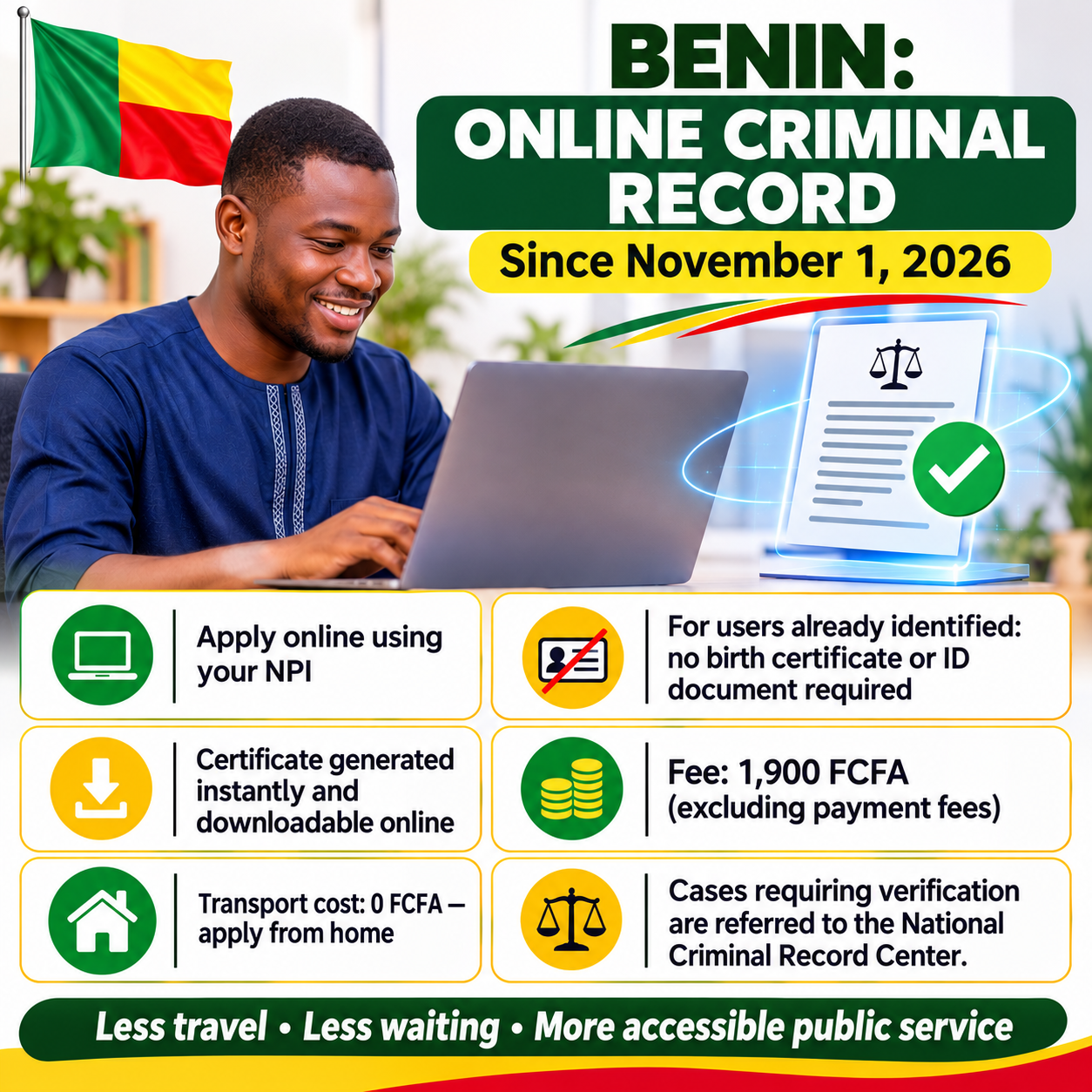
Benin’s digital criminal record system cuts paperwork and queues for citizens
Immediate online access to criminal records launched in Benin
Benin has launched a digital platform that allows citizens with a National Identification Number to obtain their criminal record instantly and online, eliminating the need for in-person visits and cumbersome paperwork. The initiative, effective from November 1, 2026, marks a significant milestone in the country’s digital transformation of public services.
Eliminating decades of administrative bottlenecks
Previously, obtaining an official document such as a criminal record required multiple trips to government offices, often located far from residential areas, resulting in lost work hours, transportation costs, and long waiting periods. For rural residents, workers, students, and members of the diaspora, these obstacles were particularly burdensome.
Citizens frequently had to:
Travel long distances to reach administrative centers
Bear the cost of transport and other incidental expenses
Wait for hours or days in crowded offices
Make repeat visits when documents were unavailable
Rely on intermediaries, especially when living abroad
The new digital system removes these barriers by enabling users to request and download their criminal record directly from the national public services portal, using only their National Identification Number.
Simplified process reduces paperwork and costs
The updated procedure eliminates the need for applicants to submit additional supporting documents such as birth certificates or national ID cards provided their data is already verified in government databases. Once a request is validated, the criminal record is automatically generated and available for download.
The official processing fee remains at 1,900 FCFA, excluding payment platform charges. While the system streamlines most requests, cases requiring manual review are automatically forwarded to the National Criminal Record Center to ensure document authenticity and administrative control.
Key benefits of the new system
Zero travel costs: No need to commute to government offices
Time savings: Documents obtained in minutes, not days
Accessibility: Available to all citizens, including those abroad
Efficiency: Reduces administrative workload and waiting times
The evolution of Benin’s digital administration
Benin’s digital transformation began in July 2020 with the launch of online applications for various administrative documents, including passports and criminal records. This new step builds on earlier reforms to further simplify public service delivery.
The government’s goal is not merely to digitize forms but to bring services closer to citizens. By enabling people to complete official procedures from home or abroad, the administration is shifting from a model based on citizen movement to one based on service delivery.
This approach aligns with a growing public expectation: easy, fast, and cost-effective access to administrative services without unnecessary constraints.
Who benefits most from this innovation?
The online criminal record system particularly benefits:
Working professionals: Saves hours otherwise spent in queues
Students: Eases application processes for scholarships and internships
Rural residents: Eliminates long-distance travel for simple procedures
Diaspora communities: Enables request completion from abroad without intermediaries
Geographic location or employment status no longer needs to hinder access to essential administrative documents.
A model for digital governance in Africa
Benin’s initiative demonstrates how digital tools can transform public administration by reducing bureaucracy, cutting costs, and improving efficiency. Other African nations, where citizens still face significant logistical hurdles to obtain official documents, could learn from this example.
The digitalization of public services should not remain a political slogan but must translate into measurable benefits: less travel, lower expenses, shorter wait times, and greater accessibility for all citizens. Benin’s experience offers a practical blueprint for governments seeking to modernize their civil services and better serve their populations.
A step toward more accessible government services
The instant online availability of criminal records represents a meaningful advance in Benin’s administrative modernization. By removing the need for physical documents and in-person visits, the system not only saves time and money but also strengthens trust in government services.
As digitalization continues, ensuring accessibility for those unfamiliar with technology and protecting personal data remain priorities. Yet these challenges do not diminish the value of this reform, which has already improved daily life for thousands of citizens. It proves that modernization, when effectively implemented, can be a powerful tool for creating a more efficient, transparent, and citizen-centered public administration.
The message is clear: public services should exist to serve citizens not the other way around. Benin’s digital criminal record system is a step in the right direction.
By Yacouba Ouédraogo — Journalist
