
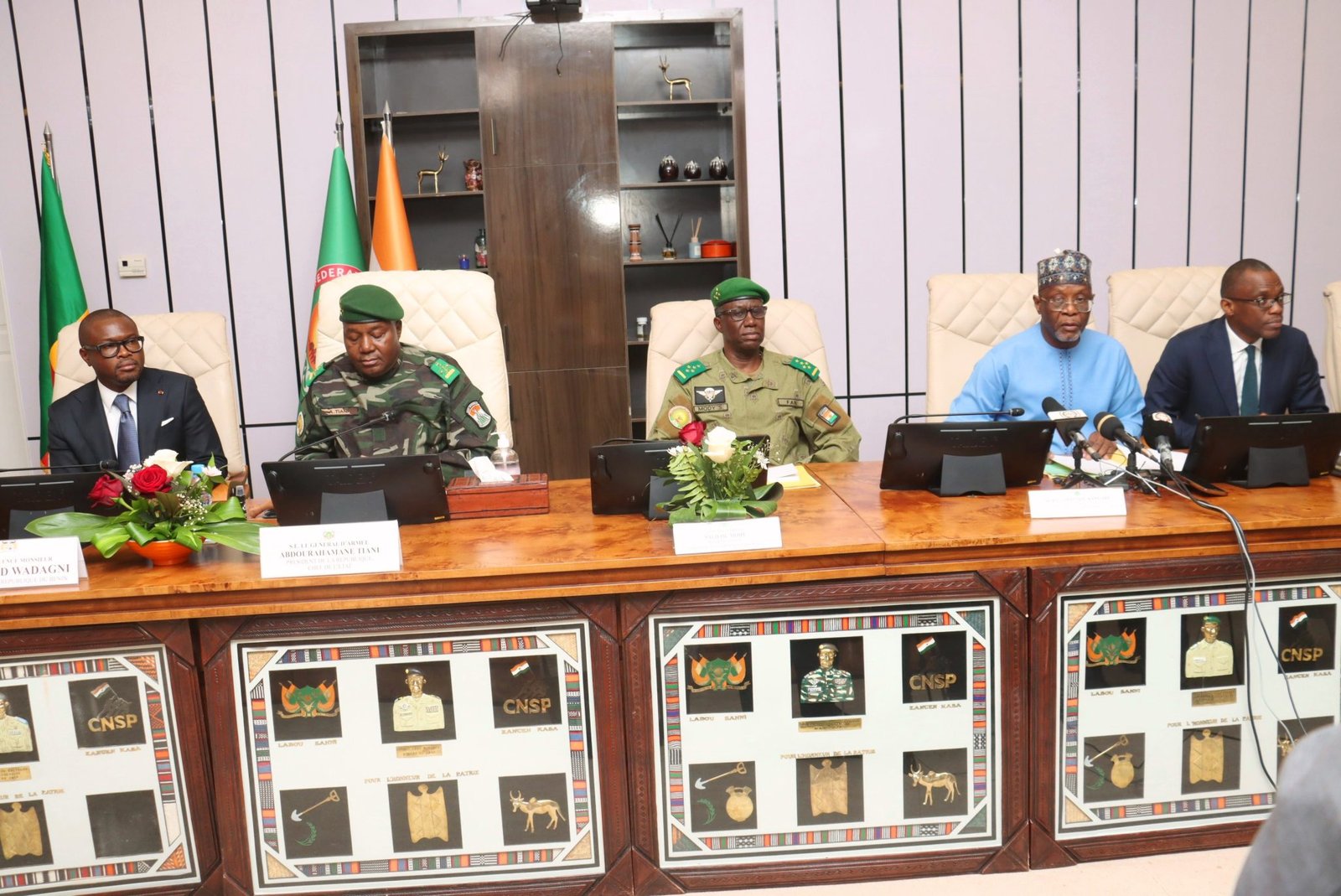
Ties between Bénin and Niger have reached a pivotal moment with a landmark visit and new commitments to restore cross-border cooperation. On June 2, 2026, President Romuald Wadagni of Bénin concluded a landmark working visit to Niamey, where he met with his Nigerien counterpart, Abdourahamane Tiani. The two leaders concluded their discussions by announcing the formation of a joint expert committee tasked with assessing and addressing the conditions required to reopen the land border between the two nations.
The announcement follows the release of a joint communiqué outlining the outcomes of the high-level talks. The committee has been given a strict 15-day deadline to evaluate existing barriers—whether administrative, security-related, or logistical—and propose actionable steps to remove them. Once its findings are submitted, both governments will review the recommendations to determine the feasibility of restoring free movement between Bénin and Niger.
Shared vision for stronger bilateral ties
The discussions in Niamey were marked by mutual respect and a shared commitment to deepening cooperation across multiple sectors. Both presidents emphasized the historical bonds uniting Bénin and Niger, rooted in decades of cultural and economic exchange. They reaffirmed their dedication to strengthening bilateral relations with a focus on three core priorities: regional security, economic integration, and sustainable development.
In a show of intent, the leaders agreed to revitalize the existing Niger-Bénin Joint Cooperation Commission. Regular meetings of this body will help maintain momentum in collaborative initiatives, from infrastructure projects to cross-border trade facilitation.
Security challenges drive closer collaboration
The rise of violent extremism across the Sahel has posed persistent threats to peace and stability in West Africa. During their talks, both presidents highlighted the urgent need for coordinated action to combat terrorism and cross-border crime. They underscored that unchecked insecurity not only jeopardizes national security but also undermines economic progress and social cohesion in both countries.
They pledged to enhance intelligence sharing, joint patrols, and coordinated border management to disrupt the activities of armed groups operating near their shared frontier. These measures are seen as essential to creating a safer environment conducive to renewed trade and mobility.
Path to reopening the border
The closure of the Bénin-Niger border in mid-2023, following regional tensions, has had a profound impact on local communities and businesses. Cross-border trade, once a vital economic driver for towns like Malanville and Gaya, came to a near standstill. Families separated by the border faced hardship, while farmers and traders struggled to move goods across the frontier.
The establishment of the expert committee signals a clear political will to reverse this situation. Within two weeks, the panel is expected to deliver a comprehensive report identifying the necessary reforms—whether in customs procedures, infrastructure upgrades, or security protocols—to allow for a phased and safe reopening of the border.
Following the successful completion of the committee’s work and the implementation of its recommendations, President Wadagni extended a formal invitation to President Tiani to visit Cotonou. This reciprocal gesture is seen as a further step toward building trust and consolidating a new era of partnership between the two West African nations.