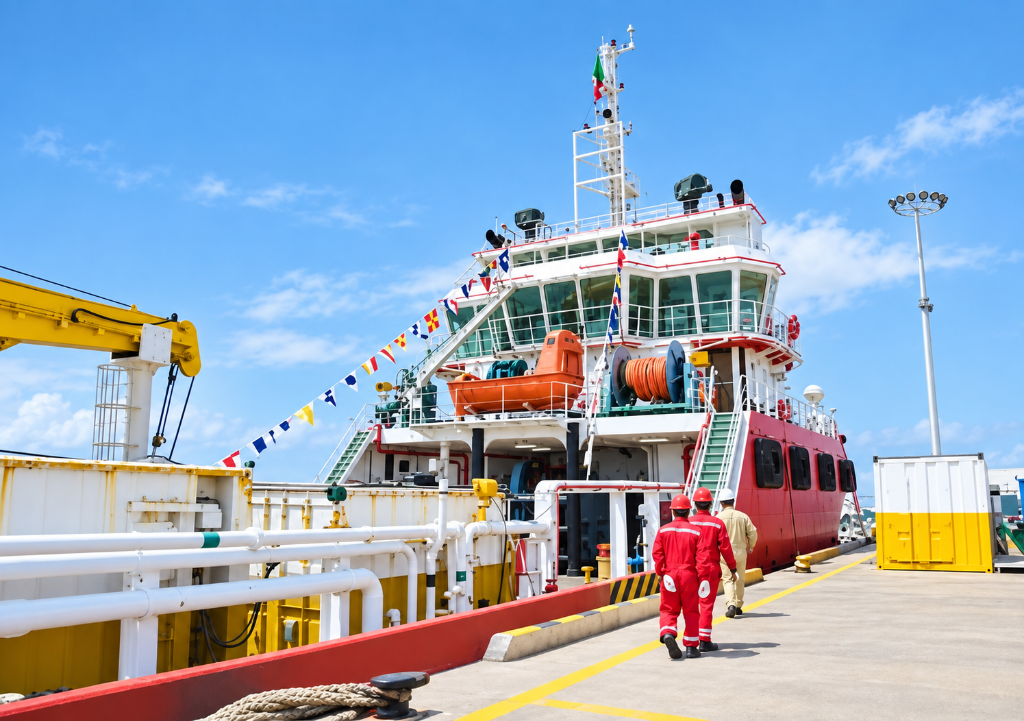
Behind the scenes: how Benin’s Sèmè field revival reshapes its economic future
By October 2026, Benin will make a historic return to the global oil stage with the first shipment of 250,000 barrels of crude from the offshore Sèmè field. This milestone isn’t just a commercial milestone; it’s the result of years of behind-the-scenes geopolitical, technical, and economic decisions that reveal how a nation’s energy strategy evolves behind closed doors.
The country’s economic landscape is on the brink of a fundamental transformation. While Benin has long been recognized as a regional trade hub and agricultural powerhouse, its decision to reinvest in Sèmè marks a strategic shift toward diversifying its growth model. The upcoming export isn’t merely an industrial event—it’s the culmination of strategic planning, international negotiations, and infrastructural overhauls that have quietly unfolded over the past decade.
Why the Sèmè field’s comeback wasn’t inevitable
The offshore Sèmè field, located just off Benin’s southeastern coast near the Nigerian maritime border, was discovered in the late 1960s but saw sporadic production through the 1980s and 1990s. The site was mothballed due to technical hurdles, low global oil prices, and dwindling yields—factors that made continued exploitation economically unviable at the time. So why revive it now?
The answer lies in a convergence of three critical factors:
- Technological leap: Advanced offshore drilling technologies, enhanced reservoir characterization methods, and improved extraction efficiency have transformed previously untappable reserves into viable assets.
- Market dynamics: Rising global energy demand and the diversification of supply chains have made even modest oil reserves strategically valuable for West African nations seeking energy independence.
- National strategy: The decision to revive Sèmè aligns with Benin’s broader Plan d’Action du Gouvernement, which emphasizes maximizing the value of national resources through sustainable extraction and value addition.
The recent geological surveys revealed untapped reserves with significant potential, prompting the government to secure partnerships with international oil firms and investors to finance the redevelopment of extraction infrastructure.
The 250,000-barrel milestone: more than just a number
While 250,000 barrels may seem modest compared to global giants, this shipment serves as far more than a financial transaction—it’s a strategic statement. For international buyers and traders, the first delivery establishes Benin’s crude as a recognizable commodity on the world market, determining its benchmark pricing relative to standards like Brent crude.
On the domestic front, the financial ripple effects are immediate and multifaceted:
- Foreign exchange boost: The influx of foreign currency will strengthen Benin’s foreign reserves, stabilizing the national currency and reducing pressure on the balance of payments.
- Fiscal revenue stream: The production-sharing agreement guarantees the state a direct share of extracted volumes, in addition to taxes levied on petroleum activities.
- Creditworthiness upgrade: Predictable revenue streams from oil sales can enhance Benin’s sovereign credit rating, improving access to international financing and reducing borrowing costs.
In a global economic environment plagued by commodity price volatility, diversifying national income sources acts as a crucial economic buffer, shielding Benin from external shocks.
Local industries ride the wave of Sèmè’s revival
The economic impact of the Sèmè project extends well beyond oil sales. The redevelopment phase has already mobilized substantial investment, directly benefiting local businesses across maritime services, construction, and logistics.
The offshore nature of the project demands heavy-duty infrastructure, from offshore installations and tug services to technical maintenance and high-tech equipment supply. Beninese companies in maritime logistics, civil engineering, and engineering services have secured subcontracting agreements, fostering skill transfers and creating high-value employment opportunities for the country’s youth.
Additionally, the expansion of the Cotonou and Sèmè coastline into an integrated industrial zone is accelerating. Upgrades to port facilities for storage, transport, and primary processing of oil are transforming the littoral into a regional hub for energy logistics, integrating Benin further into the Gulf of Guinea’s petroleum network.
The Niger-Benin pipeline: an unexpected synergy
The timing of Sèmè’s revival coincides with another strategic energy project: the Niger-Benin pipeline, which connects Niger’s Agadem oil fields to the Sèmè-Kpodji port terminal. Though distinct in operation, the two initiatives share an undeniable synergy.
Benin is positioning itself as a critical petroleum crossroads in the Gulf of Guinea. The expertise developed in managing the transit and export of Nigerien crude has bolstered local technical capacity, providing a foundation for Benin’s own offshore operations. This dual role—as both producer and transit hub—enhances the country’s visibility in regional and international energy forums, attracting further investment and partnership opportunities.
Balancing progress with responsibility: the governance challenge
The greatest challenge for Benin’s economic authorities lies in ensuring the sustainable and transparent management of its newfound petroleum wealth. Lessons from other resource-rich nations highlight the risks of mismanagement, corruption, and short-term profiteering—pitfalls that could undermine long-term development.
To mitigate these risks, the government has committed to:
- Establishing a sovereign wealth fund to allocate oil revenues toward priority sectors such as education, healthcare, and infrastructure.
- Implementing robust regulatory frameworks to oversee transparency in revenue collection and distribution.
- Investing in national capacity building to ensure long-term control over resource management.
The October 2026 shipment is not an endpoint but the opening chapter of a renewed industrial strategy. While modest in volume, its symbolic and catalytic potential lays the groundwork for a more diversified and resilient Beninese economy, capable of weathering global economic shifts while charting a sustainable future.
