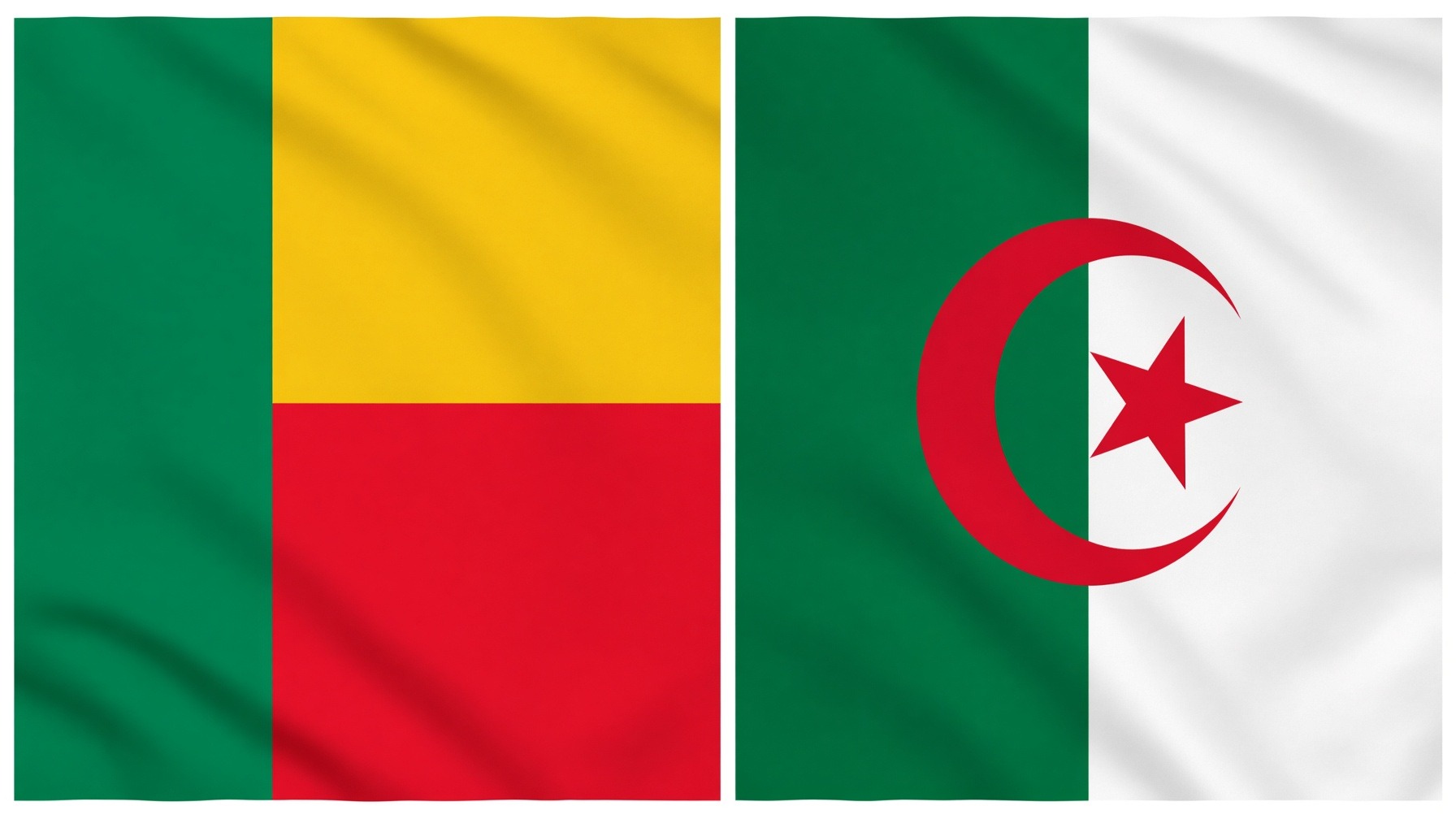
Behind the scenes: how Benin’s security calculus pivoted toward Algeria’s antiterror playbook
The corridors of Benin’s Ministry of National Defence in Cotonou buzzed with quiet intensity recently as high-level talks unfolded not with familiar Western partners, but with a delegation from Algiers. The closed-door meeting signalled a deliberate pivot: moving beyond traditional alliances to anchor Benin’s security architecture in a partnership with Algeria, a country whose counterterrorism blueprint has reshaped its own southern flank.
Why Cotonou looked east for its security makeover
Rising attacks along Benin’s northern border have forced the country to confront a harsh reality: the need for rapid upskilling and adaptive intelligence.
Algeria emerged as the natural choice for three strategic reasons. First, its military’s track record in subduing insurgent networks across the Sahara—desert operations, border surveillance, and rapid-response tactics—aligns closely with the terrain and climate Benin faces in the Sahel. Second, Algiers offers a non-Western pathway, allowing Cotonou to diversify its security partnerships without overreliance on traditional donors. Third, Algerian military academies and training centres provide a fast lane for Benin to elevate its officer corps and elite units, filling critical skill gaps in intelligence, logistics, and crisis management.
From handshake to hard commitments: the nuts and bolts of the defence deal
What began as diplomatic courtesy quickly evolved into concrete deliverables. The two sides are finalising a formal defence framework that will do more than just codify cooperation—it will embed Algerian expertise into Benin’s daily operations.
- Institutionalised training: Algerian instructors will run continuous professional development for Benin’s officers, with priority seats in counterinsurgency courses at Algerian academies.
- Electronic and tactical intelligence exchange: A secure channel for sharing signals intelligence and battlefield insights will be established, enabling real-time threat assessment along the porous Sahel-Saharan corridor.
- Crisis response protocols: Joint simulation drills and scenario planning will prepare both armies for cross-border incursions, hostage rescue operations, and rapid deployment scenarios.
- Regular strategic dialogue: A standing committee will meet quarterly to review emerging threats, reassess priorities, and adjust tactics before crises escalate.
These measures are not abstract gestures. They are designed to plug operational gaps that have left Benin vulnerable to spillover from Mali and Burkina Faso.
What this means for Benin’s north and the Gulf of Guinea
Algeria’s footprint in West Africa is not new, but its renewed engagement under this pact marks a geopolitical shift. By strengthening Benin’s northern defences, Algiers is effectively creating a buffer that protects not only Cotonou but the wider Gulf of Guinea region. This zone has seen rising piracy and smuggling linked to Sahel instability, putting Benin’s ports and coastal economy at risk.
For Benin’s civilian leadership, the pact delivers immediate political dividends: it demonstrates proactive leadership during a period when citizens question whether the state can secure its borders. Economically, investors in agriculture and agribusiness—critical sectors in northern Benin—are watching closely, hoping the security upgrade will unlock new trade corridors and reduce insurance costs.
Inside the room: the unspoken calculus
Beyond the public communiqués, the talks revealed deeper motivations. Algeria seeks to reinforce its role as a continental security stabiliser, countering perceptions that its influence is confined to North Africa. For Benin, the calculus was simpler: time is not on its side. With jihadist groups probing its northern edges and Western partners recalibrating their Sahel footprint, Cotonou needed a credible, rapid-deployment partner. Algeria fit the bill—not as a replacement for existing ties, but as a force multiplier.
This alliance is less about headlines and more about hard-edged preparation. The next phase will test whether Algeria’s doctrine can be transferred seamlessly to Benin’s tactical reality. If successful, it could redefine how smaller coastal states in West Africa approach their own Sahel security dilemmas.
Looking ahead: what comes next?
The agreement still needs parliamentary approval in both capitals, but momentum is strong. Next steps include:
- Deployment of a joint border assessment team to map high-risk infiltration routes.
- Development of a shared early-warning system using satellite and drone feeds.
- Launch of a bi-national rapid-reaction unit for joint anti-terror exercises.
For observers of West Africa’s security landscape, this pact is less a surprise than a strategic inevitability. The real story lies in what happens once the ink dries—and whether Algeria’s hard-won lessons can take root on Benin’s soil.
