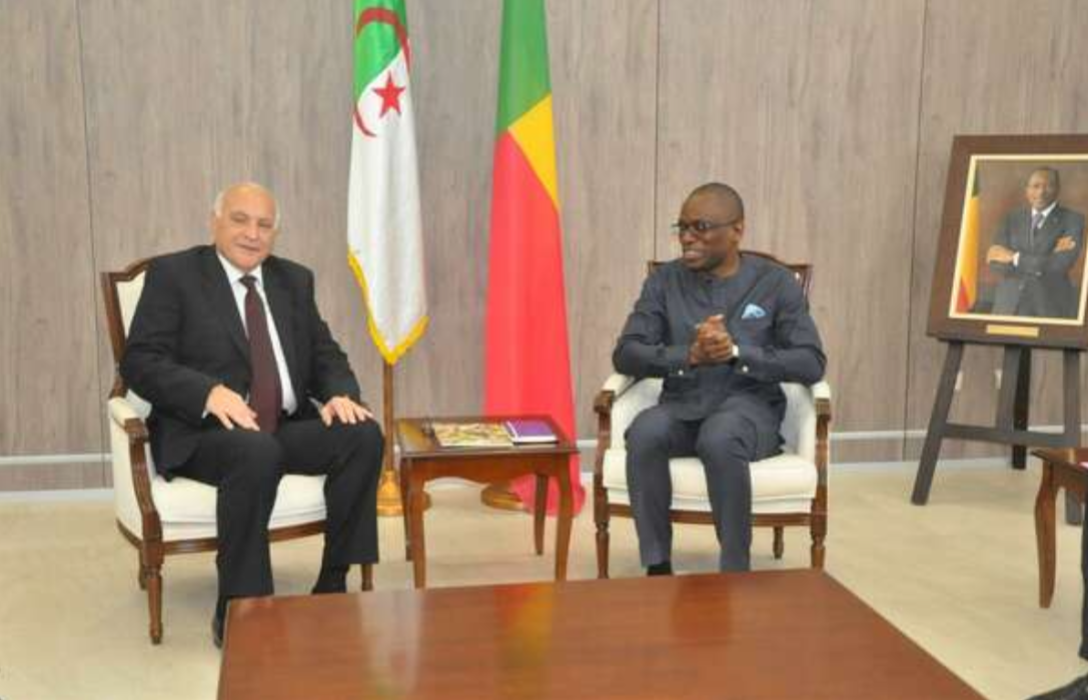
Behind the scenes at Cotonou: how Algeria’s deal-making reveals Africa’s integration challenges
Why Algeria’s economic push at Cotonou exposes the hidden costs of closed borders
Cotonou’s Benin Deal Room 2026 isn’t just another investment forum—it’s a pressure test for Africa’s South-South cooperation model. As Algerian firms jostle for partnerships in pharmaceuticals, energy, and infrastructure, the closed border between Niger and Benin looms as a stark reminder: no amount of deals can compensate for the absence of free movement.
While delegations inked memoranda of understanding and explored joint ventures, the geopolitical paradox became impossible to ignore. Algeria’s government—long focused on political alliances—now bets on economic integration, yet its most promising trade routes remain blocked just miles from the negotiation tables. The question isn’t whether Algeria can sell its expertise in Benin; it’s whether Africa can build the corridors to make those sales sustainable.
The Deal Room’s hidden equation: capital meets closed gates
The Benin Deal Room wasn’t designed for abstract debates. Over three days, it paired institutional investors with ready-to-fund projects valued at $2.5 billion across agro-industry, renewable energy, and logistics. For Algeria’s delegation—led by pharmaceutical giant Saidal and Sonelgaz’s electrical arm—this was a litmus test: could local solutions replace reliance on European markets?
The math seemed straightforward. Benin’s port and industrial zones offered a gateway to West Africa’s $700 billion consumer market. Algeria’s surplus in pharmaceuticals and energy could plug immediate shortages. Yet every potential contract faced the same silent obstacle: the 400-kilometer gap between Niamey and Cotonou, sealed since 2023. Without transit agreements, Algerian drugs bound for Niger must reroute through Burkina Faso or Togo, adding weeks to delivery times and inflating costs by 30%.
When pharmaceutical pipelines hit border walls
The pharmaceutical sector exemplifies the contradiction. Algeria’s state-owned Saidal produces 70% of its domestic drug demand and holds WHO-certified manufacturing capacity. With West Africa spending $4 billion annually on imported medicines, the fit seemed perfect—until a shipment of HIV treatment destined for a Niamey clinic sat stranded in Parakou. The border closure turned a $12,000 order into a $19,000 logistic nightmare, pricing Algerian generics out of competition.
Delegates at the Deal Room admitted the issue in private conversations. “We can offer competitive prices,” noted a Saidal executive, “but unless the trucks roll, we’re just another supplier waiting for a clearance that never comes.” The episode underscored a brutal truth: Africa’s integration isn’t about signing deals—it’s about removing the barriers in between.
Algeria’s pivot: from political alliances to industrial corridors
Algeria’s African strategy has undergone a quiet revolution. For decades, its engagement prioritized security pacts and diplomatic solidarity. Today, Sonelgaz’s engineers discuss microgrid installations in Benin’s northern regions, while Sonatrach negotiates gas export terms with both Niamey and Abuja. The shift reflects a broader continental trend: African nations now seek sovereign industrial development over aid dependency.
The Gazoduc transsaharien—planned to carry Nigerian gas through Niger and Algeria to Europe—promises to reconnect Saharan supply chains. Yet even as Sonatrach begins drilling in Niger’s Kafra block, the project’s viability depends on what happens outside the boardrooms. “A pipeline is only as strong as the roads that service it,” remarked a Sonelgaz logistics manager. “And roads depend on open borders.”
The energy paradox: abundance meets isolation
West Africa’s energy deficit is well-documented—60% of the region lacks reliable electricity. Algeria’s Sonelgaz, with its 20 GW generation capacity, sees a clear opportunity. During the Deal Room, it presented Beninese authorities with a proposal: build a 50 MW solar plant in Bohicon, reducing grid strain by 15%. Financing was secured; land permits were issued. The catch? The plant’s inverters must be sourced from Europe due to import restrictions in neighboring countries. Every component delayed at a closed border erodes the project’s margins.
“We’re building for the future,” said a Sonelgaz renewable energy director, “but we’re still playing by 20th-century rules. Tariffs, quotas, and—worst of all—closed gates.”
The Niger-Benin rift: a regional fracture point
The closed border isn’t just a bilateral dispute. It’s a symptom of a larger fragmentation gripping West Africa. In August 2026, Niger and Benin agreed to reopen talks on transit security and customs harmonization—but no deadline was set. Meanwhile, Niger’s Prime Minister warned that “stability cannot co-exist with siege economics.”
The crisis traces back to July 2023’s coup in Niamey. Benin, under pressure from ECOWAS, suspended trade relations. Niger retaliated by sealing its western frontier. Two years later, the stalemate persists, despite both nations’ dependence on Cotonou’s port: 80% of Niger’s imports flow through Benin’s docks. The closure has cost Niamey an estimated $1.2 billion in lost trade, while Benin’s logistics companies report revenue drops of 22%.
The domino effect: when one gate shuts, entire supply chains stall
The ripple effects extend beyond Niamey and Cotonou. Burkina Faso, already grappling with jihadist insurgencies, now faces doubled transport costs for Algerian goods heading south. Mali, dependent on Nigeria’s Dangote cement for its construction boom, sees delays cascade like dominoes. “We used to source Algerian steel through Niamey in three days,” said a Burkinabè construction firm owner. “Now, it takes three weeks via Togo, and the price has risen by 40%.”
For Algeria, the lesson is clear: its industrial advantages mean little without the connective tissue of regional infrastructure.
Can Algeria’s Cotonou deals survive without open doors?
The Benin Deal Room produced over 30 preliminary agreements, including two with Algerian firms. But the value of these MOUs hinges on execution—something impossible without border normalization. “A contract signed in Cotonou is just ink on paper unless the trucks can cross,” asserted a financial analyst tracking the transactions.
Algeria’s path forward involves dual strategies. First, accelerate the development of its own trans-Saharan corridors, including the Lagos-Alger highway feasibility studies launched in 2025. Second, leverage its role as a diplomatic mediator between Niamey and Cotonou, proposing joint security protocols to unlock transit routes.
The gamble: turning Africa’s gatekeepers into partners
Algeria’s recent overtures to the G5 Sahel suggest a broader play. By offering military support to Niger and infrastructure investments in Mali, it positions itself as a stabilizing force—one capable of brokering the very transit agreements its industry needs. The question is whether the region’s fractured alliances can unite around economic priorities.
For Benin, the incentive is straightforward: a reopened Niger border could restore its status as West Africa’s logistics hub, unlocking $800 million in annual transit revenues. For Algeria, the stakes are higher: its industrialization depends on African markets, but its African ambitions depend on African mobility.
What comes next: from Deal Room handshakes to hard infrastructure
The real test begins after the curtain falls on Cotonou. Algeria must convert its deal momentum into on-the-ground progress—securing transit agreements, fast-tracking customs clearances, and investing in border infrastructure. Benin, meanwhile, needs to demonstrate that its port and industrial zones can deliver on the promises made to Algerian investors.
One delegate summed it up succinctly: “Cotonou showed us the will. Niamey to Cotonou will show us the way.” The next chapter of African integration won’t be written in boardrooms—it will be carved into asphalt and steel at the continent’s most contested crossings.
