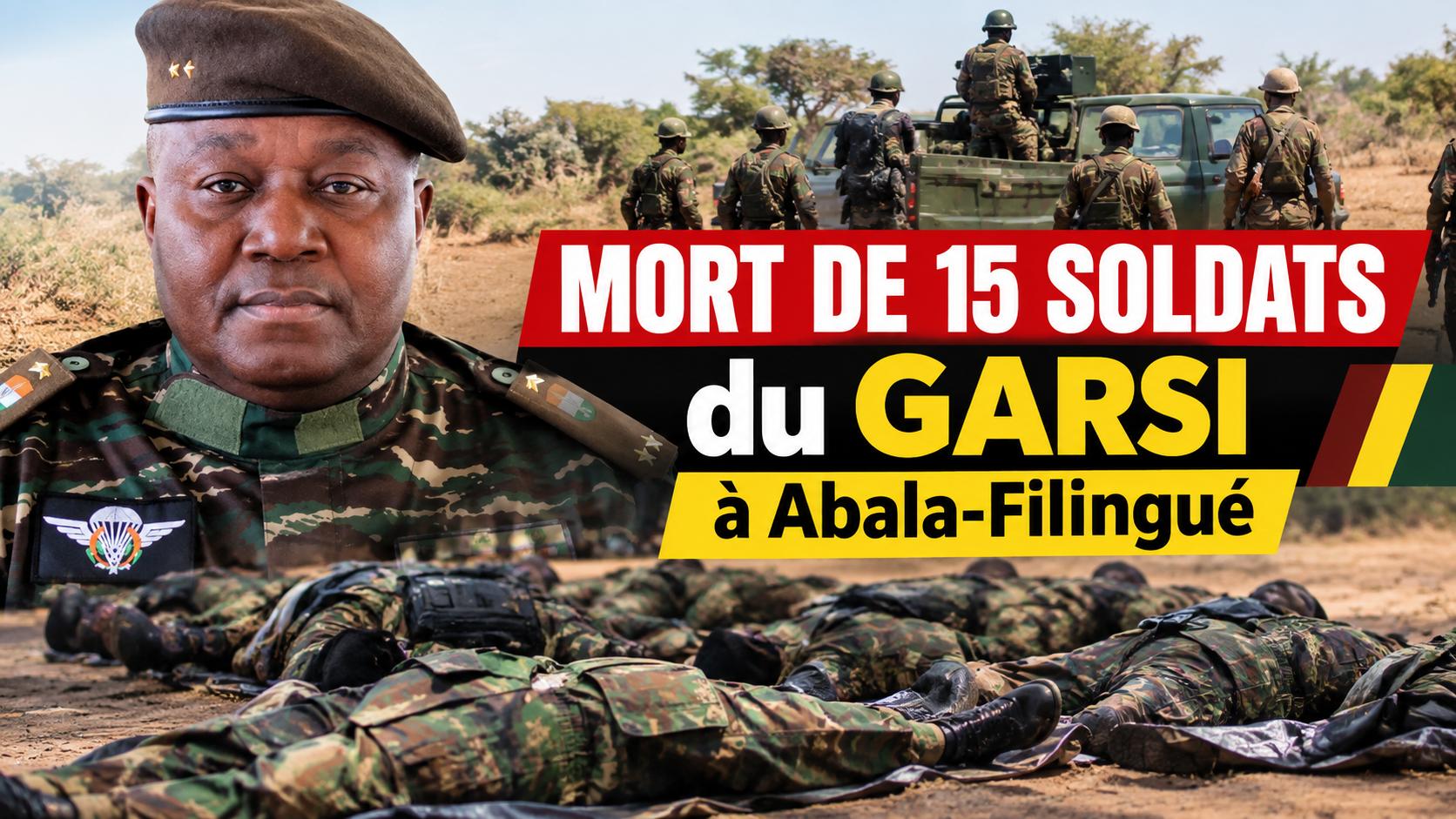
Behind the Abala-Filingué ambush: how Niger’s junta betrayed its soldiers and civilians amid crumbling security
Inside the deadliest ambush: what really happened to Niger’s elite GARSI troops
The Abala-Filingué massacre wasn’t just another attack—it was a tactical collapse that exposed deep fractures within Niger’s military command. In the early hours of that morning, a heavily armed convoy from the Group of Rapid Action, Surveillance and Intervention (GARSI) rolled into a remote corridor near the Niger-Burkina Faso border. Moments later, a coordinated ambush by jihadist factions overwhelmed the patrol. By noon, fifteen soldiers lay dead, including two of the unit’s highest-ranking officers: Captain Hassoumie and Sergeant Djindagarey. The assault wasn’t an isolated failure—it was the latest in a relentless pattern of military setbacks under General Abdourahamane Tiani’s junta.
The scale of the loss was unprecedented, not only in casualties but in symbolism. For months, the CNSP—Niger’s ruling military council—had marketed itself as the antidote to spiraling insecurity. Yet the bodies of elite GARSI troops returned to Niamey not as victors, but as martyrs, their deaths highlighting a chilling truth: the junta’s security promises were built on sand.
From coup to chaos: how Niger’s military rule unraveled the fight against terrorism
The July 26, 2023 overthrow of President Mohamed Bazoum was sold to the public as a necessary intervention to halt the country’s descent into jihadist violence. The junta pledged immediate, decisive action against armed groups in the Tillabéri region—a hotspot where the Support Group for Islam and Muslims (GSIM) and the Islamic State in the Greater Sahara (ISGS) had carved out de facto control.
Instead of strengthening defenses, the transition leadership dismantled critical operational systems. Field reports from military insiders and conflict analysts confirm a systemic breakdown:
- Command chain disruptions: Frequent reshuffles of top commanders destabilized frontline operations, leaving units like GARSI scrambling without clear leadership.
- Loss of intelligence networks: Cutting ties with traditional partners like France and the United States severed access to real-time surveillance, drone reconnaissance, and rapid medical evacuation—tools that had previously blunted large-scale attacks.
- Tactical voids: Deployments of elite units like GARSI often lacked air cover, armored support, or even basic communication relays, turning patrols into easy targets for mobile jihadist squads.
Raw data from ACLED underscores the cost of this mismanagement: over 1,500 political violence events since the coup, more than 5,800 deaths (military and civilian), and a 40% surge in civilian fatalities in the first months of junta rule—figures that contradict official claims of “stabilization.”
Diplomatic isolation and fatal gambles: why shifting alliances failed to protect Niger
In the wake of the coup, the junta severed decades-old defense agreements with Western nations, pinning hopes on a new alliance: the Alliance of Sahel States (AES), formed with Mali and Burkina Faso. Russia’s Wagner Group was courted as a security provider, a move praised in state media as a path to sovereignty.
Yet in Abala-Filingué, as in scores of other ambushes, the promised reinforcements never materialized. Reconnaissance drones—now flown by Nigerien pilots but backed by Russian advisors—failed to deliver actionable intelligence. Ground troops, meanwhile, advanced through hostile terrain with dwindling supplies, their radios often dead.
The stark contrast between propaganda and reality became impossible to ignore: while junta leaders rallied supporters in Niamey, soldiers in the field were dying without air support or medical evacuation. The regime’s priorities had shifted from protecting citizens to preserving its own grip on power—through mass arrests of opponents, media gag orders, and orchestrated rallies.
The human toll: civilians pay the highest price in Niger’s forgotten war
While the death of GARSI officers dominated headlines, the real tragedy unfolded in the villages of Tillabéri. Jihadist groups now enforce a brutal rule: forced taxes, burned schools, looted markets, and summary executions of dissenters. Over 450,000 Nigeriens have fled their homes, creating one of West Africa’s fastest-growing displacement crises. More than 3.3 million face acute food insecurity, their livelihoods choked by blocked trade routes and abandoned farmlands. Hundreds of schools stand closed, leaving generations of children without education.
The Abala-Filingué ambush revealed more than a military failure—it exposed a leadership failure. The junta promised security; it delivered devastation. The deaths of Captain Hassoumie, Sergeant Djindagarey, and fourteen other soldiers were not just losses on the battlefield—they were indictments of a regime that placed power above protection.
No more excuses: what Niger’s junta must do before the next ambush
The time for nationalist slogans is over. Niger’s survival does not hinge on who rules Niamey, but on who can protect its people. The junta must:
- Restore operational integrity: End arbitrary command reshuffles and reinstate stable leadership at the front lines.
- Rebuild intelligence partnerships: Re-engage with Western and regional allies to restore drone surveillance, medical evacuation, and precision strike capabilities.
- Prioritize civilian safety: Reroute resources from political policing to rural security, food convoys, and school rehabilitation.
- Confront reality: Acknowledge that sovereignty without security is a hollow victory—and that the blood of soldiers and civilians alike stains the hands of those who refused to act.
The next ambush may not make headlines in Niamey. But in Tillabéri, it doesn’t need to be televised—it will simply be remembered as another day of terror, another mass grave, another failure of leadership.
