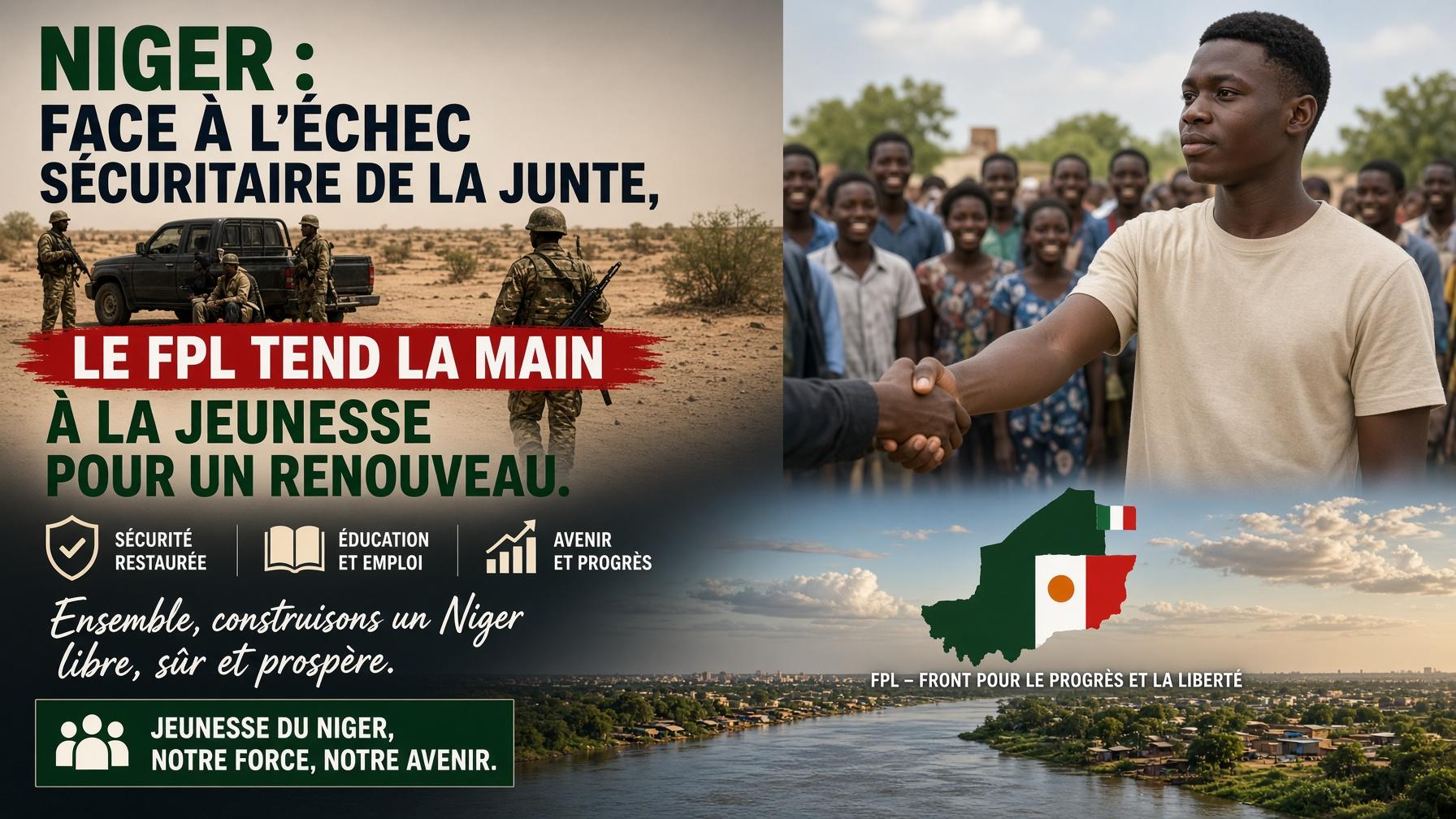
Behind Niger’s youth rallying call: how the FPL’s bold move is rewriting the security narrative
The Nigerien military junta’s persistent failure to restore security has pushed the Front Populaire pour la Justice (FPL) into uncharted territory. In a sweeping outreach campaign, the rebel movement has unveiled a multilingual video appeal that cuts across linguistic and regional divides, directly targeting the nation’s youth with an urgent call to arms. Far from a routine recruitment drive, the initiative reflects a calculated gamble on the generation most affected by the crisis—and most capable of reshaping it.
Why the FPL’s move signals a turning point in Niger’s security deadlock
The timing and tone of the FPL’s outreach reveal deeper strategic intent. After years of pledges unmet and violence unabated, the junta’s inability to deliver on its core mandate—security—has eroded public trust. By bypassing traditional state channels and speaking directly to citizens, the FPL is positioning itself not as an enemy of the people, but as a challenger to a failed system.
The video message, delivered in Arabic and several local tongues, is designed for maximum resonance. Its core pledge—“We have no quarrel with the people of Niger”—is carefully crafted to neutralize accusations of targeting civilians. Instead, the focus is squarely on the military leadership, whose promises of stability have yielded only mounting insecurity.
For observers tracing the roots of Niger’s crisis, the FPL’s outreach is more than symbolic. It signals a recognition that long-term security hinges not on military might alone, but on the mobilisation of civic energy—especially from those who feel abandoned by the state.
The youth factor: Niger’s silent majority finds a voice in the FPL call
No demographic has felt the weight of the security collapse more acutely than the youth. Disillusioned by the absence of economic opportunity and the daily threat of armed incursions, many young Nigeriens see the FPL’s appeal as a rare glimmer of agency in a system that has repeatedly failed them.
Testimonies from activists across regions reveal a growing appetite for change. “We are tired of waiting for protection that never comes,” said one community organiser in Tillabéri. “The FPL’s call offers a way to take responsibility for our own security—and our future.”
This sentiment is echoed in urban centres and rural outposts alike. The FPL’s multilingual strategy ensures that the message lands not just in French-speaking elites, but in Hausa, Zarma, and Tamachek communities—regions where the state’s absence is most palpable. In doing so, the movement is tapping into a reservoir of untapped civic potential.
The junta’s credibility vacuum and the FPL’s opportunity to fill it
A closer look at the junta’s track record reveals a pattern of unfulfilled pledges. Despite repeated declarations of restored order, attacks by armed groups have surged in border regions, displacing thousands and crippling local economies. The result? A toxic mix of desperation and distrust that the FPL is now exploiting.
Analysts note that the FPL’s strategy mirrors broader trends in Sahelian conflicts, where rebel movements increasingly target youth disillusionment as a recruitment lever. Unlike past insurgencies tied to ideology or foreign affiliation, today’s calls for action resonate with a generation asking: “What do we have to lose?”
What comes next: can the FPL’s youth gamble pay off?
The immediate question is whether the FPL’s appeal will translate into tangible support. Early indicators suggest cautious curiosity—especially among young people who view military service as their only path to influence. Yet the risk of overreach looms large. Can the FPL sustain a unified front when regional loyalties and political fractures run deep?
One certainty remains: Niger’s security future will be shaped by how its youth respond to this pivotal moment. If the FPL succeeds in channeling civic energy into organised action, it could force a reckoning with the junta’s legitimacy. If it fails, the vacuum it seeks to fill may only deepen—leaving the nation at a crossroads between chaos and fragile hope.
The coming weeks will reveal whether this youth-focused overture is the spark that reignites Niger’s stalled quest for stability—or just another chapter in a cycle of unmet expectations.
